Summit Hotel Properties (INN‑P‑E): Brand exposure that underwrites a 6.25% preferred coupon
Summit Hotel Properties’ Series E cumulative preferred (INN‑P‑E) offers a fixed-income exposure to a portfolio of premium select‑service hotels whose income streams are materially driven by relationships with major global brands. The security monetizes through a prioritized dividend (6.250% cumulative) paid out of the REIT’s hotel cash flows; operational performance at the property level—largely a function of occupancy, ADR and brand distribution—directly underwrites that payout. For income-focused investors, INN‑P‑E is a play on stabilized hotel cash flows supported by marquee brand affiliations rather than on equity upside. Explore more on NullExposure.
What the preferred shares actually buy: yield with brand‑driven cash flow support
INN‑P‑E pays a cumulative 6.250% dividend, positioning the holder ahead of common equity in the capital stack and behind secured debt. The underlying operating model is a classic hotel‑REIT structure: Summit owns real estate and derives revenue from room revenue, F&B and ancillary services operated under franchise or management agreements with large hotel companies. The preferred coupon is supported by stabilized operating cash flow, but that cash flow is concentrated in a relatively compact portfolio (over thirty properties), so brand distribution and reservation channels carry outsized importance for revenue resiliency.
Portfolio brand relationships that move the needle
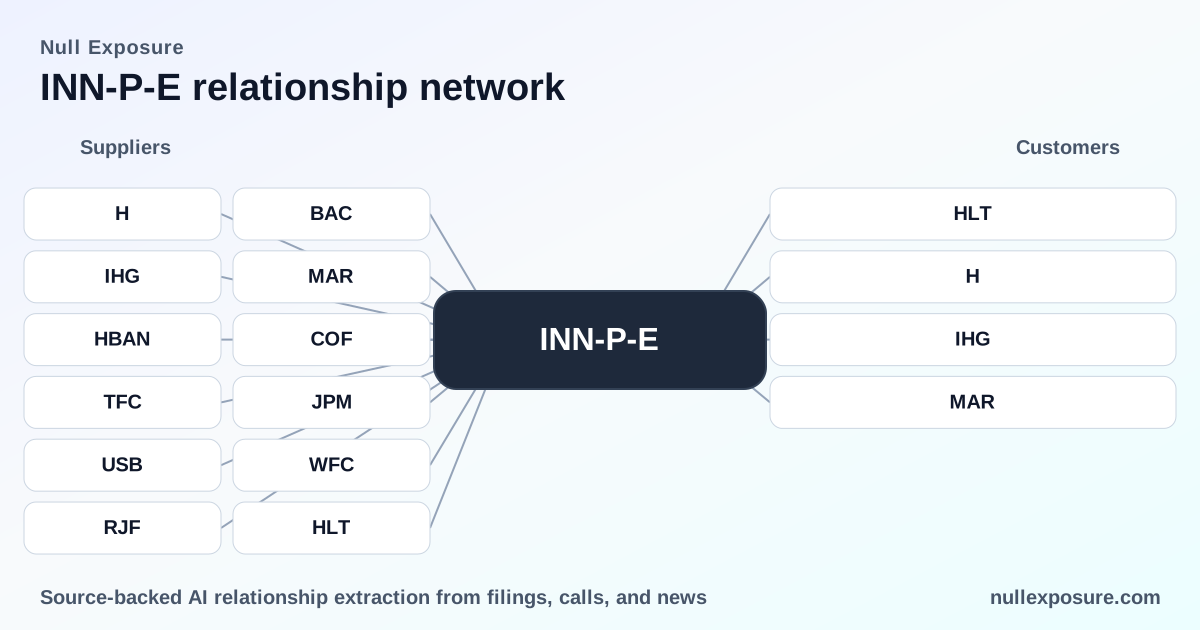
According to a MarketBeat instant alert covering FY2026, Summit’s portfolio “comprises over thirty hotels carrying well‑known flags such as Marriott, Hilton, Hyatt and IHG.” (MarketBeat, Feb 7, 2026: https://www.marketbeat.com/instant-alerts/summit-hotel-properties-inc-nyseinn-given-consensus-recommendation-of-reduce-by-analysts-2026-02-07/). Below I summarize each brand relationship from that report and what it implies for holders of INN‑P‑E.
Hilton
Summit operates multiple properties under Hilton flags, which supply reservation system distribution and loyalty demand that materially supports occupancy and RevPAR at those assets. According to MarketBeat’s FY2026 coverage, Hilton is one of the primary brands represented across Summit’s portfolio (MarketBeat, Feb 7, 2026).
Hyatt
Hyatt‑flagged properties sit in Summit’s mix and contribute access to a distinct loyalty cohort and corporate channels that can raise weekend and weekday demand in different markets. MarketBeat lists Hyatt among the major flags in Summit’s more than thirty‑hotel portfolio (MarketBeat, Feb 7, 2026).
IHG
IHG branding on Summit properties provides exposure to both economy and upscale reservation channels, helping diversify distribution risk relative to any single brand platform. MarketBeat’s FY2026 note includes IHG as a named partner in the company’s property roster (MarketBeat, Feb 7, 2026).
Marriott
Marriott flags are represented across the portfolio, supplying broad corporate and leisure demand through Marriott Bonvoy and extensive group sales support—an important revenue lever for select‑service hotels. MarketBeat’s FY2026 coverage explicitly lists Marriott among the portfolio’s well‑known flags (MarketBeat, Feb 7, 2026).
How brand relationships define Summit’s operating constraints and risk profile
The provided data include no explicit third‑party contractual constraints, so the following characteristics are presented as company‑level operating signals derived from the brand footprint and REIT structure:
- Contracting posture: Summit operates via long‑term franchise/management models typical of hotel owners, which implies multi‑year agreements that stabilize brand fees but expose owners to fee escalations and performance provisions. These agreements prioritize brand standards and reservation access in return for fees and marketing support.
- Concentration and scale: With a portfolio of just over thirty hotels, brand diversification across Hilton, Hyatt, IHG and Marriott reduces single‑brand concentration risk but leaves the REIT exposed to property‑level concentration—local market downturns at a handful of assets can still stress distributions.
- Criticality of partners: Brand partners are critical to revenue generation because they supply reservations, loyalty demand and corporate channels; any disruption to those relationships would meaningfully affect cash flow available for the preferred dividend.
- Maturity and predictability: These are established, mature brand relationships that provide predictable distribution and loyalty flows, supporting the preferred dividend under stable lodging markets; however, cyclical downturns in travel remain the primary operational risk.
If you want a distilled view of counterparty importance and contractual posture, Summit’s brand mix reads like a diversified set of distribution partners that materially underwrite income stability but do not eliminate cyclical revenue risk. See the NullExposure homepage for more relationship intelligence.
What investors should watch next
Several practical points determine the risk‑return tradeoff for INN‑P‑E:
- Occupancy and RevPAR trajectory: Preferred dividends rely on cash flow; monitor same‑store RevPAR and local market trends at Summit’s branded properties.
- Brand agreements and fee trajectories: Escalating franchise/management fees or unfavorable contract renewals could compress margins available to service the preferred coupon.
- Portfolio concentration: While the brand mix is diversified among four majors, the relatively small property count means idiosyncratic shocks (asset‑specific or market‑specific) can move distributable cash quickly.
- Capital structure events: Preferred holders are protected ahead of common shareholders but behind secured lenders; refinancing risks and covenant resets at the REIT level are material considerations.
Bottom line: income exposure backed by marquee brands, not equity optionality
INN‑P‑E is an income‑first instrument that trades on the stability of hotel cash flows supported by Hilton, Hyatt, IHG and Marriott affiliations (MarketBeat instant alert, FY2026). For investors focused on yield, the security delivers a firm coupon with operational support from well‑known brands; for investors focused on downside protection, the compact portfolio and lodging cyclicality remain principal risks to monitor. The key valuation lever is not market multiple expansion but the resilience of franchise‑driven cash flow through travel cycles.
For deeper counterparty mapping and relationship analysis on hotel REITs and other income securities, visit NullExposure’s research hub at https://nullexposure.com/.