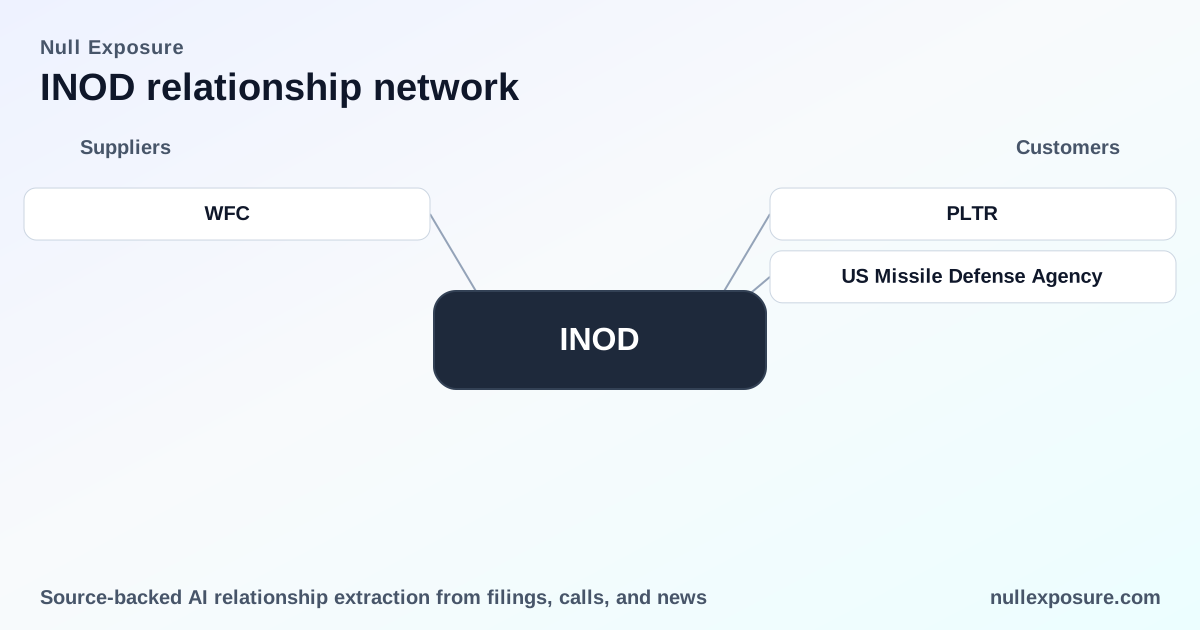
Innodata (INOD): Customer Relationships Driving an AI-services Re-rating
Innodata monetizes by selling a mix of SaaS platforms and managed services (Synodex, Agility, DDS) and by delivering AI data engineering, annotation and time‑and‑materials services to large technology and government customers; revenue streams include subscriptions, licensing and usage/time-based billing. Recent high‑visibility wins with Palantir and a Missile Defense Agency IDIQ illustrate the company’s strategic pivot toward higher-margin AI work and government prototyping, while its FY2024 disclosures flag high customer concentration that investors must price into valuation. For a fast primer on how these customer relationships change Innodata’s risk/reward profile, see https://nullexposure.com/.
The Palantir engagement: what investors should read between the lines
Innodata was selected by Palantir to supply high‑quality training data, specialized annotation, multimodal data engineering and generative‑AI workflow support for Palantir’s AI‑enabled video analysis use cases (notably rodeo event analytics). This engagement is repeatedly documented across trade press and earnings commentary and has driven notable short‑term share interest. According to Proactive Investors and multiple market writeups published between January and March 2026, Innodata’s work with Palantir covers both training‑data preparation and managed engineering services that feed Palantir’s platforms (Proactive Investors; SimplyWallSt; Research‑Tree, Jan–Mar 2026). Innodata also referenced use of “components of this system” in high‑visibility engagements during its Q4 2025 earnings call transcript (press release/earnings transcript, Q4 2025).
Why it matters: the Palantir relationship validates Innodata’s move into multimodal AI workflows and provides a large‑enterprise reference that supports cross‑selling of SaaS plus managed services.
The Missile Defense Agency award: government business with strategic optics
On January 20, 2026, Innodata announced it received a contract award under the US Missile Defense Agency’s SHIELD IDIQ, positioning the company to participate in government‑sponsored research and prototyping work related to homeland defense (Finviz report, Jan 20, 2026). This contract gives Innodata access to a vehicle used for multiple task orders over time and creates an addressable pipeline for defense data engineering and prototyping.
Why it matters: government IDIQs are commercially valuable not only for direct revenue but for credentialing Innodata for additional defense and intelligence work, with different contract economics and procurement cadence than commercial engagements.
All customer relationships reported in our sources
- Palantir Technologies (PLTR) — Innodata was selected to provide training data, annotation, multimodal data engineering and generative‑AI workflow support to Palantir for AI‑enabled video analytics; coverage appears in multiple market outlets and Innodata’s own earnings commentary (Proactive Investors; SimplyWallSt; Research‑Tree; Q4 2025 earnings call transcript, Jan–Mar 2026).
- US Missile Defense Agency — Innodata won a place on the SHIELD IDIQ, enabling future task orders for missile defense research and prototyping work (Finviz, Jan 20, 2026).
These two counterparties represent the unique customer names surfaced in our coverage set; press coverage clusters heavily around the Palantir win while the MDA award underscores government pipeline expansion.
How Innodata’s contracting posture and business model come together
Company disclosures and segment descriptions define a hybrid model that blends subscription‑based SaaS, licensing and managed services with usage/time‑and‑materials engagements. Key operating characteristics drawn from Innodata’s own descriptions:
- Contracting mix: subscription revenue under Agility, licensing under Synodex, and usage/time‑and‑materials billing in the DDS services business. The company recognizes revenue monthly for subscription services and on delivery or as services are performed for usage‑based work — a structure that combines recurring revenue with project variability.
- Term and termination profile: agreements can include long‑term, project‑based or requirements contracts, but many arrangements are terminable on 30–90 days’ notice, which limits contractual lock‑in for certain customers.
- Customer types and geography: Innodata targets large and very large technology companies and global brands, with customers primarily in North America and Europe and platform reach that is worldwide.
- Delivery model: the company deploys industry platforms as SaaS and managed services while its DDS segment delivers bespoke AI data preparation and annotation.
- Revenue concentration and criticality: Innodata disclosed that one DDS customer generated approximately 48% of total revenues in FY2024, indicating material customer concentration that is a central credit and valuation risk.
These are company‑level signals that define how revenue scales and why a single large relationship can move margins and investor sentiment meaningfully.
Investor implications — upside, risks, and valuation context
- Upside: the Palantir engagement is a commercial milestone for Innodata’s AI positioning and serves as a clear reference for pitching higher‑margin data engineering work to other large tech clients. The MDA IDIQ expands the company’s addressable market into defense, where program credibility matters more than short‑term churn.
- Concentration risk: 48% revenue exposure to a single customer in FY2024 is a structural constraint investors must underwrite; a loss or significant scale‑down would materially compress revenue and operating leverage.
- Contract flexibility and cash flow: the plural mix of subscription and usage billing provides recurring revenue, but 30–90 day termination clauses and time‑and‑materials work increase revenue volatility, particularly in DDS project cycles.
- Valuation: Innodata trades with a premium multiple relative to peers (Market capitalization ~$1.49B; Trailing P/E ~47.6; EV/EBITDA ~29.1), reflecting investor expectations for sustained AI growth and margin expansion (company market data, latest quarter 2025). Investors should reconcile premium valuation with the company’s concentration and contract termination dynamics.
Operational takeaways for operators
- Focus commercial strategy on converting large reference wins like Palantir into multi‑year managed services and platform licenses to improve revenue predictability.
- Use the MDA IDIQ to build a disciplined government pipeline and diversify away from single‑customer concentration in DDS.
- Strengthen contracting terms where possible—longer minimum terms and predictable usage pricing will materially reduce revenue volatility.
For a concise dashboard of Innodata’s customer signals and to compare these relationships across peers, visit https://nullexposure.com/.
Bold closing takeaway: Innodata is executing an intelligent mix of SaaS and bespoke AI services that can justify a premium multiple — but investors must underwrite material customer concentration and short termination windows when sizing positions.