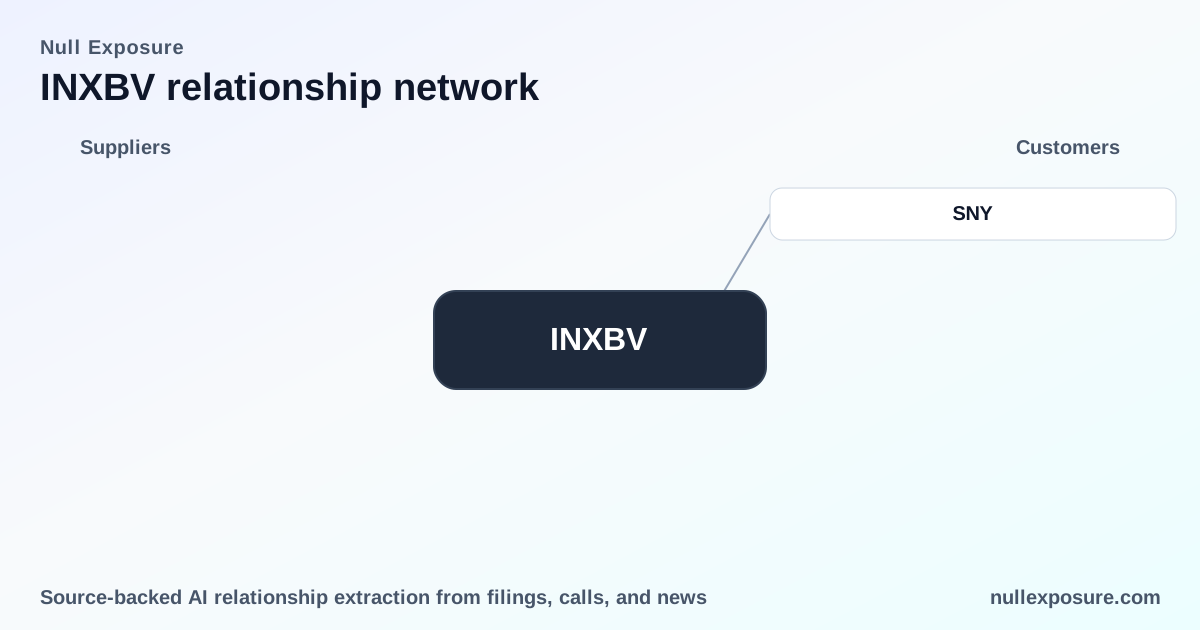
INXBV — How a single strategic buyer reshapes a small biotech’s commercial profile
Inhibrx (INXBV) operates as a clinical-stage biotech that monetizes primarily through asset transactions and partnership/licensing arrangements rather than through product sales today. The company’s recent dealings with Sanofi S.A. reflect a deliberate move to extract value from proprietary programs (notably the INBRX‑101 program) via strategic sale, shifting Inhibrx’s revenue mix toward one-time transactional proceeds and reducing near-term internal development burden. For investors and operators, the Sanofi relationship is the dominant commercial event to price into INXBV’s next phase of corporate evolution.
For a concise view of how this impacts counterparty exposure and commercial concentration, see NullExposure’s homepage: https://nullexposure.com/
Why the Sanofi transaction matters to investors
The sale of Inhibrx, Inc. and the INBRX‑101 program to Sanofi is a material commercial inflection: it converts pipeline value into cash or consideration and changes how Inhibrx interacts with large pharma counterparties going forward. This is not a routine collaborator update — it is an exit-of-asset event that directly affects revenue recognition timing, balance sheet composition, and the company’s operational footprint.
- Concentration: Sanofi emerges as the principal counterparty connected to this asset transfer, creating a single-point relationship that dominates the public record for INXBV in the period under review.
- Contracting posture: The relationship recorded in public sources is transactional (an acquisition) rather than a long-term supply or co-development contract, indicating a transfer-of-rights model rather than an ongoing operating dependency.
- Criticality: Given that the INBRX‑101 program was a named asset in the transaction, the sale is highly material to program-level value extraction and investor return expectations.
Relationship evidence — what the record shows
Sanofi S.A. appears in every entry available for INXBV’s customer scope. Below are the discrete recorded items from public sources; each entry is summarized with a plain-English takeaway and a citation.
-
Sanofi S.A. — A PR Newswire release (May 3, 2026) documents that, prior to the sale of Inhibrx, Inc. and the INBRX‑101 program to Sanofi, Inhibrx Biosciences executed internal restructuring and transferred certain corporate infrastructure and assets. This notice frames the acquisition as preceded by internal portfolio and legal organization steps. Source: PR Newswire, May 3, 2026 (https://www.prnewswire.com/news-releases/inhibrx-biosciences-announces-preliminary-data-from-the-phase-1-trial-of-ozekibart-inbrx-109-for-the-treatment-of-colorectal-cancer-302356540.html).
-
Sanofi S.A. — A Newswise release (March 10, 2026) references the same restructuring language: Inhibrx completed internal restructurings and then sold Inhibrx, Inc. and the INBRX‑101 program to Sanofi, indicating the transaction involved transfer of both program rights and supporting infrastructure. This public report reiterates that the sale was not a simple license but involved corporate-level transfers. Source: Newswise, March 10, 2026 (https://www.newswise.com/articles/inhibrx-biosciences-reports-positive-topline-results-from-its-registrational-trial-of-ozekibart-inbrx-109-in-chondrosarcoma-and-provides-updates-on-colorectal-cancer-and-ewing-sarcoma-expansion-cohorts).
-
SNY (Sanofi symbol) — The same Newswise item is catalogued again under the inferred ticker SNY (March 10, 2026) and repeats the organizational-transfer wording: public reporting classifies Sanofi as the acquirer and notes pre-sale internal restructurings at Inhibrx, suggesting deliberate corporate housekeeping to isolate the divested assets. Source: Newswise, March 10, 2026 (https://www.newswise.com/articles/inhibrx-biosciences-reports-positive-topline-results-from-its-registrational-trial-of-ozekibart-inbrx-109-in-chondrosarcoma-and-provides-updates-on-colorectal-cancer-and-ewing-sarcoma-expansion-cohorts).
Each entry supports the same core commercial fact: Sanofi is the counterparty that acquired specific Inhibrx assets and programs, and the transaction was preceded by internal restructurings at Inhibrx.
How this shapes INXBV’s operating model and investor checklist
Treat the above facts as signals about how Inhibrx conducts business and how investors should model the company going forward.
- Revenue model shifts to transactable value extraction. With a program sale to Sanofi, expect episodic, transaction-driven revenue rather than steady product revenues. This supports a valuation approach that incorporates milestone payments and one-off proceeds.
- Concentration risk increases in the short term. Publicly visible counterparty exposure is highly concentrated around a single strategic buyer; future monetizations will determine whether concentration persists or diversifies.
- Contracting posture is strategic and exit-oriented. The pre-sale restructurings and documented sale structure indicate an operational posture that prioritizes carve-outs and portfolio optimization rather than exclusive co-development.
- Maturity signal: partial de‑risking of pipeline. Selling a named program to a large pharma indicates the company is executing a de‑risking strategy, realizing value at intermediate clinical stages instead of carrying full late‑stage development risk internally.
Investment implications — downside and upside to price in
- Upside: Immediate capital realization reduces near-term cash burn and funds remaining portfolio activity or shareholder returns; partnering with a deep-pocket acquirer like Sanofi validates the underlying science and improves optionality for other assets.
- Downside: Revenue volatility and dependence on transactional monetizations compress predictability; losing a core program erodes potential upside if Inhibrx had pursued commercialization independently.
- Operational risk: integration of sold assets is Sanofi’s responsibility, but Inhibrx’s remaining corporate footprint could be leaner and dependent on future similar transactions.
Final read for operators and allocators
The publicly recorded relationship set for INXBV is dominated by a single, high-impact corporate sale to Sanofi that repositions Inhibrx from a traditional discovery/clinical developer to a firm that extracts value through strategic divestitures and realignment of its infrastructure. Investors should reframe forecasts around episodic monetization events and treat counterparty risk as concentrated until additional partnership announcements diversify the company’s customer footprint.
For a deeper counterparty analysis across tickers and to monitor future relationship changes, visit NullExposure: https://nullexposure.com/ — the homepage has tools for tracking transaction-level counterparties and material relationship events.
Bold takeaway: Sanofi is the single dominant counterparty shown in public records for INXBV in this period; the transaction represents a deliberate strategy to convert program value into realized proceeds and materially alters Inhibrx’s revenue and operational profile.