Inozyme (INZY) — Acquisition clarifies the customer map and strategic position
Inozyme Pharmaceuticals developed enzyme-focused treatments for rare metabolic disorders and monetized its clinical-stage assets through partnerships, licensing options, and ultimately an exit sale to a strategic acquirer. The company’s commercial path culminated in a cash offer from BioMarin that converted INZY’s value into a definitive acquirer payment, validating a model where small rare-disease biotechs realize value through strategic M&A rather than large-scale direct commercialization. For a quick view of this customer-relationship analysis and comparable corporate intel, see Null Exposure.
What happened, in plain language
BioMarin Pharmaceutical agreed to and completed a cash acquisition of Inozyme Pharma, paying approximately $270 million to fold Inozyme’s enzyme-therapy programs into BioMarin’s rare-disease portfolio. Multiple market reports detail the transaction chronology and price terms, including the $4.00 per-share cash tender offer used to acquire outstanding common shares. According to BioSpace, the acquisition was announced as a strategic build-out of BioMarin’s enzyme expertise (BioSpace, March 10, 2026: https://www.biospace.com/business/biomarin-expands-enzyme-expertise-with-270m-inozyme-buy). Local business coverage and a PR release confirm purchase mechanics and completion filings (Boston Business Journal, May 2025; PR Newswire, May 2025).
The relationships you need to know
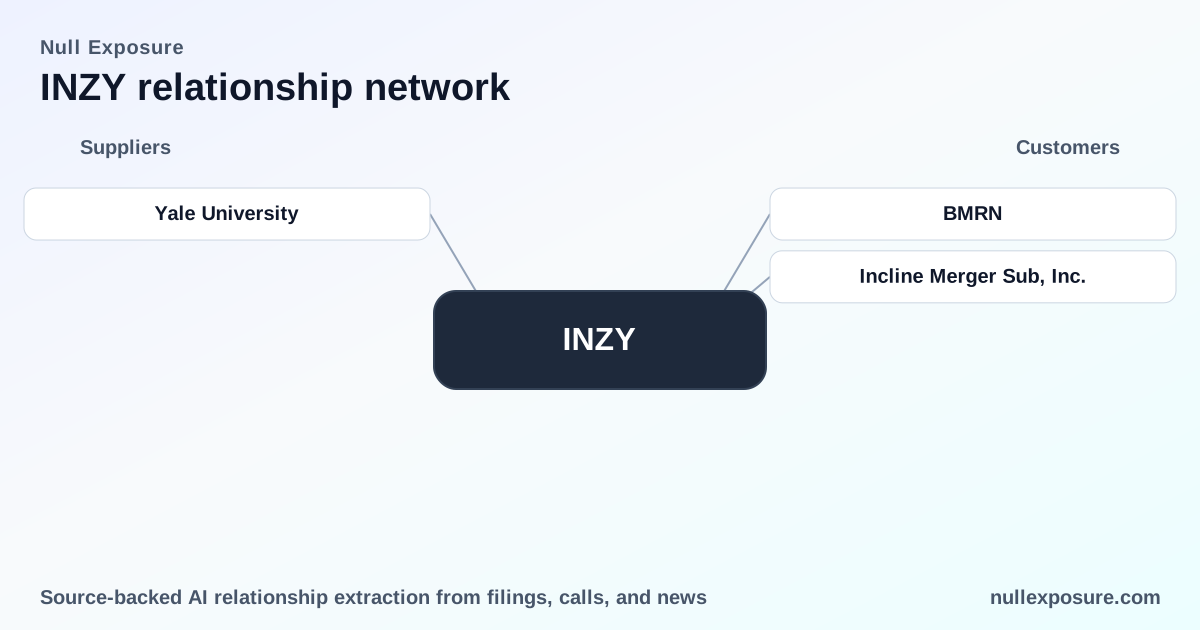
- BioMarin Pharmaceutical (BMRN) — BioMarin executed a cash acquisition of Inozyme, paying a total consideration cited at $270 million and launching a $4.00-per-share tender offer to acquire outstanding common stock. This transaction removed Inozyme from the public market and transferred its programs into BioMarin’s development pipeline (BioSpace, March 10, 2026; PR Newswire, May 2025; Boston Business Journal, May 2025).
- Incline Merger Sub, Inc. — The purchase was carried out through BioMarin’s wholly owned acquisition vehicle, Incline Merger Sub, Inc., as the legal buyer in the cash deal structure (ad-hoc-news report on acquisition finalization, March 2026: https://www.ad-hoc-news.de/boerse/ueberblick/inozyme-pharma-acquisition-finalized-by-biomarin/68416254).
Each of the above relationships is documented repeatedly across industry press and regulatory notices between March and May 2025–2026, providing consistent corroboration of transaction terms and execution.
Why this matters for investors and operators
The transaction delivers several clear signals about Inozyme’s business model and operating posture that are relevant to investors, potential partners, and operators who evaluate similar small biotech counterparties:
- Monetization via strategic exit: The primary commercial outcome for Inozyme was an outright sale to a strategic buyer, not independent commercialization. This indicates a business model optimized for value extraction through licensing or M&A rather than building a standalone commercial organization.
- Contracting posture: acquisition-ready and partner-centric. The company’s governance and capital strategy were oriented to enable a sale—sufficient IP, de-risked clinical assets, and transactionable study data—making it an attractive takeover candidate for established rare-disease players.
- Concentration and counterparty exposure: As a clinical-stage biotech, Inozyme’s revenue and value were concentrated in a small number of asset programs and dependent on partnership or exit events for realized returns. That concentration raises payoff potential but increases execution and timeline risk prior to an exit.
- Criticality to buyers is tactical: BioMarin positioned the acquisition as a capability and portfolio add-on—Inozyme’s programs were strategically important to a buyer’s product-line expansion, but they did not represent a transformative standalone business requiring immediate large-scale integration.
- Maturity and commercialization runway: The company’s lifecycle stage—pre-commercial, clinically positioned—made strategic sale the most efficient path to monetization and distribution access for its therapies.
There are no explicit contract- or supplier-constraint records provided in the available relationship data; that absence is itself a signal that commercial entanglements were resolved through the acquisition rather than long-term customer contracts.
Risk and value implications for counterparties
Investors and operators who evaluate firms like INZY should weigh the following actionable implications:
- Upfront upside vs. execution risk: Small rare-disease biotechs deliver concentrated upside on positive clinical or deal outcomes and concentrated downside if development stalls. The BioMarin deal crystallized upside that public investors could not scale into a commercial franchise.
- Due diligence focus for acquirers: Technical fit (enzyme platform, IP estate), regulatory trajectory, and the ability to integrate pipeline assets quickly are the primary value levers in acquiring targets like Inozyme.
- Limited direct customer revenue precedent: Companies with this profile tend not to establish broad customer bases prior to exit; value is realized through corporate transactions and downstream commercialization by acquirers.
How operators should think about comparable opportunities
For corporate development teams and investors evaluating similar targets, prioritize regulatory clarity, IP defensibility, and program specificity when screening. Transactions executed through dedicated merger subsidiaries—like Incline Merger Sub in this case—are standard practice for cash acquisitions and should not change valuation assumptions, but they do streamline execution risk and regulatory filings (ad-hoc-news, March 2026).
If you track small-cap biotech customer and counterparty overlays, a consistent approach to screening and mapping counterparties improves hit rates for strategic buys; for a streamlined way to visualize these customer relationships and transaction signals, visit Null Exposure for guided workflows.
Final investment takeaways
- The BioMarin acquisition confirms Inozyme’s business model: creation of de-risked, acquisition-ready rare-disease assets rather than independent commercialization.
- Deal mechanics (cash tender offer and acquisition vehicle) demonstrate a standard strategic-buy approach for consolidating enzyme-focused capabilities into an incumbent rare-disease portfolio.
- For investors, exposure to companies like INZY is a bet on thesis-driven clinical value that resolves through partnership or M&A rather than recurring customer revenue.
Primary reporting on this transaction comes from BioSpace and Boston Business Journal at the time of announcement and PR filings; final legal acquisition execution is recorded in coverage noting Incline Merger Sub as the acquisition vehicle (BioSpace, March 10, 2026; Boston Business Journal, May 2025; ad-hoc-news, March 2026; PR Newswire, May 2025).