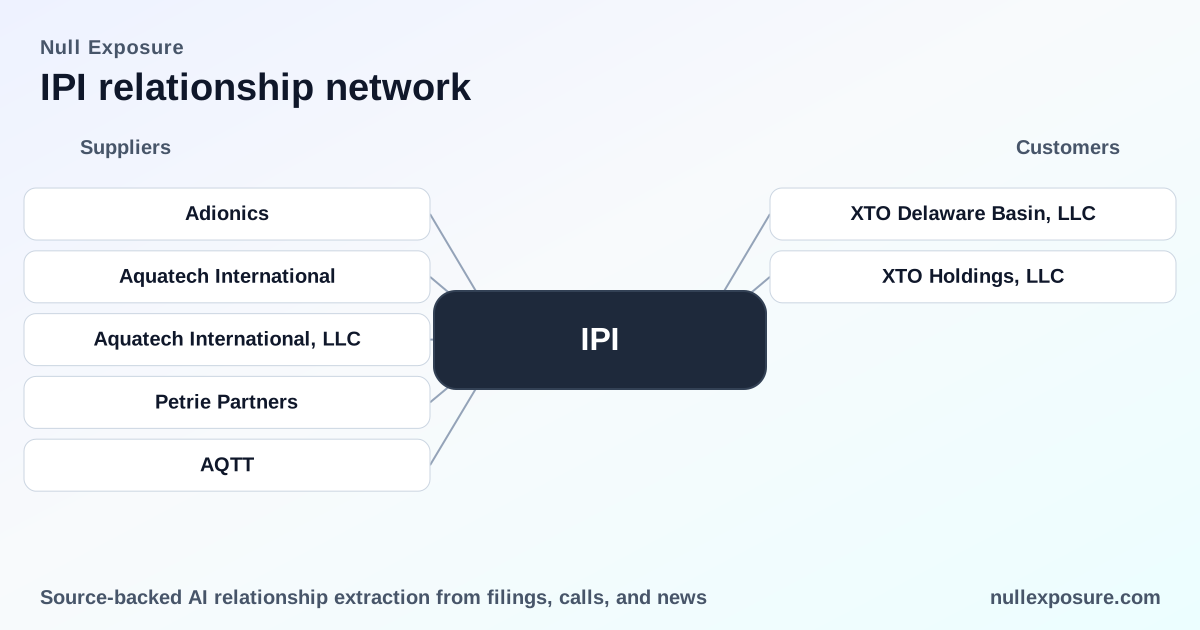
Intrepid Potash (IPI): Customer relationships that drive cash, contracts and concentration
Intrepid Potash operates as a vertically focused producer of potash, Trio™ specialty fertilizer and water, monetizing through a mix of spot commodity sales for potash and Trio, multi‑year water contracts that provide recurring cash flow, and occasional asset monetizations that reshape balance sheet flexibility. For investors, the combination of spot‑priced core product sales, a small number of high‑value customers, and targeted strategic partnerships defines both upside from commodity cycles and exposure to concentration and price volatility. For deeper relationship analytics visit https://nullexposure.com/.
Recent customer transactions that change the cash profile
Intrepid executed a material asset sale in 2026 that instantly altered liquidity and asset footprint. On April 2, 2026 Intrepid Potash–New Mexico, LLC entered into an Asset Purchase Agreement to sell the majority of the Intrepid South Ranch to HydroSource Logistics, LLC for $70 million; major market reports confirmed the sale and the price point. This transaction is a clear example of converting non‑operating real estate into near‑term cash, reducing asset exposure while preserving operating focus on core product businesses (TradingView, May 3, 2026; WorldFertilizer, Apr 7, 2026).
Strategic development agreement and cash consideration from XTO
Intrepid’s cooperative development relationship with XTO spans amendments and cash consideration tied to development rights. Intrepid entered a Third Amendment to its Cooperative Development Agreement with XTO Delaware Basin, LLC (successor to BOPCO, L.P.) that updated development arrangements and delivered immediate payments to Intrepid. The amendment and related consideration reflect strategic monetization of subsurface development rights paired with upfront cash, strengthening liquidity while preserving potential longer‑term value from developed acreage (GlobeNewswire, Jan 9, 2024).
Who Intrepid is doing business with — relationship snapshots
-
HydroSource Logistics, LLC — Intrepid sold the majority of its Intrepid South Ranch assets to HydroSource for $70.0 million under an Asset Purchase Agreement announced in early April 2026; the transaction was widely reported across trade and financial outlets and reflects a one‑off monetization of non‑core ranch assets. Sources: TradingView (May 3, 2026); Yahoo Finance (May 3, 2026); WorldFertilizer (Apr 7, 2026).
-
XTO Delaware Basin, LLC — Intrepid executed a Third Amendment to a Cooperative Development Agreement that names XTO Delaware Basin as a successor in interest; the amendment formalized development terms and underscores an ongoing, contractual relationship tied to resource development. Source: GlobeNewswire release (Jan 9, 2024).
-
XTO Holdings, LLC — As part of the same amendment process Intrepid received material cash consideration, including a $45 million payment on January 2, 2024 in addition to an initial $5 million payment received December 12, 2023, reported in Intrepid’s public release describing the amendment consideration. Source: GlobeNewswire release (Jan 9, 2024).
What these relationships reveal about Intrepid’s operating model
Intrepid’s customer and partner footprint is coherent with a company that balances commodity exposure with targeted, contract‑driven cash generation:
-
Contracting posture: Intrepid sells most of its potash and Trio into the spot market, exposing revenue to commodity price cycles, while water sales include multi‑year fixed‑price contracts that provide predictable cash flow for that segment. These are company‑level characteristics derived from public disclosures and regulatory filings.
-
Concentration and spend: The company reports a meaningful single‑customer exposure—one customer accounted for roughly $25.6 million of consolidated revenue in 2024—placing that counterparty in the $10m–$100m annual spend band and indicating a measurable customer concentration risk.
-
Geography and market reach: Intrepid’s sales remain dominantly U.S. focused (roughly 94% of total sales in recent years), with a modest international export component (Trio exports reported near 15% in a recent year), positioning the company to benefit from domestic demand cycles while retaining limited global diversification.
-
Relationship roles and channels: Customers operate as distributors and end‑users, and the company sells into both agricultural and industrial/feed markets; this structure drives a mix of transactional spot activity and wholesale distributor relationships.
-
Product criticality and segment focus: Potash, Trio and water are core products—potash is the company’s central commodity exposure while Trio and water provide higher‑margin and contractual revenue streams, respectively.
-
Maturity and activity: Public sales and the XTO amendments indicate active and evolving relationships, with Intrepid both transacting in spot markets and negotiating longer‑dated development and water contracts to stabilize parts of its revenue base.
Investment implications — risks and opportunities
-
Upside from cyclical potash prices: Because most potash and Trio volumes trade on the spot market, Intrepid benefits directly from rising commodity prices; investors should treat volume trends and market pricing as primary drivers of near‑term earnings variability.
-
Stability from water contracts and strategic deals: Multi‑year water contracts and development agreements with parties like XTO deliver recurring cash and lump‑sum consideration that materially reduce short‑term leverage and support capital allocation flexibility.
-
Concentration risk: A single large customer generating ~$25.6M in sales introduces credit and revenue concentration risk that can amplify downside during sectoral or counterparty stress.
-
Asset monetization as a liquidity lever: The $70M sale to HydroSource demonstrates management’s willingness to monetize non‑core assets to strengthen the balance sheet rather than rely solely on operating cash flow, which is a deliberate capital‑allocation posture.
Bottom line and next steps for relationship due diligence
Intrepid Potash runs a hybrid commercial model: spot‑exposed commodity sales that provide upside in strong markets, complemented by contractual water revenues and discrete strategic monetizations that smooth cash flow and buy time through cycles. Investors should weigh potash price cycles and volume dynamics against customer concentration and the company’s ongoing use of asset sales and development agreements to fund operations.
For a detailed, ongoing view of Intrepid’s counterparty network and how these relationships evolve, see our coverage at https://nullexposure.com/.