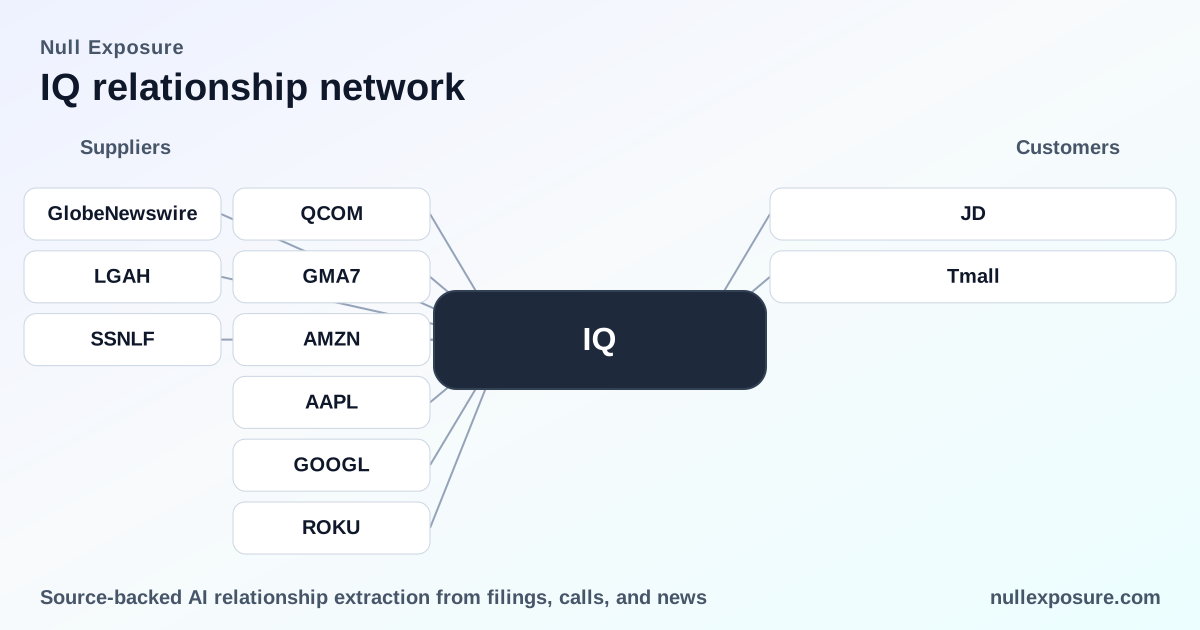
iQIYI Customer Relationships: Distribution Links to JD, JD.com and Tmall
iQIYI operates a freemium streaming and online entertainment platform in China, monetizing through subscriptions, advertising, content licensing and ancillary hardware and distribution partnerships. For investors evaluating customer and channel relationships, recent reporting shows iQIYI extending its content and device reach via mainstream e‑commerce partners — a distribution strategy that supports modest top‑line growth while keeping capital intensity low.
Explore more company relationship signals at https://nullexposure.com/ if you want a consolidated view of partner exposures and sourced evidence.
Why distribution partnerships matter for the business model
iQIYI runs a content-first media platform with revenue TTM of 27.29 billion and gross profit of 5.75 billion (latest reported period ending 2025‑12‑31). These economics create incentives to push content and branded hardware through high‑traffic retail outlets rather than rely solely on owned channels. Distribution agreements with leading Chinese e‑commerce platforms expand reach, drive subscription conversion, and create cross‑sell opportunities for premium hardware bundles and advertising inventory.
Operationally, these retail relationships are typically transactional and marketing‑focused rather than capital‑intensive. That structure keeps iQIYI’s contracting posture light: the company can scale content promotion through partners without bearing inventory risk, while preserving cash flow flexibility.
What the relationship records show: mainstream retail distribution
The open relationship records include three entries that document the same distribution event: the launch of iQIYI’s QIYU 3 virtual reality headset on major Chinese e‑commerce platforms. Each entry is summarized below with sourcing.
-
JD — iQIYI listed the QIYU 3 on China’s mainstream e‑commerce platform JD.com with availability starting September 3; that listing positions JD as a primary retail channel for device distribution and promotional activity. According to an Auganix news post dated March 10, 2026, the QIYU 3 will be available on JD.com starting September 3 (Auganix, 2026). https://www.auganix.org/china-based-online-entertainment-platform-iqiyi-launches-new-qiyu-3-virtual-reality-headset/
-
JD.com — duplicate entry: the same Auganix coverage repeats that the QIYU 3 will be sold on JD.com, underscoring that iQIYI targets JD’s marketplace for device and content bundling rather than a proprietary retail rollout. Auganix news report, March 10, 2026, indicates availability on JD.com and related promotional linkage to the product launch. https://www.auganix.org/china-based-online-entertainment-platform-iqiyi-launches-new-qiyu-3-virtual-reality-headset/
-
Tmall — the QIYU 3 will also be available through Tmall, giving iQIYI access to Alibaba’s large consumer base and typical promotional calendar events on that platform. The same Auganix item (March 10, 2026) cites Tmall alongside JD.com as a listed retail channel for the QIYU 3 launch. https://www.auganix.org/china-based-online-entertainment-platform-iqiyi-launches-new-qiyu-3-virtual-reality-headset/
Key takeaway: iQIYI is leveraging established e‑commerce marketplaces rather than exclusive, proprietary retail channels to distribute the QIYU 3, increasing reach while avoiding inventory risk.
Contracting posture, concentration and maturity — company‑level signals
The relationship records do not contain explicit contractual constraints or long‑form agreements. No customer‑level contractual constraints were captured in these relationship records; this absence itself is a company‑level signal. For investors, that implies:
- Contracting posture: transactional and distribution‑oriented rather than long‑term exclusive retail contracts disclosed in these records.
- Concentration: distribution across both JD/Tmall points to diversified channel exposure for hardware and promotional activity, which reduces single‑partner dependency for device sales.
- Criticality: the relationships catalogued are important for scale and marketing, but are not documented here as strategic exclusivity that would be critical to core streaming revenues.
- Maturity: the entry is a product launch distribution event rather than a long‑standing partnership disclosure, suggesting marketing lifecycle activity rather than contractually entrenched revenue streams.
These signals align with a platform that prioritizes broad consumer reach and conversion efficiency over supplier‑side lock‑ins.
Risk, upside and what investors should watch
- Risk — promotional reliance: Rolling product availability through marketplace partners exposes iQIYI to platform promotion cycles and fee structures that can compress margins or shift marketing ROI. Watch for changes in commission, placement, or promotional cost structure on JD and Tmall.
- Upside — scale and cross‑sell: Broad marketplace distribution accelerates user acquisition pathways and can boost subscription conversion if hardware bundles include trial subscriptions or exclusive content.
- Visibility: Because public relationship records here are event‑level, investors should demand more granular disclosure around revenue attribution from hardware bundles and related advertising uplift in order to quantify channel economics.
What to watch next:
- Trailing conversion metrics tied to the QIYU 3 launch (device sales → new subscriptions).
- Any formal distribution agreements disclosed in company filings naming JD or Alibaba/Tmall with revenue sharing or promotional commitments.
- Promotional spending trends in quarterly operating expenses that coincide with marketplace launches.
For ongoing tracking of partner exposures and sourced evidence, visit the company relationship hub at https://nullexposure.com/.
Bottom line for investors
iQIYI’s use of JD and Tmall as distribution channels for the QIYU 3 reflects a pragmatic, low‑capital approach to expanding physical touchpoints for content engagement. The relationships are marketing and distribution‑centric rather than contractually entrenched revenue drivers in the records reviewed. Investors should value the reach these platforms provide while pressuring for disclosure on conversion economics and any preferential terms that could alter margin profiles.