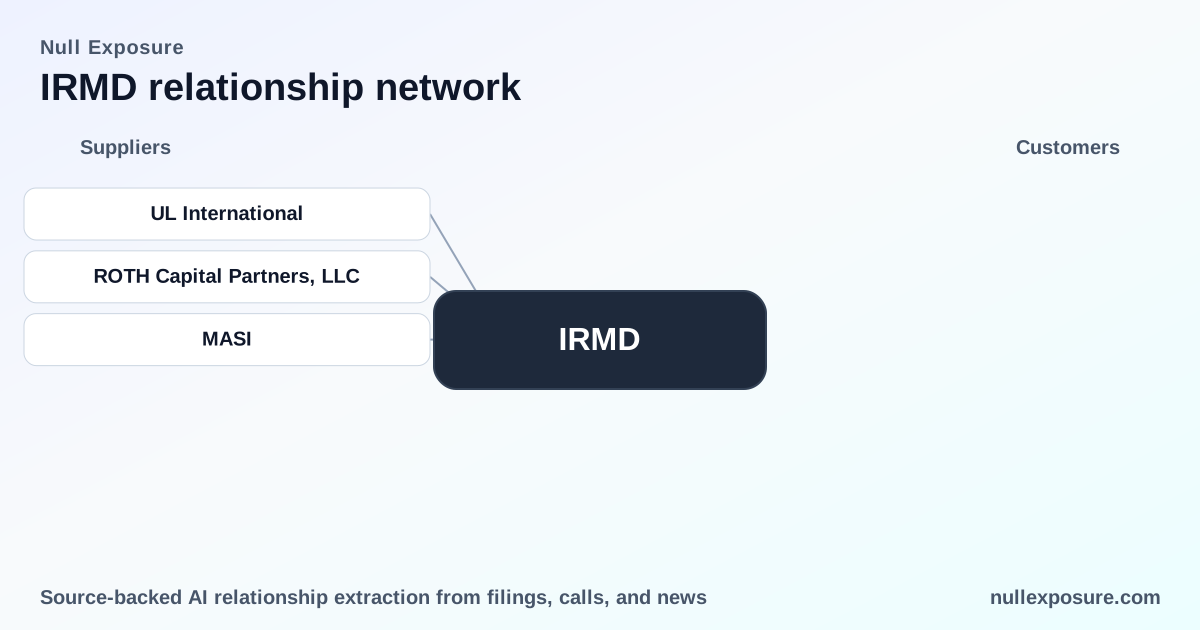
IRADIMED (IRMD) — Customer Relationships, Operational Signals, and Investment Implications
Iradimed builds and sells MRI‑compatible medical devices, accessories and related services, monetizing primarily through hardware sales to hospitals and acute care facilities, supplemented by extended warranty and service contracts and international distributor channels. Revenue is concentrated in the U.S., and the company recognizes a mix of near-term distributor receipts and deferred warranty revenue over multi-year periods, creating a hybrid contracting posture that shapes cash flow and margins. For a concise view of customer ties and what they mean for investors, see NullExposure’s coverage. https://nullexposure.com/
How Iradimed sells value and collects cash
IRADIMED’s business model is hardware‑driven with an attached services layer. The company develops MRI‑compatible equipment and sells directly to U.S. hospitals through its own sales force while using third‑party distributors internationally. Product monetization is twofold: upfront hardware revenue and service/extended warranty income that is deferred and earned over one to four years after the initial manufacturer warranty period. According to company disclosures, extended warranty revenue is deferred and recognized over the warranty term, which creates a predictable, longer‑dated revenue stream alongside transactional sales.
Contracting posture is therefore mixed: short collection cycles on many international distributor orders (partial advance payment with balance due within 30 days) coexist with multi‑year contractual service obligations that require revenue deferral and careful margin management. This operating model reduces early cash conversion from some international channels while creating a sticky annuity-like element in service revenue.
Who buys Iradimed products and what that implies
Iradimed’s principal customers are hospitals and acute care facilities, and its revenue composition signals material geographic concentration: 83% of revenue in 2024 was U.S., down slightly from 80% in 2023 but still dominant. That concentration creates both stability—through large, creditworthy healthcare buyers—and cyclical exposure to U.S. hospital capital spending patterns. Company‑level constraints extracted from filings and disclosures indicate:
- Buyer profile: Predominantly large enterprise healthcare providers (hospitals and acute care).
- Channel mix: Direct U.S. sales and third‑party international distributors that require advance/short‑term payments.
- Contract tenor: A combination of short‑term product payments and multi‑year extended warranty contracts (1–4 year recognition windows).
- Segment focus: Hardware and related consumables/services, with recurring revenue from warranties and support.
- Customer spend signal: A company‑level indicator suggests significant transaction bands (a $10M–$100M spend band signal), driven by material U.S. revenue growth lines.
These signals point to high customer concentration, moderate contract maturity due to warranties, and operational criticality—IRADIMED’s devices are capital items for providers, and replacement or upgrade cycles underpin long sales timelines.
Active customer relationships worth watching
Below are the customer relationships surfaced in recent market coverage. Each relationship is presented in plain language with a concise source citation.
- Melco’s MSC — Melco Resorts is reported to be planning an “iRad Polyclinic” at Studio City in Macau that will offer MRI, CT, mammography and other diagnostic services, indicating a commercial tie where iRad branding and MRI capabilities will be deployed in a high‑profile integrated resort setting. (GGRAsia, March 10, 2026).
- Melco Resorts (MLCO) — Melco launched what was described as the world’s first integrated resort hospital in Macau in partnership with iRad, positioning iRad’s diagnostic services within a resort‑anchored healthcare facility and demonstrating a strategic customer engagement beyond traditional hospital sales. (InsiderMonkey reporting on October 6 event; covered March 10, 2026).
Both media items show IRADIMED’s market presence extending into non‑traditional healthcare venues through named partnerships that leverage the company’s MRI platform and service capabilities. The coverage indicates active, outward‑facing commercial activity in the Asia‑Pacific region tied to branded diagnostic centers.
What these relationships mean for revenue and strategic positioning
The Melco engagements signal a purposeful move to embed iRad capabilities into bundled healthcare offerings outside classic hospital procurement channels. That has three material investor implications:
- Revenue diversification potential: Partnerships with integrated resorts open alternative distribution and recurring service streams beyond the U.S. hospital market.
- Brand and install base expansion: High‑visibility installations in Macau can serve as commercial references for other international hospital and clinic buyers.
- Modest near‑term cash upside but strategic upside medium‑term: Initial contracts likely follow the company’s mix of product sales plus service/warranty terms—so revenue recognition and cash dynamics will reflect the established hybrid contracting posture.
Risks, catalysts, and what to monitor next
Investors should weigh the following, with bold items highlighting key active considerations:
- Concentration risk: With 83% of revenue in the U.S., international partnerships are strategically important but not yet large enough to shift revenue concentration meaningfully.
- Contracting complexity: The coexistence of short‑term distributor payments and deferred extended warranty revenue requires monitoring deferred revenue and warranty reserve trends in quarterly filings.
- Customer type and procurement cycles: Selling primarily to hospitals means long procurement cycles and capital spending sensitivity, which compresses near‑term predictability.
- Commercialization upside: Partnerships that embed iRad services into resort hospitals and polyclinics can accelerate international brand recognition and create recurring service revenue.
- Margin and cash flow drivers: Watch gross margin trends and the company’s disclosure of warranty costs and deferred revenue amortization; these drive adjusted operating cash flow.
Catalysts to track: international distributor agreements, disclosed terms for the Melco relationships (equipment orders, installation timelines, service contracts), and quarterly movements in deferred revenue and warranty liabilities.
Bottom line and actionable next steps
Iradimed is a hardware company with growing service annuities and targeted international partnerships that expand its addressable market beyond traditional hospitals. The operating model blends short‑term distributor collections with multi‑year warranty recognition, producing a mixed cash conversion profile and concentrated U.S. revenue exposure.
For deeper situational awareness, monitor upcoming quarterly filings for deferred revenue and warranty disclosures, and track public announcements about the Melco deployments for order sizes and timelines. For further curated relationship intelligence and comparative vendor analysis, visit NullExposure’s homepage. https://nullexposure.com/
Bold, systematic tracking of deferred revenue, distributor payment terms, and any expansion of international partnerships will determine whether these relationships materially change IRADIMED’s revenue mix and valuation trajectory.