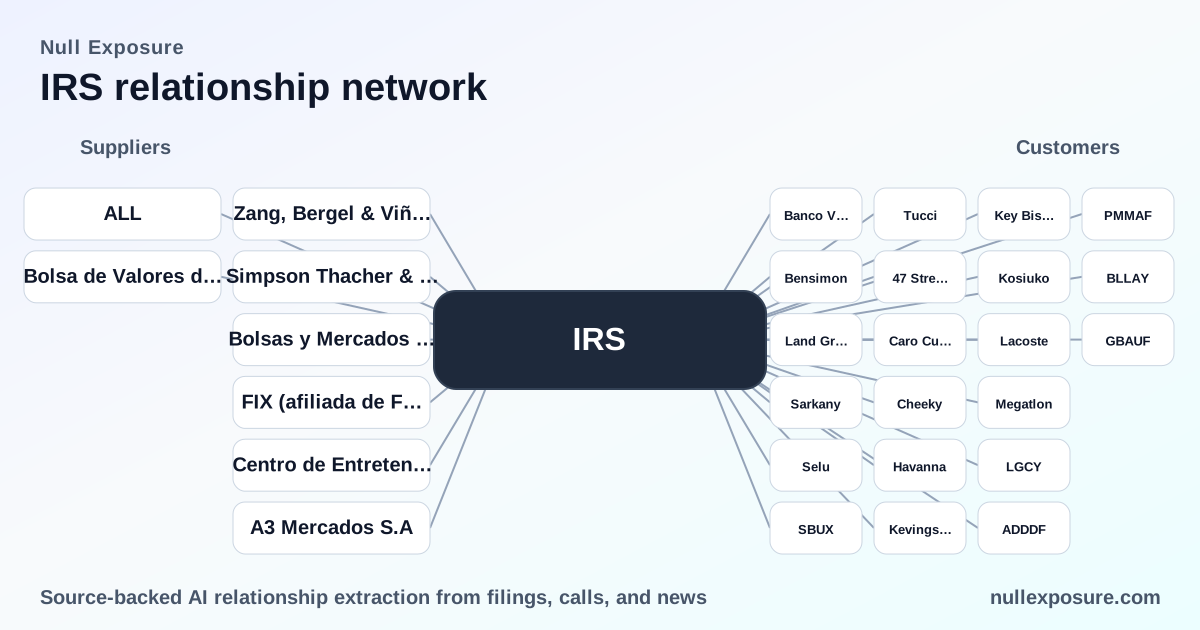
IRSA’s Customer Map: What tenants and buyers tell investors about cash flow, concentration and execution
IRSA Inversiones y Representaciones is a diversified Argentine real estate owner-operator that monetizes through long-term leasing, asset sales and active portfolio rotation across shopping centers, offices and development projects. Recent transactions and press coverage show a hybrid operating model: stable rental income from traditional retail anchors, opportunistic divestments of non-core stakes, and selective office disposals that crystallize value in a volatile macro environment. For counterparty-level analysis and mapping, visit https://nullexposure.com/.
Why counterparty detail matters for IRSA investors
IRSA’s credit profile and valuation are driven more by the composition of tenants and buyers than by headline NAV multiples alone. High-quality, international retail tenants support predictable footfall and rental reversion, while one-off sales of floors or minority stakes are leverageable liquidity events that improve cash generation. The relationships captured below illustrate both recurring cash drivers (retail anchors) and episodic monetization (office and subsidiary disposals).
Who rents, buys or is named in IRSA coverage — a relationship-by-relationship read
Below I cover every relationship flagged in the dataset. Each entry is a plain-English take on the link between the counterparty and IRSA, followed by the source.
Banco Voii S.A.
Banco Voii purchased an entire floor in IRSA’s prominent Catalinas office building for US$12.6 million, signaling willingness among local financial buyers to pay office premiums for trophy assets. Reported by iProfesional on March 10, 2026 (https://www.iprofesional.com/negocios/368016-irsa-profundiza-su-proceso-de-venta-de-oficinas).
Land Group S.A.
Land Group S.A. acquired a 49% stake in Manibil — an IRSA subsidiary focused on developments — with IRSA receiving approximately ARS 577 million for the sale, illustrating active portfolio rotation and willingness to monetize development stakes. Reported by iProfesional on March 10, 2026 (https://www.iprofesional.com/negocios/368016-irsa-profundiza-su-proceso-de-venta-de-oficinas).
Bensimon
Bensimon was listed among international and domestic retail brands named as prospective tenants for an IRSA shopping project in a 2019 local report, reflecting IRSA’s strategy of targeting a broad mix of fashion and lifestyle anchors to populate new mall supply. See 0221.com.ar, Oct 2019 (https://www.0221.com.ar/nota/2019-10-24-14-53-0-ya-comenzaron-a-nivelar-el-terreno-para-construir-el-shopping-de-irsa-frente-a-walmart-y-carrefour).
Megatlon
Megatlon — a national fitness chain — was included in the same 2019 tenant list, indicating IRSA targets experiential and services tenants alongside retail to diversify footfall drivers. See 0221.com.ar, Oct 2019 (https://www.0221.com.ar/nota/2019-10-24-14-53-0-ya-comenzaron-a-nivelar-el-terreno-para-construir-el-shopping-de-irsa-frente-a-walmart-y-carrefour).
Sarkany
Sarkany appears as a listed prospective tenant in the 2019 report, underscoring IRSA’s emphasis on bringing domestic fashion brands into new centers to preserve local relevance. See 0221.com.ar, Oct 2019 (https://www.0221.com.ar/nota/2019-10-24-14-53-0-ya-comenzaron-a-nivelar-el-terreno-para-construir-el-shopping-de-irsa-frente-a-walmart-y-carrefour).
Selu
Selu was named among potential tenants in the 2019 project coverage, reinforcing IRSA’s tenant mix strategy of combining national clothing chains with international names. See 0221.com.ar, Oct 2019 (https://www.0221.com.ar/nota/2019-10-24-14-53-0-ya-comenzaron-a-nivelar-el-terreno-para-construir-el-shopping-de-irsa-frente-a-walmart-y-carrefour).
Starbucks (SBUX)
Starbucks was cited as a potential tenant for IRSA’s new shopping project in the Oct 2019 article, a signal that IRSA markets its centers to global food & beverage brands that stabilize daily traffic (inferred ticker SBUX). See 0221.com.ar, Oct 2019 (https://www.0221.com.ar/nota/2019-10-24-14-53-0-ya-comenzaron-a-nivelar-el-terreno-para-construir-el-shopping-de-irsa-frente-a-walmart-y-carrefour).
Tucci
Tucci was listed in the prospective-tenant roster, consistent with IRSA’s mix of mid-to-upper fashion retailers aimed at broad consumer segments. See 0221.com.ar, Oct 2019 (https://www.0221.com.ar/nota/2019-10-24-14-53-0-ya-comenzaron-a-nivelar-el-terreno-para-construir-el-shopping-de-irsa-frente-a-walmart-y-carrefour).
47 Street
47 Street — a youth-oriented apparel chain — was named as a potential tenant, illustrating IRSA’s pursuit of demographic diversity in its tenant lineup. See 0221.com.ar, Oct 2019 (https://www.0221.com.ar/nota/2019-10-24-14-53-0-ya-comenzaron-a-nivelar-el-terreno-para-construir-el-shopping-de-irsa-frente-a-walmart-y-carrefour).
Caro Cuore
Caro Cuore appeared among the brands mentioned for the new shopping development, reflecting IRSA’s inclusion of niche and specialty retailers to broaden category coverage. See 0221.com.ar, Oct 2019 (https://www.0221.com.ar/nota/2019-10-24-14-53-0-ya-comenzaron-a-nivelar-el-terreno-para-construir-el-shopping-de-irsa-frente-a-walmart-y-carrefour).
Cheeky
Cheeky was listed as a prospective tenant, underscoring the classic tenant mix that IRSA seeks for footfall and sales-per-square-meter stability. See 0221.com.ar, Oct 2019 (https://www.0221.com.ar/nota/2019-10-24-14-53-0-ya-comenzaron-a-nivelar-el-terreno-para-construir-el-shopping-de-irsa-frente-a-walmart-y-carrefour).
Havanna
Havanna — a major Argentine food brand — was cited as a tenant prospect, showing IRSA’s use of strong local food anchors to supplement international F&B players. See 0221.com.ar, Oct 2019 (https://www.0221.com.ar/nota/2019-10-24-14-53-0-ya-comenzaron-a-nivelar-el-terreno-para-construir-el-shopping-de-irsa-frente-a-walmart-y-carrefour).
Kevingston
Kevingston, a domestic apparel firm, was named in the shopping-center tenant list, fitting IRSA’s pattern of combining national and global retail names. See 0221.com.ar, Oct 2019 (https://www.0221.com.ar/nota/2019-10-24-14-53-0-ya-comenzaron-a-nivelar-el-terreno-para-construir-el-shopping-de-irsa-frente-a-walmart-y-carrefour).
Key Biscayne
Key Biscayne was included in the roster of potential occupants, another example of IRSA courting a wide retail universe to fill new mall supply. See 0221.com.ar, Oct 2019 (https://www.0221.com.ar/nota/2019-10-24-14-53-0-ya-comenzaron-a-nivelar-el-terreno-para-construir-el-shopping-de-irsa-frente-a-walmart-y-carrefour).
Kosiuko
Kosiuko was listed among possible tenants in the Oct 2019 article, supporting IRSA’s tenant sourcing across both established and trend-focused local brands. See 0221.com.ar, Oct 2019 (https://www.0221.com.ar/nota/2019-10-24-14-53-0-ya-comenzaron-a-nivelar-el-terreno-para-construir-el-shopping-de-irsa-frente-a-walmart-y-carrefour).
Lacoste
Lacoste — an international apparel brand — was cited as a potential tenant, indicating IRSA’s capacity to attract global premium retailers to its projects. See 0221.com.ar, Oct 2019 (https://www.0221.com.ar/nota/2019-10-24-14-53-0-ya-comenzaron-a-nivelar-el-terreno-para-construir-el-shopping-de-irsa-frente-a-walmart-y-carrefour).
Legacy (LGCY)
Legacy (inferred ticker LGCY) was named among the brands in the 2019 tenant list; its inclusion highlights IRSA’s mix that extends to diverse retail chains. See 0221.com.ar, Oct 2019 (https://www.0221.com.ar/nota/2019-10-24-14-53-0-ya-comenzaron-a-nivelar-el-terreno-para-construir-el-shopping-de-irsa-frente-a-walmart-y-carrefour).
Adidas (ADDDF)
Adidas was listed as a prospective tenant for the shopping project, confirming IRSA’s outreach to global sportswear anchors that drive high sales per square meter (inferred ticker ADDDF). See 0221.com.ar, Oct 2019 (https://www.0221.com.ar/nota/2019-10-24-14-53-0-ya-comenzaron-a-nivelar-el-terreno-para-construir-el-shopping-de-irsa-frente-a-walmart-y-carrefour).
Puma (PMMAF)
Puma was included in the 2019 tenant roster, reinforcing IRSA’s strategy of securing multiple sportswear tenants to capture category spend (inferred ticker PMMAF). See 0221.com.ar, Oct 2019 (https://www.0221.com.ar/nota/2019-10-24-14-53-0-ya-comenzaron-a-nivelar-el-terreno-para-construir-el-shopping-de-irsa-frente-a-walmart-y-carrefour).
Billabong (BLLAY)
Billabong was identified as a potential tenant in the same 2019 article, reflecting IRSA’s pursuit of international youth and beachwear brands (inferred ticker BLLAY). See 0221.com.ar, Oct 2019 (https://www.0221.com.ar/nota/2019-10-24-14-53-0-ya-comenzaron-a-nivelar-el-terreno-para-construir-el-shopping-de-irsa-frente-a-walmart-y-carrefour).
BLLAY (duplicate entry)
The dataset also contains a duplicate listing for BLLAY (Billabong) from the same 2019 report; this is a repeat mention of the international brand in the tenant roster. See 0221.com.ar, Oct 2019 (https://www.0221.com.ar/nota/2019-10-24-14-53-0-ya-comenzaron-a-nivelar-el-terreno-para-construir-el-shopping-de-irsa-frente-a-walmart-y-carrefour).
Freedo (GBAUF)
Freedo appears in the tenant list (inferred ticker GBAUF), further illustrating the wide range of domestic and regional retail chains IRSA engaged when marketing its new shopping supply. See 0221.com.ar, Oct 2019 (https://www.0221.com.ar/nota/2019-10-24-14-53-0-ya-comenzaron-a-nivelar-el-terreno-para-construir-el-shopping-de-irsa-frente-a-walmart-y-carrefour).
Operating model characteristics and company-level signals
No contract-level constraints were supplied in the feed; the relationship set itself delivers company-level signals about IRSA’s operating model:
- Contracting posture: Predominantly long-term retail and office leases that produce recurring cash flow, complemented by opportunistic asset sales and minority stake exits to improve liquidity.
- Concentration: Revenue drivers are concentrated in Argentine retail and office markets; tenant lists are broad but geographically concentrated, so macro/FX risk is material.
- Criticality: Core assets such as Catalinas (office) and established malls are strategic cash generators; transactions involving these properties have outsized balance-sheet impact.
- Maturity and execution: IRSA shows a mature playbook — routine leasing to global retail names and targeted divestments (e.g., Manibil stake) to crystallize enterprise value.
For a structured counterparty risk matrix and deeper vendor/tenant exposure mapping, see https://nullexposure.com/.
Investment implications — what investors should take from these relationships
- Recurring rent is reinforced by IRSA’s ability to market properties to large international and domestic brands; tenant diversity across categories lowers single-anchor dependency.
- Portfolio rotation is an explicit liquidity lever. The Manibil minority sale and Catalinas floor sale demonstrate IRSA converts non-core positions into cash to fund operations or reduce leverage.
- Concentration risk persists. Despite a broad tenant roster, IRSA’s asset base is Argentina-centric and sensitive to local consumption and office demand cycles.
- Execution quality matters. Closing mid-market buyers (Land Group) and niche local tenants validates IRSA’s on-the-ground leasing and asset-management capability.
Bottom line
IRSA’s customer footprint mixes stable retail anchors and opportunistic buyers, generating a cash-flow profile that blends predictability with episodic liquidity events. The relationships documented here confirm IRSA’s dual strategy: extract steady rental income from diversified tenants while selectively monetizing assets to manage balance-sheet volatility. For investor tools that map these exposures into measurable risk scores, visit https://nullexposure.com/.
Key takeaway: IRSA’s tenant and buyer relationships provide both stability (retail portfolio) and optionality (asset sales); investors should weight Argentine macro risk and execution cadence when modeling future cash flows and valuation.