Ironwood Pharmaceuticals (IRWD): Partner-driven commercial economics anchored in LINZESS
Ironwood monetizes a single, high-margin gastrointestinal franchise through a hybrid of licensing, co-promotion and revenue-sharing arrangements: it licenses linaclotide (LINZESS) to global partners, receives U.S. net‑sales reporting and reimbursements from a U.S. commercialization partner, collects upfront and milestone payments abroad, and sells API/finished goods into partner supply chains. The business is partner-dependent and U.S.-centric: LINZESS commercialization and partner receipts are the primary cash drivers. For a compact view of Ironwood’s partner exposures, visit https://nullexposure.com/.
How Ironwood’s commercial model converts R&D into recurring cash
Ironwood operates as a specialty commercializer that outsources large portions of global marketing and distribution while retaining concentrated economic exposure to LINZESS. Revenue streams include: (1) U.S. collaborative arrangements and reimbursements tied to the U.S. commercialization program; (2) royalties, milestone and up‑front payments from regional partners outside the U.S.; and (3) sales of API and finished product into partner-controlled markets. This hybrid model produces higher apparent operating margins but creates outsized counterparty and geographic concentration risk.
- Contracting posture: Ironwood structures non‑U.S. coverage through licensing and marketing partnerships, and in the U.S. it receives reported net sales and expense reimbursements from its commercial partner, reflecting a revenue model that is partnership- and contract-driven rather than direct global distribution.
- Concentration: Ironwood’s revenue is heavily U.S.-weighted; public disclosures show roughly 97% of revenue originates in the U.S., making the company sensitive to U.S. pricing, access and reimbursement dynamics.
- Criticality and maturity: LINZESS is a mature, established product with stable demand characteristics, but the company’s valuation and cash generation are highly correlated with continued LINZESS performance and partner execution.
For deeper customer and partner signal analysis, explore NullExposure at https://nullexposure.com/.
The partner map that matters — concise summaries and sources
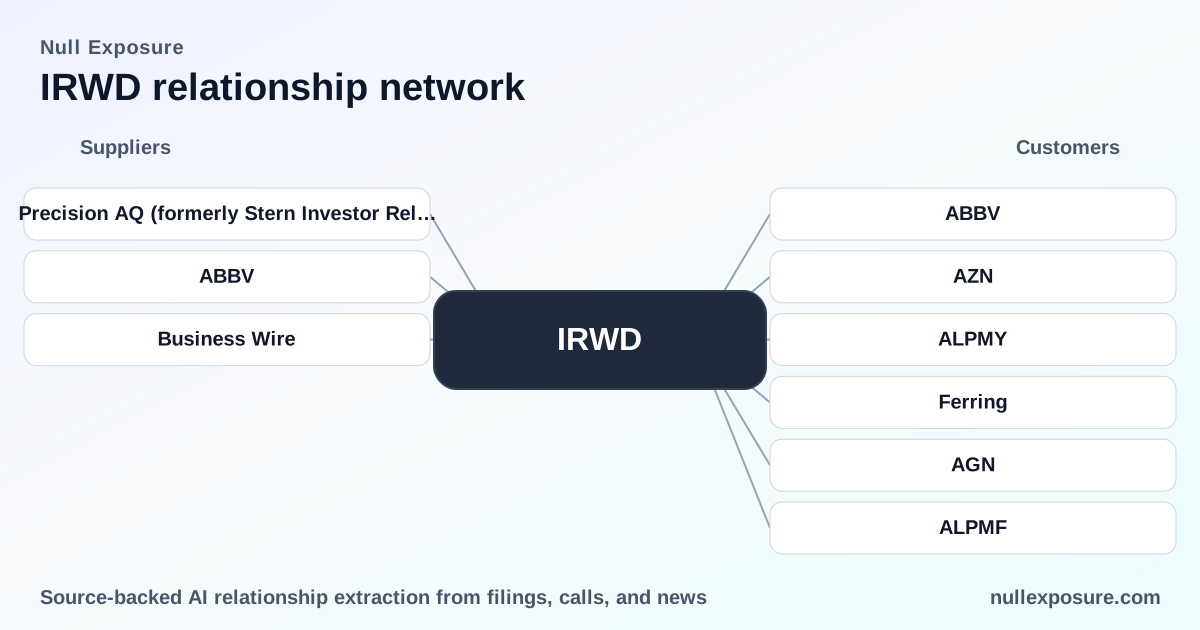
This section lists every partner relationship cited in public reporting and media coverage; each entry is a short, plain-English summary with the referenced source.
-
AbbVie (ABBV / AbbVie Inc.) — U.S. commercialization and expense reimbursement. Ironwood reports that LINZESS U.S. net sales are provided to Ironwood by its U.S. partner, AbbVie, and Ironwood’s U.S. collaborative arrangements revenue includes reimbursement from AbbVie for a portion of Ironwood’s commercial expenses related to LINZESS sales in the U.S. (Ironwood investor press release, FY2025; BizWire coverage, FY2026).
-
AstraZeneca (AZN) — China development and commercialization partner with fixed and contingent payments. Ironwood’s agreements with AstraZeneca cover development and commercialization of LINZESS in China; AstraZeneca committed three non‑contingent payments totaling $35m between 2021–2024 and up to $90m of contingent milestone payments tied to sales targets. (AstraZeneca press release, FY2019; Ironwood investor release and market coverage, FY2025–FY2026).
-
Astellas (ALPMY / ALPMF) — Japan commercialization partner that markets linaclotide as LINZESS. In Japan, Astellas markets linaclotide under the LINZESS brand for adults with IBS‑C or CIC, delivering a regional revenue stream and regulatory coverage for Ironwood in that market. (PR Newswire approval notice, FY2017; Ironwood press statements and biospace coverage, FY2025–FY2026).
-
Allergan plc (AGN) — historical co‑promotion relationship in the U.S. and Mexico. Public filings and FDA-related announcements note that Ironwood and Allergan co‑promoted LINZESS in the United States and Mexico under established marketing arrangements. (PR Newswire FDA approval statement, FY2017).
-
Ferring — license amendment and milestone/royalty economics via VectivBio subsidiary. Ironwood’s VectivBio subsidiary amended a license with Ferring that includes a $12.5m milestone payment and ongoing royalties, reflecting monetization of non-core assets and incremental partner-driven revenue potential. (Sahm Capital reporting on VectivBio and Ferring, FY2026).
Contracts and constraints — company-level signals investors should weigh
The public evidentiary signals highlight several structural characteristics that define Ironwood’s operating profile:
- U.S.-centric revenue base. Company disclosures show the U.S. accounts for roughly 97% of total revenue in recent years, an explicit company-level concentration that increases sensitivity to U.S. reimbursement policy, pricing pressure and channel dynamics.
- Seller role into partner supply chains. Ironwood reports that cost of revenues includes sales of linaclotide API and finished product to partners, generally recognized upon shipment after quality acceptance, indicating Ironwood functions as a supplier into partner distribution networks outside the U.S.
- Partner-dependent cash flow cadence. Payments from partners consist of a mix of non‑contingent payments, milestone receipts, royalties and reimbursements, generating episodic cash inflows tied to contract terms and partner performance.
- Contracting posture: Ironwood’s deals allocate commercialization execution to large pharma partners while it retains reporting and certain expense exposures in the U.S.; this structure reduces fixed overhead but increases counterparty concentration and negotiation leverage risk.
Why these relationships drive the stock — upside and downside mechanics
Ironwood’s valuation reacts to three partner-driven mechanics:
- Revenue persistence through AbbVie’s U.S. program. Because U.S. sales dominate reported revenue, AbbVie’s execution directly influences reported net sales and reimbursable expense flows — the single largest operating lever for near‑term cash generation.
- Cash inflection from partner payments. Up‑front and milestone receipts from AstraZeneca and other partners produce predictable non‑operating cash inflows when triggered; AstraZeneca’s contractual non‑contingent payments are a concrete example of scheduled cash transfers.
- Portfolio risk concentration. LINZESS is the primary commercial asset, so product lifecycle events, regulatory changes, or competitive entrants will have outsized impact on free cash flow and EBITDA.
Investment implications and final takeaways
- Positive: The partner model reduces Ironwood’s direct global commercial expense and secures scheduled partner payments, supporting higher operating margins and episodic cash receipts. The company’s FY2025–FY2026 guidance and collaborative revenue language demonstrate an established partnership cash engine.
- Negative: Extreme U.S. revenue concentration and reliance on a small set of large partners create single‑product and single‑market exposure. Counterparty negotiation, regulatory shifts in U.S. reimbursement, or AbbVie execution issues would materially affect results.
If you want a summarized table of partner exposures and linked source documents for due diligence, NullExposure provides structured signal reports and direct source links at https://nullexposure.com/.
This analysis synthesizes Ironwood’s public press releases and partner press coverage across FY2017–FY2026 to present the operational and contractual facts investors need to assess the company’s partner-dependent cash profile.