Intuitive Surgical (ISRG): Directing Distribution to Control Growth and Services Revenue
Intuitive Surgical operates by selling capital surgical robots (the da Vinci platform and related products) and then monetizing installed bases through recurring procedure-driven revenue (instruments, accessories, service, and training). The company supplements outright sales with usage-based and lease arrangements, and it sells through a mix of direct sales, joint ventures, and distributors by geography. Recent moves shifting distribution in parts of Europe toward direct operations are therefore material to revenue mix, margin profile, and customer concentration.
For a concise vendor-risk and customer-relationship analysis on Intuitive, visit https://nullexposure.com/.
What Intuitive’s deal activity signals about the commercial playbook
Intuitive’s core economics rest on installed-base scale: selling systems creates a long tail of high-margin consumables and services sold per procedure. The March 2026 press reporting shows management is actively consolidating distribution in select European markets by acquiring distributor operations, converting third-party reseller channels into direct sales and service footprints. That transition increases control over pricing, training, and service economics while concentrating operating responsibility and capital deployment in-market.
This is consistent with the company’s stated contracting posture: Intuitive offers usage-based operating leases for customers with committed da Vinci programs, which accelerates recurring revenue if procedure volume is maintained but also increases credit and revenue-recognition exposure when mix shifts away from fixed payments. Company filings covering FY2023–FY2025 show domestic sales contribute roughly two-thirds of revenue while international markets account for the remainder, so regional adjustments to distribution are balance-sheet significant.
Key operating-model implications:
- Higher direct control over European sales and service should lift take-rate on consumables and training but requires additional local sales infrastructure and working capital.
- Usage-based contracts align Intuitive’s incentives with procedure volume and hospital utilization, increasing revenue sensitivity to procedure trends.
- The company still relies on distributors and joint ventures in many markets (notably China and some EMEA pockets), so channel consolidation is selective rather than global overnight.
Customer relationships disclosed in FY2026 press — who was involved and why it matters
-
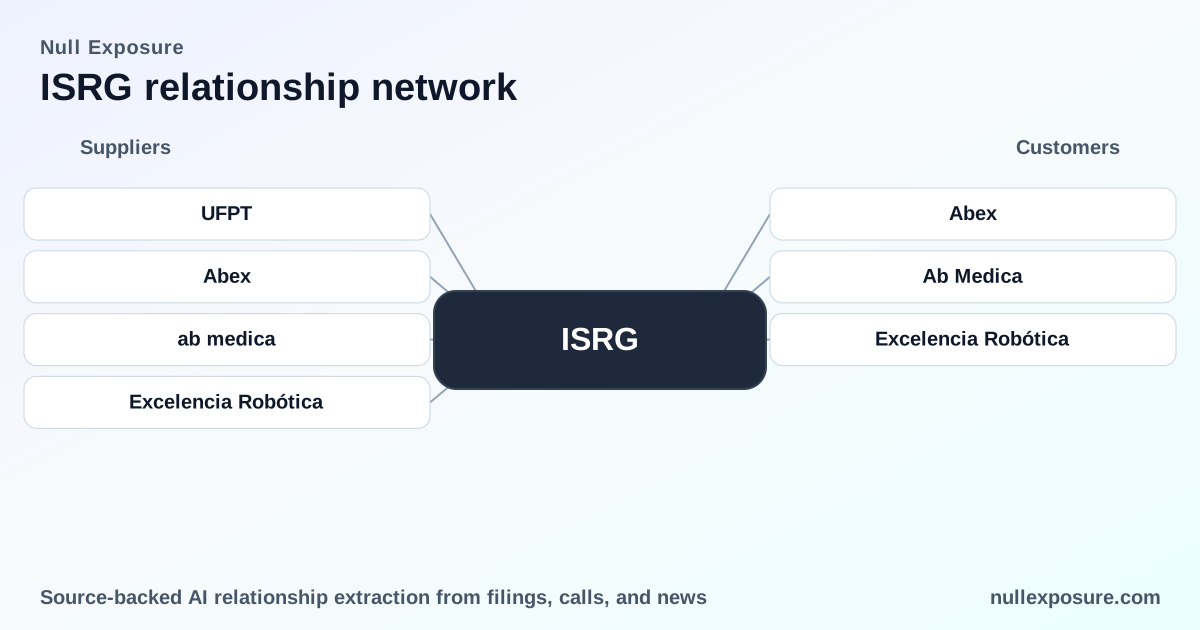
Abex — Intuitive acquired distribution operations run under the Abex name as part of a package of local distributors enabling direct operations in Italy, Spain, and Portugal. This eliminates a local reseller layer and brings Abex’s customer contracts and service responsibilities in-house. Source: MassDevice, March 10, 2026; Intellectia.ai, March 10, 2026.
-
Ab Medica — Intuitive completed an acquisition of the distribution business operated by Ab Medica, moving those Italy-based sales and service relationships onto Intuitive’s direct go-to-market model to improve competitive positioning in Europe. Source: MassDevice, March 10, 2026; Intellectia.ai, March 10, 2026.
-
Excelencia Robótica — The distribution operations run by Excelencia Robótica were included in the same acquisition package, enabling Intuitive to convert distributor-run accounts in Spain and Portugal into direct customer relationships and centralized service delivery. Source: MassDevice, March 10, 2026; Intellectia.ai, March 10, 2026.
Each of these entries is reported in FY2026 coverage and reflects the same strategic transaction: acquisition of distributor businesses to enable direct operations across targeted Southern European markets.
Operational constraints that shape investor risk and upside
Company-level signals in filings and public commentary outline the structural constraints shaping Intuitive’s customer economics:
-
Contracting posture — usage-based exposure. Filings state Intuitive offers usage-based operating leases that bill as procedures occur, increasing exposure to procedure volume variability and credit risk while aligning revenue with hospital utilization. This is a structural driver of recurring revenue growth but also a lever of earnings volatility.
-
Counterparty mix includes government accounts. The company retains government customers in certain geographies and uses distributors selectively for these segments, introducing procurement and payment timing dynamics that differ from private hospital customers.
-
Geographic footprint is diversified but U.S.-heavy. Domestic revenue accounted for roughly 68% of total revenue in 2025, with OUS markets representing the rest; Intuitive operates direct sales in many developed markets and uses distributors or joint ventures elsewhere (notably China).
-
Channel mix: distributors plus direct sellers. The firm operates a hybrid model—direct sales in major markets and distributor relationships in other regions. The recent European conversions reduce distributor exposure in specific countries but do not eliminate the distributor model companywide.
-
Services central to growth. Management positions systems, learning, and services as core offerings; service and per-procedure sales are critical to margin expansion once systems are installed.
These constraints indicate a commercially mature, capital-intensive business where economic upside depends on expanding installed base utilization and converting reseller relationships into direct, higher-margin channels.
Investment implications — what investors should watch next
-
Revenue mix and margin trajectory. Expect near-term costs from integration of European distributor operations offset by medium-term improvement in consumable take-rates and services margin as Intuitive internalizes sales and service delivery.
-
Procedure volumes and utilization. Because usage-based leases translate procedures into immediate revenue, procedure trends (elective surgery volumes, reimbursement environment) will be leading indicators for revenue momentum.
-
Credit and working-capital exposure. Expanding usage-based and lease arrangements raises receivables/credit risk; investors should track aging and allowance metrics in quarterly filings.
-
Geographic execution risk. The company’s performance will improve where Intuitive can replicate high-penetration models (U.S., parts of Europe), but converting distributor relationships requires local talent, spare-parts logistics, and regulatory alignment.
-
Competitive and regulatory pressure. Direct control over distribution improves defensibility, but it also concentrates operational risk and makes Intuitive the visible front-line counterparty for hospitals and health systems.
For a structured risk and vendor-relationship brief on Intuitive and similar health-technology firms, see https://nullexposure.com/.
Bottom line
Intuitive’s FY2026 moves to acquire distributor operations in Italy, Spain, and Portugal are a deliberate push to capture more of the procedure-linked revenue pool and to increase control over training and service delivery in EMEA. That shift should lift long-term take-rates and margin on consumables and services, but it increases short-term integration costs and usage-based credit exposure. Investors should monitor procedure volumes, the evolution of receivables, and quarterly disclosures on channel mix and geographic revenue to gauge payoff timing.