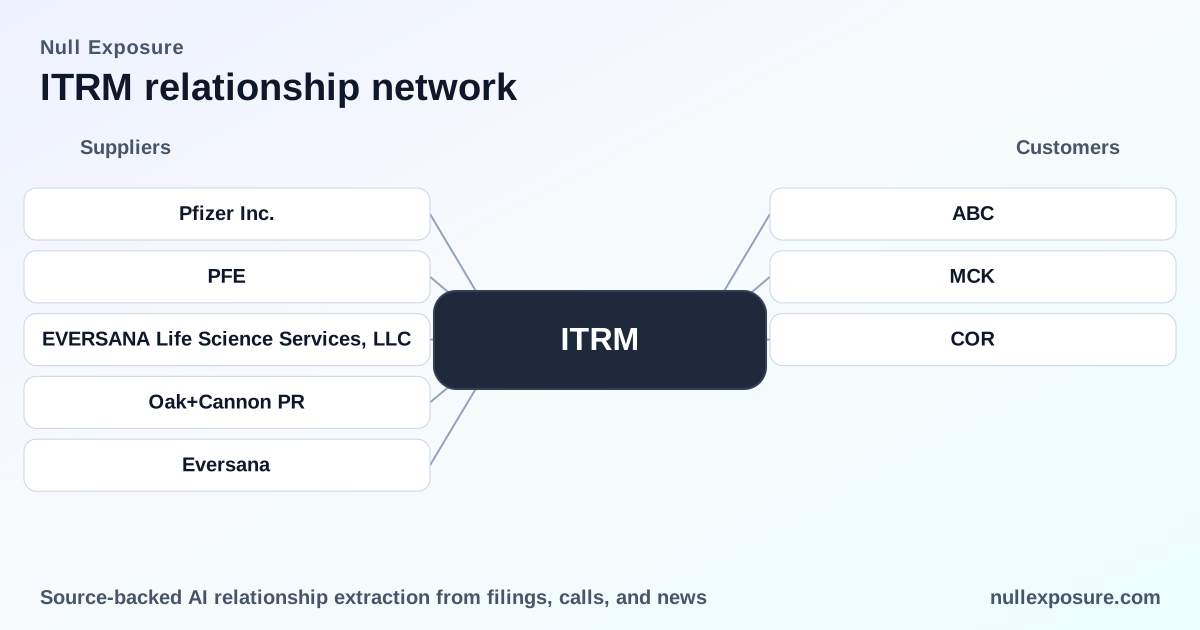
Iterum Therapeutics (ITRM) — distribution relationships that define commercialization optionality
Iterum Therapeutics operates as a clinical-stage pharmaceutical company that commercializes a single, specialty anti-infective product (ORLYNVAH/ORLYNDA). The company’s monetization is straightforward: sell product through large pharmaceutical distributors and physician procurement channels while retaining the option to build a direct U.S. salesforce or partner for commercialization; revenue will scale with product uptake through those channels. For investors, the balance between third-party distributor reach and Iterum’s limited internal commercial footprint is the defining value driver and near-term execution risk. Learn more at https://nullexposure.com/.
Why distribution partners matter more than ever
Iterum’s immediate revenue path runs through pharmaceutical wholesalers and distributor stocking decisions. Large wholesalers provide national reach into hospitals and physician offices, compressing the time and capital required to make ORLYNVAH available to prescribers. That distribution leverage is a strength — it reduces capital intensity and accelerates access — but it also concentrates commercial dependency on a handful of channel partners.
Company disclosures explicitly preserve two commercialization routes: partner with a distributor or build a targeted U.S. commercial force if capital permits. In short, Iterum’s contracting posture is hybrid: the company retains the strategic option to outsource distribution while retaining the capability to internalize sales. This results in clear business-model characteristics:
- Contracting posture: Flexible — explicit option to commercialize via partners or direct sales, which preserves strategic optionality but requires capital to exercise the direct channel.
- Concentration: Distribution reliant — a small number of large wholesalers control access to the majority of physician procurement channels, creating concentration risk if stocking or terms change.
- Criticality: High for go-to-market — distributor stocking decisions are critical to near-term revenue ramp and physician access.
- Maturity: Early commercialization — statements and recent shipments indicate product rollout is in initial stages, so execution and supply chain alignment determine whether early traction converts to sustainable revenues.
The company’s own filings state the U.S. commercialization option and the single business focus on development and commercialization of treatments for drug-resistant infections, which frames management priorities and capital allocation going forward.
Relationship roster: who’s stocking ORLYNVAH and what it implies
McKesson (MCK) — shipment confirmed in Q3 2025 commentary
Iterum told investors that it has already shipped ORLYNVAH to McKesson as part of initial distribution moves, signaling that one of the largest U.S. wholesalers is in the supply chain for early commercial availability. According to the Q3 2025 earnings call transcript published on InsiderMonkey (reported March 10, 2026), “At this time, we have already shipped Orlynda to McKesson…” This confirms operational readiness to supply a major channel.
MCK (inferred symbol) — mirrored note on the same shipment
The dataset also records a parallel mention tied to the ticker MCK with the same earnings call evidence that Iterum’s product has reached McKesson, reinforcing the significance of that distributor as a first-line commercial partner. The InsiderMonkey earnings transcript (Q3 2025 / reported March 10, 2026) repeats the shipment disclosure, underlining distribution activation through MCK.
AmerisourceBergen (ABC) — imminent stocking announced in the same call
Iterum communicated that shipments to AmerisourceBergen are imminent following the McKesson shipment, indicating sequential onboarding of the top-tier distributors that collectively serve the majority of U.S. physician procurement flows. The company said during its Q3 2025 earnings call transcript (InsiderMonkey, March 10, 2026) that “we will be shipping Orlynda to AmerisourceBergen shortly,” which points to deliberate distributor roll-out planning.
McKesson (duplicate entry) — same excerpt, same implication
A duplicate record also references McKesson with identical language from the Q3 2025 earnings call transcript. This duplication in reporting reaffirms the operational milestone: Iterum has moved product into a major distribution node, validating logistics and initial commercial execution (InsiderMonkey, March 10, 2026).
Cencora (COR) — added distributor to broaden physician procurement channels
Iterum’s business update notes that ORLYNVAH is now stocked at additional distributors such as Cencora, expanding procurement options for physicians and enhancing market availability beyond the initial wholesalers. The Intellectia.ai business update (FY2026, reported March 10, 2026) states, “ORLYNVAH™ is now stocked at additional distributors like Cencora, allowing physicians to procure the product through various channels,” which suggests a multi-wholesaler strategy to reduce single-channel bottlenecks.
What these relationships mean for investors
The pattern is clear: Iterum is targeting national wholesalers first to deliver scale efficiently. McKesson, AmerisourceBergen, and Cencora together provide breadth of access across the U.S. healthcare system, which materially lowers time-to-prescription compared with building a full direct sales force from day one. That distribution strategy is capital-efficient and appropriate given Iterum’s current stage.
At the same time, dependence on a small set of wholesalers introduces commercial concentration risk. If any of these partners delays stocking, changes purchasing terms, or faces supply constraints, Iterum’s revenue ramp could shift materially. The company’s public language makes this trade-off explicit: it retains the option to build a targeted sales force in the U.S. if capital is available — a contingency plan that transfers execution risk from partners back to Iterum but requires funding.
Investment implications and near-term read-throughs
- Near-term upside: Faster product availability and higher adoption rates are likely if the major wholesalers maintain stocking and reimbursement flows; initial shipments to McKesson and imminent AmerisourceBergen shipments support early market access.
- Execution risk: Distribution concentration and early-stage commercialization elevate the importance of operational discipline and capital access; failure to secure favorable wholesaler terms or physician reimbursement could slow revenue growth.
- Capital sensitivity: Management’s stated option to build a direct U.S. sales force is conditional on capital — a shift to internalization would increase fixed costs and require scale to justify the investment.
- Monitorables for the next 12 months: order cadence and replenishments from McKesson, AmerisourceBergen, and Cencora; physician uptake signals; and any financing moves that indicate intent to internalize commercialization.
If you want a concise, investor-ready snapshot of Iterum’s customer posture and distribution dependencies, visit https://nullexposure.com/ for further analysis and tracking.