INVO Fertility (IVF): Customer relationships driving a clinic-and-device roll‑up
INVO Fertility monetizes through a dual model: it manufactures and sells the INVOcell device to third‑party clinics and operates company‑owned fertility clinics where patient services generate recurring clinical revenue. Revenue drivers are hardware sales (INVOcell) plus clinic services and acquisitions that scale patient volume and payer access. For investors evaluating customer relationships, the strategic signal is clear — INVO combines device distribution with an expanding clinic network to convert product placement into service revenue and insurer/payer connectivity. Learn more about relationship intelligence at https://nullexposure.com/.
How INVO’s operating posture structures customer exposure
INVO operates as a US‑centric, vertically blended fertility operator. Geography is concentrated in the United States; the company reports no sales or operations outside the U.S. for the year ending December 31, 2024, and active marketing for INVOcell has been focused domestically. That domestic posture simplifies compliance but concentrates regulatory and reimbursement risk within the U.S. healthcare system.
Contracting posture is mixed: INVO sells INVOcell directly to third‑party clinics while also acquiring and operating clinics that consume those products. Distribution arrangements exist historically (for example, a Distribution Agreement with IDS Medical Systems dated November 23, 2020), signaling willingness to partner with regional distributors when advantageous. Revenue concentration is low at the customer level — no single customer represented 10% or more of consolidated revenue in 2023 or 2024 — but company‑level financials remain fragile (negative EBITDA and extreme EPS drawdown), which makes growth execution critical.
Segment-wise, INVO reports distinct operating segments: INVOcell (manufacture and hardware sales) and Clinic Services (own‑operated fertility clinics such as WFI and the Atlanta Clinic). This bifurcated model creates both cross‑sell opportunities and integration risk: clinics can drive recurring services revenue, while device sales create a channel to third‑party clinics.
What investors should watch: concentration, criticality, and maturity
- Concentration: Customer revenue is diffuse; no single customer is material by the 10% threshold, which reduces counterparty risk but increases dependence on scaling many smaller clinic relationships.
- Criticality: For third‑party clinics, INVOcell is an elective device rather than a life‑critical intervention, limiting pricing power; however, for INVO the device is central to product strategy and brand adoption.
- Maturity: The business combines a nascent clinic roll‑up (early stage, M&A‑driven growth) with a manufactured medical device product that requires adoption cycles and clinic education. Financial metrics show operating losses and small market capitalization, so execution on clinic integrations and payor relationships determines near‑term survival and valuation upside.
Reported relationships and source evidence
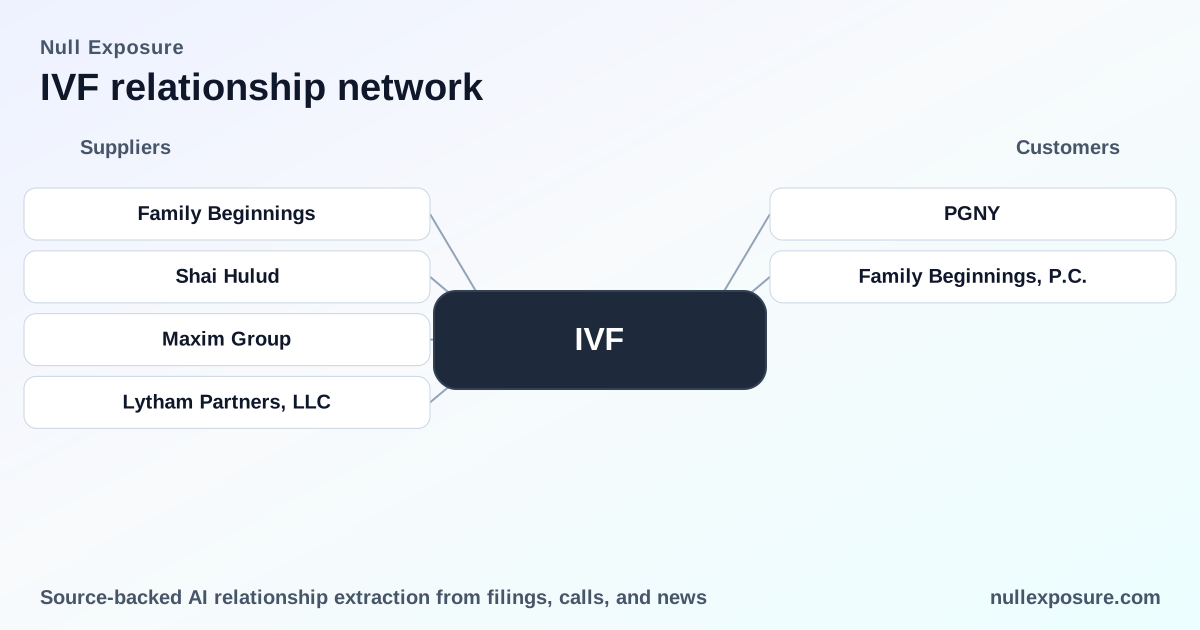
Family Beginnings, P.C. — acquisition target and clinic operator
INVO executed an agreement to acquire Family Beginnings, a full‑service fertility clinic that offers IVF, intravaginal culture (an early adopter of INVOcell), IUI, fertility preservation, and diagnostic services. Coverage notes the clinic’s clinical and embryology capabilities and positions the acquisition to bolster INVO’s clinic footprint. Sources: Manila Times press release (Dec 17, 2025) and GlobeNewswire/Bitget coverage (Feb–May 2026) reporting the acquisition and service profile.
The acquisition closed in early 2026 and the purchase adds roughly $1.2 million in trailing‑12‑month revenue and approximately $0.2 million in net income, improving INVO’s clinic revenue base. Source: Meyka blog reporting premarket activity (Jan 21, 2026) and GlobeNewswire announcement (Feb 2026).
Progyny / PGNY — payer network relationship for Wisconsin Fertility Institute
INVO’s Wisconsin Fertility Institute (WFI) joined the Progyny network, aligning one of INVO’s company‑operated clinics with a national fertility benefits manager. This is a strategic distribution and referral outcome that increases patient access through employer‑sponsored benefits and could materially affect utilization at WFI. Sources: GlobeNewswire press release (April 14, 2025) and multiple news outlets reporting the network addition (The Globe and Mail, Bitget, March 2026).
Progyny/PGNY coverage appears across company press releases and market wire reports, confirming that WFI’s inclusion in Progyny is an active operational change, not merely exploratory discussion. Source: The Globe and Mail press release coverage (March 2026) and Bitget (March 2026).
Relationship map: implications for revenue and risk
- Clinic acquisitions (Family Beginnings) accelerate revenue recognition from services and provide immediate local patient volume; however, acquisition economics must be accretive to offset corporate overhead and negative operating margins. The publicly reported small revenue addition from Family Beginnings is helpful but not transformational on its own.
- Payor connectivity (Progyny) materially increases patient funnel quality for the Wisconsin clinic and demonstrates INVO’s ability to win network access, a prerequisite for scaling clinic revenue through employer‑sponsored programs. Network access reduces patient acquisition cost and increases utilization, a direct lever on clinic profitability.
Constraints that shape partner strategy
The company constraints reported in filings and disclosures provide operational guardrails:
- United States only (geography): INVO’s commercial and clinic strategy is U.S.‑centric, limiting foreign revenue upside but reducing multi‑jurisdiction regulatory complexity.
- No material single customer (materiality): Diffuse customer base reduces counterparty concentration risk.
- Dual role as seller and manufacturer: INVO both manufactures the INVOcell and sells it to clinics and engages in distribution agreements; this generates multiple margin pools but also potential channel conflict with third‑party clinics.
- Service and manufacturing segments: The company’s reported segments reflect a combined device manufacturing business and clinic services operation, which requires both medical‑device manufacturing discipline and healthcare services execution.
Investment takeaways and operational priorities
- Key positive: Clinic acquisitions plus payor network wins (e.g., Progyny) create a visible path to scale clinic service revenue and improve device adoption through owned channels.
- Key risk: Financials show negative EBITDA and volatile EPS; small absolute revenue base means execution on integration and payer contracting is decisive. If INVO converts network access into sustained volume and controls acquisition economics, upside exists; failure to integrate will pressure liquidity and valuation.
- Operational priority: Standardize clinic workflows to maximize INVOcell adoption, and prioritize payor relationships that drive predictable utilization.
For investors and operators who need ongoing relationship monitoring and competitive context, visit https://nullexposure.com/ for curated coverage and signals on clinic roll‑ups and payor network activity.
Bold, actionable intelligence on customer relationships is the lever that separates strategic investors from passive observers — INVO’s current mix of device sales and clinic acquisitions makes those relationships the primary determinant of near‑term valuation.