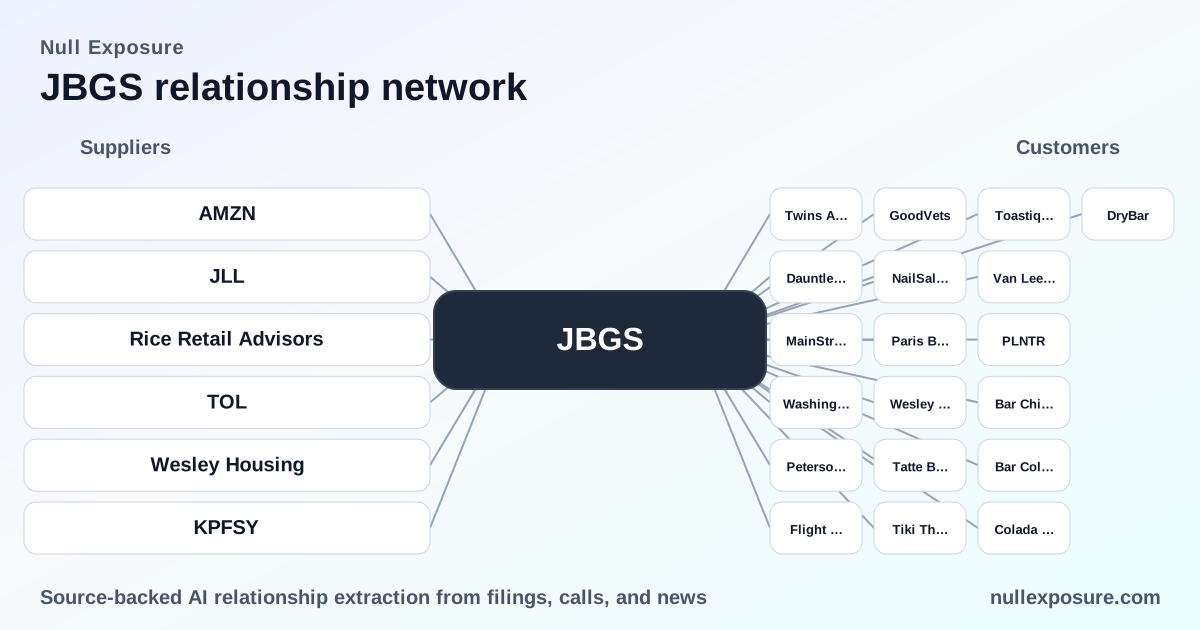
JBG SMITH Properties: customer relationships that drive cash flow and local placemaking
Thesis — JBG SMITH (NYSE: JBGS) operates a concentrated, mixed‑use real estate platform in and around Washington, D.C., monetizing through long‑term lease income from residential, office and retail tenants, development and disposition gains, and a fee‑based third‑party services business that manages assets and retail leasing. The company’s income mix is anchored by multi‑year leases and a localized retail ecosystem in National Landing, supported by recurring property management and asset‑management fees. For investors seeking exposure to urban redevelopment and steady rent rolls, JBGS couples predictable leasing economics with active development and third‑party service revenue. (For a data-driven view of tenant concentration and transaction history, visit https://nullexposure.com/.)
What the relationship data reveal about JBGS’s operating model
JBGS runs a vertically integrated, regionally concentrated business. The evidence compels four operating characteristics:
- Contracting posture — long-term leases dominate. The company reports that property rental revenue is recognized on a straight‑line basis over the non‑cancelable lease term and the portfolio’s weighted average remaining lease term is 5.8 years, signaling a multi‑year income stream rather than a short‑cycle retail roll.
- Concentration — geographic and counterparty concentration are material. Properties are concentrated “in and around Washington, D.C.” with roughly 75% of holdings in National Landing; separately, leases with the U.S. federal government represent ~11.9% of total revenue, a material customer concentration to monitor.
- Criticality and role diversity — owner, manager and seller. JBGS functions as landlord and service provider — it manages Amazon’s National Landing HQ and earns third‑party management fees — and also executes dispositions (property sales) and development financing via investment pools.
- Maturity — active, fee‑driven services alongside core rental income. Third‑party real estate services remain an active revenue line (reported third‑party services revenue quantified in company reporting), showing a mature services capability that supplements leasing cash flows.
These are company‑level signals drawn from public filings and disclosures; they frame the risk/reward tradeoffs investors should evaluate: strong lease duration and a deep tenant roster in a single, high‑growth submarket paired with material counterparty concentration and localized market risk. If you want to track tenant and transaction dynamics for JBGS in one place, see https://nullexposure.com/.
Retail tenants and neighborhood activation: a roll call of relationships
Below is a relationship‑by‑relationship summary drawn from recent reporting. Each line captures the customer role and the public citation.
- Twins Ace Hardware (FY2025): Twins Ace leased the entire 8,116‑square‑foot ground‑floor retail space at The Zoe, JBG SMITH’s 420‑unit residential tower in National Landing, reflecting large single‑tenant retail commitments at street level (CityBiz, March 2026 — https://www.citybiz.co/article/702216/jbg-smith-welcomes-twins-ace-hardware-at-the-zoe-in-national-landing/).
- Dauntless Capital Partners, LLC (FY2025): Dauntless Capital Partners acquired 2100 Crystal Drive — a development parcel — from JBG SMITH for $8 million, demonstrating JBGS’s active disposition of development sites to third‑party capital (MarketScreener, Jan 2026 — https://www.marketscreener.com/news/jbg-smith-properties-keeps-quarterly-dividend-at-0-175-a-share-payable-jan-13-2026-to-holders-o-ce7d50ded189f127).
- MainStreet Bank (FY2025): MainStreet Bank was admitted in the final closing of JBGS’s Impact Pool, indicating participation by institutional lenders and banks in JBGS’s structured investment vehicles (REIT.com / NAREIT blog, 2026 — https://www.reit.com/news/blog/nareit-developments/jbg-smith-announces-1145-million-private-sector-investor-commitments).
- Washington Housing Conservancy (FY2025): The Impact Pool provided a $6.7 million subordinate loan to Washington Housing Conservancy for the purchase of Crystal House, showing JBGS’s use of third‑party capital to support affordable‑housing transactions in its submarket (REIT.com / NAREIT blog, 2026 — https://www.reit.com/news/blog/nareit-developments/jbg-smith-announces-1145-million-private-sector-investor-commitments).
- Peterson Companies (FY2025): In a sale transaction, JLL represented the seller (JBG SMITH) and Peterson Companies acquired the asset, illustrating JBGS’s active asset rotations in suburban/urban neighborhoods (YieldPro, Feb 2025 — https://yieldpro.com/2025/02/8001-woodmont/).
- Paris Baguette (FY2026): Paris Baguette leased 3,384 square feet of ground‑floor retail at Valen, JBGS’s 355‑unit tower in National Landing, reinforcing the tenant mix strategy of food and daily‑needs retail at multifamily podiums (CityBiz, March 2026 — https://www.citybiz.co/article/804016/jbg-smith-welcomes-paris-baguette-to-national-landing/).
- Flight Wine Shop (FY2026): Listed among retailers at JBGS’s National Landing multifamily properties, Flight Wine Shop contributes to the curated neighborhood retail mix that supports resident amenities (CityBiz, March 2026 — https://www.citybiz.co/article/804016/jbg-smith-welcomes-paris-baguette-to-national-landing/).
- GoodVets (FY2026): GoodVets appears in the retailer roster at National Landing multifamily properties, indicating a veterinary/medical retail presence serving residents (CityBiz, March 2026 — https://www.citybiz.co/article/804016/jbg-smith-welcomes-paris-baguette-to-national-landing/).
- NailSaloon (FY2026): NailSaloon is included among new retail operators at JBGS’s multifamily properties in National Landing, adding service‑oriented retail to the tenant mix (CityBiz, March 2026 — https://www.citybiz.co/article/804016/jbg-smith-welcomes-paris-baguette-to-national-landing/).
- Tatte Bakery (FY2026): Tatte Bakery is listed as a retailer at National Landing multifamily properties, an indicator of lifestyle and F&B brand attraction to JBGS’s retail podiums (CityBiz, March 2026 — https://www.citybiz.co/article/804016/jbg-smith-welcomes-paris-baguette-to-national-landing/).
- Tiki Thai (FY2026): Tiki Thai is part of the tenant roster at National Landing, supporting diverse dining options for residents and office workers (CityBiz, March 2026 — https://www.citybiz.co/article/804016/jbg-smith-welcomes-paris-baguette-to-national-landing/).
- Toastique (FY2026): Toastique appears in the curated retail mix at National Landing properties, reinforcing daily‑need and quick‑service food options (CityBiz, March 2026 — https://www.citybiz.co/article/804016/jbg-smith-welcomes-paris-baguette-to-national-landing/).
- Twins Ace Hardware (FY2026): Twins Ace is also cited in the 2026 retail roster for National Landing, reflecting both standalone leases and inclusion in the broader retail ecosystem (CityBiz, March 2026 — https://www.citybiz.co/article/804016/jbg-smith-welcomes-paris-baguette-to-national-landing/).
- Van Leeuwen (FY2026): Van Leeuwen is listed among National Landing retailers, signaling national food brands anchoring neighborhood retail (CityBiz, March 2026 — https://www.citybiz.co/article/804016/jbg-smith-welcomes-paris-baguette-to-national-landing/).
- PLNTR (FY2026): PLNTR is named as part of the retail mix at JBGS’s National Landing multifamily sites, indicating specialty retail and services (CityBiz, March 2026 — https://www.citybiz.co/article/804016/jbg-smith-welcomes-paris-baguette-to-national-landing/).
- Bar Chinois (FY2026): Bar Chinois is included among restaurants at JBGS properties in National Landing, contributing higher‑end dining services to the local market (CityBiz, March 2026 — https://www.citybiz.co/article/804016/jbg-smith-welcomes-paris-baguette-to-national-landing/).
- Bar Colline (FY2026): Bar Colline is listed in the tenant lineup for National Landing properties, expanding dining diversity (CityBiz, March 2026 — https://www.citybiz.co/article/804016/jbg-smith-welcomes-paris-baguette-to-national-landing/).
- Colada Shop (FY2026): Colada Shop is among the food and beverage tenants at JBGS’s National Landing multifamily developments, supporting neighborhood activation (CityBiz, March 2026 — https://www.citybiz.co/article/804016/jbg-smith-welcomes-paris-baguette-to-national-landing/).
- DryBar (FY2026): DryBar is present in the retail mix at National Landing, representing personal‑care services for residents (CityBiz, March 2026 — https://www.citybiz.co/article/804016/jbg-smith-welcomes-paris-baguette-to-national-landing/).
Community partnerships and affordable housing activity
- Wesley Housing (FY2025): JBGS selected Wesley Housing as its affordable housing partner for Potomac Yard redevelopment and donated land for an 88‑unit affordable project, demonstrating JBGS’s role in public‑sector and community partnerships that support entitlement and placemaking objectives (ALXNow, Sept 2025 — https://www.alxnow.com/2025/09/24/developer-donates-potomac-yard-land-for-88-unit-affordable-housing-project/).
Investment implications — where returns and risks concentrate
- Upside drivers: long lease durations, local retail density that supports multifamily NOI, development pipeline and recurring third‑party management fees.
- Principal risks: geographic concentration in National Landing and the D.C. metro (about 75% of holdings), material federal government exposure (~11.9% of revenue), and retail performance sensitivity to local demand.
- Operational nuance: JBGS is not only a landlord but also a service provider and seller of development parcels; investors should treat the company as a hybrid operator with both stable rental cash flows and event‑driven development/disposition economics.
Conclusion — JBGS’s customer relationships paint a coherent operating picture: a landlord of long‑dated leases in a single high‑growth submarket, supported by a dense retail ecosystem and an active services business that monetizes leasing and management expertise. For investors focused on tenant composition and transaction flows around National Landing, the company’s disclosures and the reporting above are essential inputs. For ongoing monitoring and a unified view of these relationships, visit https://nullexposure.com/.