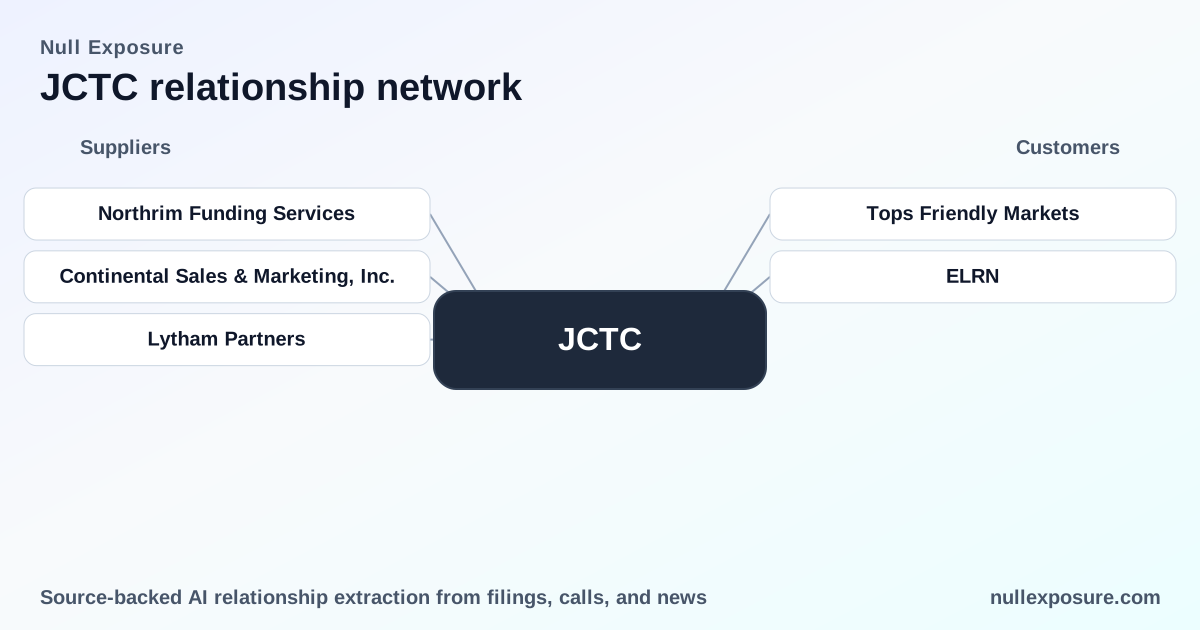
Jewett-Cameron Trading Company Ltd. (JCTC): customer map and investor implications
Jewett-Cameron manufactures and distributes specialty metal and wood products and monetizes through direct sales to home centers, eCommerce platforms, other retailers, and direct-to-consumer channels. Revenue is recognized at shipment, and the business depends on a concentrated set of large retail customers and in-store merchandising programs that drive visibility for branded products like MyEcoWorld® pet waste bags. For investors, the narrative is simple: modest scale with meaningful retail placements so long as a handful of customers sustain ordering patterns and in-store merchandising agreements. Learn more about how we surface customer insights at the NullExposure homepage: https://nullexposure.com/.
How the customer model actually works and what that means for cash flow
Jewett-Cameron sells finished fencing, specialty metal goods and wood products into three commercial funnels: national home-improvement chains (in-store displays), regional grocery/retail rollouts, and wholesale distribution for industrial customers. The company recognizes revenue on shipment (spot sales posture) and reports a high customer concentration: its top ten customers accounted for 97% of sales in FY2025, with a single largest customer responsible for 39% of revenue. Fiscal year figures show $42.17 million in trailing revenue, a negative EBITDA of $6.7 million and a negative net margin of -19.2%, underscoring sensitivity to demand swings from major accounts.
Key operating-model signals:
- Contracting posture: primarily spot (sales at shipment). Revenue recognition language in filings confirms title-transfer timing for recognition.
- Customer mix: institutional retailers plus individual consumers. Primary counterparties include home centers, eCommerce providers, other retailers and direct consumers.
- Geography: concentrated in North America. The business conducts most activity in the United States; top customers are North American.
- Concentration and criticality: extremely high. Top-ten customer concentration and a single customer at 39% make customer retention a critical financial lever.
- Relationship maturity: mixed. The company reports both active sales and specific lower-maturity signals (consignment transitions and winding-down notices).
- Core focus: fencing and related product categories. Management identifies fencing as the primary resource allocation area.
- Scale of counterparties: spend band signals show top customers in the $10m–$100m range relative to company sales.
Customer-by-customer coverage (what the filings and press say)
Below are every customer relationship cited in the collected results, with plain-English summaries and source references.
Lowe’s
Jewett-Cameron has in-store merchandising installed at Lowe’s locations, which increases product visibility for professionals and do‑it‑yourself consumers through branded displayers. This placement is referenced in the company’s FY2025 Q3 operational release. (GlobeNewswire, July 14, 2025).
The Home Depot
The company reports over 422 displayers installed across The Home Depot and Lowe’s stores, indicating a co‑retail merchandising program that places product front-and-center in major home-improvement chains. (GlobeNewswire, July 14, 2025).
Tops Friendly Markets
Jewett-Cameron expanded MyEcoWorld® Pet Waste Bags into 59 Tops Friendly Markets across the Northeastern U.S., reflecting a targeted regional grocery rollout for a consumer-packaged product line in FY2025. This initiative was announced via a retail placement notice carried by Yahoo Finance. (Yahoo Finance/press release, late February 2025). Earlier coverage of that rollout was carried into investor pages in FY2024 as well. (Finviz summary referencing GlobeNewswire, FY2024).
Greenwood
Greenwood is identified as the company’s wholesale distributor of specialty wood products focused on the transportation industry; FY2025 commentary notes a 24% sales decline quarter-over-quarter at Greenwood due to a supply issue outside Greenwood’s control. Management also states it is reviewing potential transactions to enhance Greenwood’s value. (GlobeNewswire, July 14, 2025; SahmCapital release summarizing FY2025 results, Dec 2025).
ELRN (inferred relationship mention)
A FY2025 notice summarized by SahmCapital references a potential transaction involving Greenwood and carries an inferred symbol mapping to ELRN in aggregated results; the underlying point to investors is that management is actively exploring strategic options for Greenwood as a distributor business. (SahmCapital coverage of FY2025 results, Dec 2025).
What the relationship map tells you about risk and upside
- Concentration is the single dominant risk. With top ten customers representing 97% of sales and one customer at 39%, any reduction in orders from major retailers or changes in in-store display programs will materially move revenue and margin.
- Revenue is spot-driven and therefore volatile to shipment timing. The company’s revenue recognition at title transfer means quarter-to-quarter results hinge on fulfillment and retailer reorder cadence rather than long-term contracted flows.
- Distribution and merchandising are growth levers but not durable revenue contracts. Placement in Lowe’s and The Home Depot amplifies demand quickly but does not equate to long-term contracted revenues; the firm’s mix includes individual consumers and eCommerce channels, which provide diversification but not scale protection versus large retail buyers.
- Operational fragility in adjunct businesses. Greenwood’s sales decline and the company’s active consideration of transactions show management is willing to reshuffle non-core or under-performing distribution assets—this is a liquidity and strategic-signaling event.
Financial realities that tie back to customers
Jewett-Cameron reported $42.17 million in revenue TTM with a gross profit of $3.31 million and negative EBITDA of $6.72 million for the trailing period; profit margin stands at -19.2% and return on equity is materially negative. These outcomes reinforce that retaining large retail placements and stabilizing wholesale distribution are immediate priorities to restore profitability.
If you evaluate JCTC as a potential investment or counterparty, focus on two metrics: (1) stability of orders from the top one to three customers, and (2) the company’s ability to convert retail placements into repeated purchase velocity rather than one-off merchandising spikes.
For a deeper look at customer-level exposures and to monitor changes in retail placements and vendor agreements, visit our home analysis hub: https://nullexposure.com/.
Bottom line
Jewett-Cameron operates a highly concentrated, spot-sale business model that monetizes through both national retailer merchandising and targeted regional rollouts. Upside comes from converting retail displays into recurring reorder flows; downside is concentrated-customer risk and current negative profitability. Investors should prioritize monitoring order continuity from Lowe’s, The Home Depot and the company’s largest unnamed customer, and track management’s actions on Greenwood and other distribution assets as immediate indicators of strategic traction.