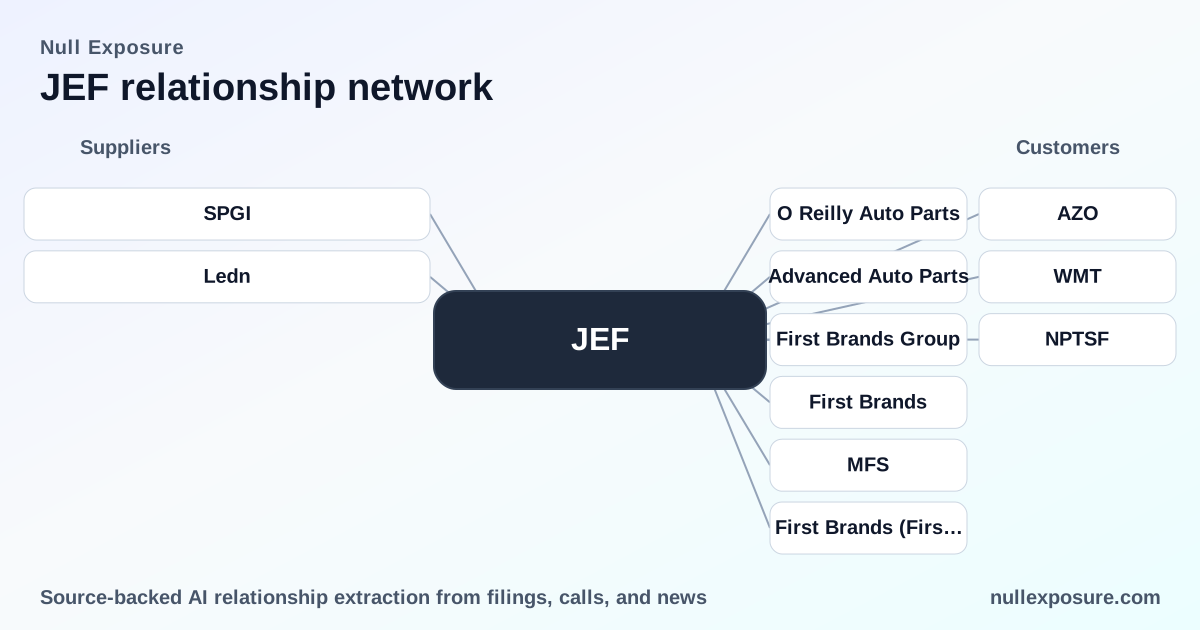
Jefferies (JEF) — Customer Relationships that Drive Capital‑Markets Revenue
Jefferies Financial Group is a global investment bank and asset manager that monetizes through advisory fees, underwriting and syndication commissions, sales‑agency commissions on at‑the‑market (ATM) programs, placement and PIPE fees, and lending/finance arrangements. Its client list—spanning biotech IPOs, energy financings, corporate M&A and structured receivables—feeds recurring commission income and episodic advisory fees that together support a capital‑efficient, fee‑based model. For quick access to the full relationship registry behind this note, visit https://nullexposure.com/.
Reading the roster: what relationships reveal about how Jefferies operates
Jefferies sells a blend of services: underwriting and book‑running, sales agent (ATM/SMAs), placement/PIPES, financial advisory for M&A and restructurings, and financing through Jefferies Funding/Finance affiliates. The evidence in filings and press coverage shows Jefferies is a service provider to a broad set of corporate clients across the Americas, EMEA and APAC; geographic diversification is explicit in reported net revenues, with material revenue contribution outside the U.S. (Asia‑Pacific and Europe noted in FY2025 reporting). Jefferies treats many engagements on an agency basis—netting commissions against revenue—while also originating credit facilities and structured financings through affiliated funding vehicles.
- Operating posture: contractually often an agent or joint bookrunner; fees are transaction‑driven with occasional recurring ATM commissions.
- Concentration and criticality: relationships skew toward mid‑to‑large corporate financings and biotech follow‑ons—highly important episodic mandates rather than recurring subscription revenue.
- Maturity: client list mixes long‑running ATM/sales agreements (multi‑year shelf programs) and one‑off M&A/advisory mandates; Jefferies’ balance sheet exposure is limited relative to fee income but exists through funding affiliates and warehouse financing.
For further context and to track changes in Jefferies’ client engagements, see https://nullexposure.com/.
Relationship ledger — concise, sourced summaries
Below is a compact, itemized record of every customer relationship captured in the provided results; each line is a one‑ to two‑sentence plain‑English summary with source context.
- O Reilly Auto Parts — Receivables from a Point Bonita portfolio included amounts due from O Reilly Auto Parts; servicer First Brands was responsible for remitting payments to the portfolio, per Jefferies’ FY2025 10‑K. (10‑K, FY2025)
- Advanced Auto Parts — Advanced Auto Parts appears among retailers singled out in the Point Bonita receivables disclosure tied to First Brands servicer activity. (10‑K, FY2025)
- AN2 Therapeutics (ANTX) — Jefferies entered an $80 million ATM sales agreement to act as sales agent and earn up to a 3% commission on gross proceeds, per company notices and press coverage in May 2026. (Globe and Mail / company press, May 2026)
- Tilray Brands (TLRY) — Jefferies is one of the managers for Tilray’s ATM program, with Jefferies LLC named alongside TD Securities and Roth Capital as managers. (GlobeNewswire, Apr 2026)
- Galecto (GLTO) — Jefferies served as a joint book‑running manager on Galecto’s $275 million offering, according to market press in March 2026. (RTTNews / QuiverQuant, Mar 2026)
- Bright Minds Biosciences (DRUG) — Jefferies acted as joint book‑running manager for Bright Minds’ $175m offering, per the company’s SEC filings and press release (Jan–Mar 2026). (SEC Form 6‑K / GlobeNewswire, Jan–Mar 2026)
- Zenas BioPharma (ZBIO) — Jefferies is listed as joint book‑running manager for Zenas’ concurrent notes and equity offerings announced in March–May 2026. (GlobeNewswire, Mar–May 2026)
- Apogee Therapeutics (APGE) — Jefferies acted as joint book‑runner on Apogee’s underwritten public offering and its subsequent closings in March–May 2026. (GlobeNewswire / Yahoo Finance, Mar–May 2026)
- SAB Biotherapeutics (SABS) — Jefferies was a joint book‑running manager for SAB‑BIO’s $85m public offering and related closings in March 2026. (GlobeNewswire / TradingView, Mar–May 2026)
- Jefferson Capital (JCAP) — Jefferies served as lead bookrunner on Jefferson Capital’s IPO and secondary offerings in late 2025–early 2026. (Renaissance Capital / GlobeNewswire, FY2025–FY2026)
- Domo (DOMO) — Domo’s board engaged Jefferies as financial advisor for strategic processes, per the company’s 8‑K filing. (8‑K / StockTitan, Mar 2026)
- Genco Shipping (GNK) — Jefferies acted as financial advisor to Genco in a contested proposal process and related board matters in early 2026. (ManilaTimes / CyprusShippingNews, Jan–Mar 2026)
- ADC Therapeutics (ADCT) — Jefferies acted as placement agent for a $60m PIPE for ADC Therapeutics in 2026. (Yahoo Finance / BioSpace, Mar 2026)
- Avalo Therapeutics (AVTX) — Historical underwriting agreement shows Jefferies as an underwriter on Avalo’s public offering. (StockTitan / press filings, 2021; referenced Mar 2026)
- ROC Energy Acquisition (ROC) — Jefferies provided capital markets advice and private placement services to ROC in SPAC and de‑SPAC activity. (PR Newswire / ConnectMoney, FY2023)
- Loar Holdings (LOAR) — Jefferies was an underwriter on Loar’s IPO, per market alert coverage. (MarketBeat, Apr 2024 / cited 2026)
- FTAI Infrastructure (FIP) — Jefferies and Lazard acted as financial advisors to FTAI Infrastructure on the Long Ridge sale to Mara, per May 2026 press. (GlobeNewswire / Mara IR, May 2026)
- Zynerba (ZYNE) — Jefferies previously acted as joint book‑runner on Zynerba’s IPO (historical transaction referenced in press). (GlobeNewswire, 2015; referenced 2026)
- Nektar Therapeutics (NKTR) — Jefferies served as joint bookrunner on multiple Nektar follow‑on offerings in 2026. (Investing.com / PR Newswire, Mar–May 2026)
- FuelCell Energy (FCEL) — Jefferies participated as a sales agent in FuelCell’s amended ATM syndicate that raised capacity to $200m in Dec 2025. (The Globe and Mail / TipRanks, Dec 2025)
- Solv Energy (MWH) — Jefferies served as joint lead book‑runners with J.P. Morgan on Solv Energy’s IPO filings in 2026. (SEC filing / FinancialContent, Mar 2026)
- Bioceres (BIOX) — Jefferies was an underwriter on Bioceres’ IPO, per market coverage. (MarketBeat, 2026)
- Corvus Pharmaceuticals (CRVS) — Jefferies acted as lead bookrunner and later as agent on an expanded $200m ATM program for Corvus in March–May 2026. (TradingView / QuiverQuant, Mar–May 2026)
- Fox Factory (FOXF) — Jefferies was retained as financial advisor to Fox Factory for a board refresh and strategic matters in early 2026. (TheShopMag / SGBOnline, Mar 2026)
- Valneva (VALN) — Jefferies acted as a global coordinator and placement agent on Valneva’s reserved offering; Jefferies GmbH also acted as settlement agent. (GlobeNewswire, Apr 2026)
- Silvaco Group (SVCO) — Silvaco launched a $15m ATM with Jefferies acting as sales agent under a prospectus supplement in March 2026. (StreetInsider / SEC filing, Mar 2026)
- Coca‑Cola Europacific (CCEP) — Jefferies entities executed share repurchases in Dec 2025 as reported by regulatory filings. (ActusNews, Dec 2025)
- Paloma Acquisition (PALOU) — Jefferies acted as sole book‑running manager for Paloma’s $150m IPO in 2026. (SpacInsider / Bitget press coverage, Mar–May 2026)
- Dianthus Therapeutics (DNTH) — Jefferies was a joint book‑running manager on Dianthus’ upsized offering in 2026. (GlobeNewswire / TradingView, Mar–May 2026)
- Calavo Growers (CVGW) — Jefferies served as exclusive financial advisor to Calavo on a sale transaction. (BlueBook / Mar 2026)
- Gyre Therapeutics (GYRE) — Jefferies was lead bookrunner on Gyre’s offering raising proceeds in 2025. (Yahoo Finance, 2025)
- Stem, Inc. (STEM) — Jefferies acted as exclusive financial advisor and placement agent in a refinancing or strategic transaction. (Yahoo Finance, 2025)
- Structure Therapeutics (GPCR) — Jefferies is listed among joint book‑running managers on a proposed $500m offering. (Investing.com, 2025)
- atai Life Sciences (ATAI) — Jefferies acted as lead bookrunner for atai’s offering and related filings in 2025–2026. (InvestingNews / GlobeNewswire, 2025–2026)
- C4 Therapeutics (CCCC) — Jefferies was a bookrunning manager on C4’s $125m offering in 2025. (InvestingNews, 2025)
- Relmada Therapeutics (RLMD) — Jefferies served as placement agent on a $160m PIPE in March 2026. (GlobeNewswire / TradingView, Mar 2026)
- Karyopharm (KPTI) — Jefferies and Piper Sandler acted as placement agents in Karyopharm’s private placement; Jefferies also facilitated ATM sales. (Karyopharm press / Mar 2026)
- Biote (BTMD) — Jefferies served as financial and capital markets advisor to Biote in its Nasdaq listing process. (IPO‑edge / StockTitan, 2021–2022)
- Red Robin (RRGB) — Red Robin retained Jefferies to advise on refinancing long‑term debt under its credit agreement. (Company press release / Mar 2025)
- UL Solutions (ULS) — Jefferies participated as an additional bookrunner on a ULS secondary offering in 2025. (Investing.com, 2025)
- First Brands Group / First Brands — Jefferies disclosed exposure and has been the subject of press scrutiny related to invoice financing and loan placements tied to First Brands in 2025–2026 filings and media coverage. (Jefferies 10‑K / Financial Times / Globe and Mail / Mar 2026)
- Harmonic (HLIT) — Jefferies acted as exclusive financial advisor to Harmonic in a strategic combination with MediaKind. (Company press / Mar 2026)
- Prelude Therapeutics (PRLD) — Prelude filed a prospectus supplement to sell up to $25m of stock through Jefferies as sales agent. (Investing.com / SEC filings, Mar–May 2026)
- Enova International (ENVA) — A Jefferies funding affiliate is named in amendments to NetCredit Receivables note and purchase arrangements, per Enova reporting. (Investing.com / 2026)
- Iovance (IOVA) — Iovance disclosed a $350m ATM through Jefferies as sales agent with up to 3% compensation, per SEC prospectus filings. (SEC filing / Aug 2025)
- Burford Capital (BUR) — Jefferies International is referenced as joint broker and adviser in Burford Capital results and private note placements. (Reuters / Stockopedia / 2026)
- Arteris (AIP) — Arteris filed an S‑3 registering an ATM with Jefferies as sales agent for up to $75m in common stock. (StockTitan / Mar 2026)
- Offerpad Solutions (OPAD) — Offerpad entered an open market sale agreement with Jefferies to sell up to $100m of its Class A common stock, generating sales in 2025. (Globe and Mail / Mar 2026)
- Oncolytics Biotech (ONCY) — Oncolytics launched a $75m ATM with Jefferies as sales agent on April 6, 2026. (TipRanks / Apr 2026)
- ProKidney (PROK) — ProKidney entered an open market sale agreement with Jefferies for up to $200m in Class A ordinary shares in July 2025. (TradingView / Jul 2025)
- CVRx (CVRX) — CVRx initiated an ATM with Jefferies for up to $50m under its shelf registration. (TradingView / Jan 2026)
- Energy Vault (NRGV) — Jefferies acted as sole placement agent and exclusive financial advisor on preferred equity financings for Energy Vault in 2026. (ADVFN / Mar 2026)
- Esperion Therapeutics (ESPR) — Jefferies served as exclusive financial advisor to Esperion in its acquisition of Corstasis (Apr 2026). (GlobeNewswire / Apr 2026)
- Howard Hughes Holdings (HHH) — Jefferies acted as exclusive financial advisor to Howard Hughes on a Vantage acquisition announced in late 2025. (GlobeNewswire / Mar 2026)
- MGM Resorts (MGM) — Jefferies provided advisory services on asset sales (Northfield Park) to private buyers in 2026. (YogoNet / Apr 2026)
- Vinci Partners (VINP) — Jefferies acted as exclusive financial advisor to Vinci on a strategic investment by Ares (2024 disclosure referenced). (PE‑Insights / 2024; cited 2026)
- First Foundation / FFWM — Jefferies served as financial advisor and provided a fairness opinion to First Foundation in a 2025 merger. (ConnectMoney / 2025)
- SelectQuote (SLQT) — Jefferies was exclusive financial advisor to SelectQuote in a $415m credit facility transaction. (NatLawReview press release / 2026)
- Perceptive Capital Solutions (PCSC) — Jefferies acted as lead capital markets advisor and sole bookrunner on the SPAC IPO for Perceptive. (MarketScreener / CityBiz, 2024)
- Numerous biotech and small‑cap issuers (selected examples: CMPS, CTMX, MANE, VRDN, CRBP, IMTX, ACET, ACGLN, GLUE, GLUE, etc.) — Across 2025–2026, Jefferies repeatedly appears as lead or joint book‑runner, placement agent, or sales agent on IPOs, follow‑ons, and PIPE financings; these engagements are documented in press releases and SEC filings cited throughout March–May 2026. (Multiple press filings and SEC notices, Mar–May 2026)
(Record compiled from filings, issuer press releases and market reports cited above; individual source contexts noted inline.)
Key takeaways for investors and operators
- Revenue profile is transaction‑driven and diversified by role: underwriting, agency sales (ATM), placement and advisory fees drive fee income. Evidence: numerous ATM and bookrunner engagements across sectors in 2025–2026.
- Global footprint matters: Jefferies reports material revenue from Americas, EMEA and APAC, supporting cross‑border mandates and syndication capabilities. (FY2025 revenue geography table)
- Risk vector is reputational and funding‑related: loan and receivable exposures (e.g., First Brands / Point Bonita) and forensic media/regulatory attention create episodic downside; these are observed in filings and press coverage in early 2026.
- Business model strength: wide client pipeline across biotech, energy, industrials and SPACs provides steady underwriting and advisory opportunities, while sales‑agent ATM programs supply recurring low‑capital commissions.
If you need a downloadable register of every cited filing and press release used to assemble this ledger, request the source package at https://nullexposure.com/.
Note: summaries above are drawn directly from the cited SEC filings and contemporaneous press releases and market reports covering the FY2025–FY2026 period.