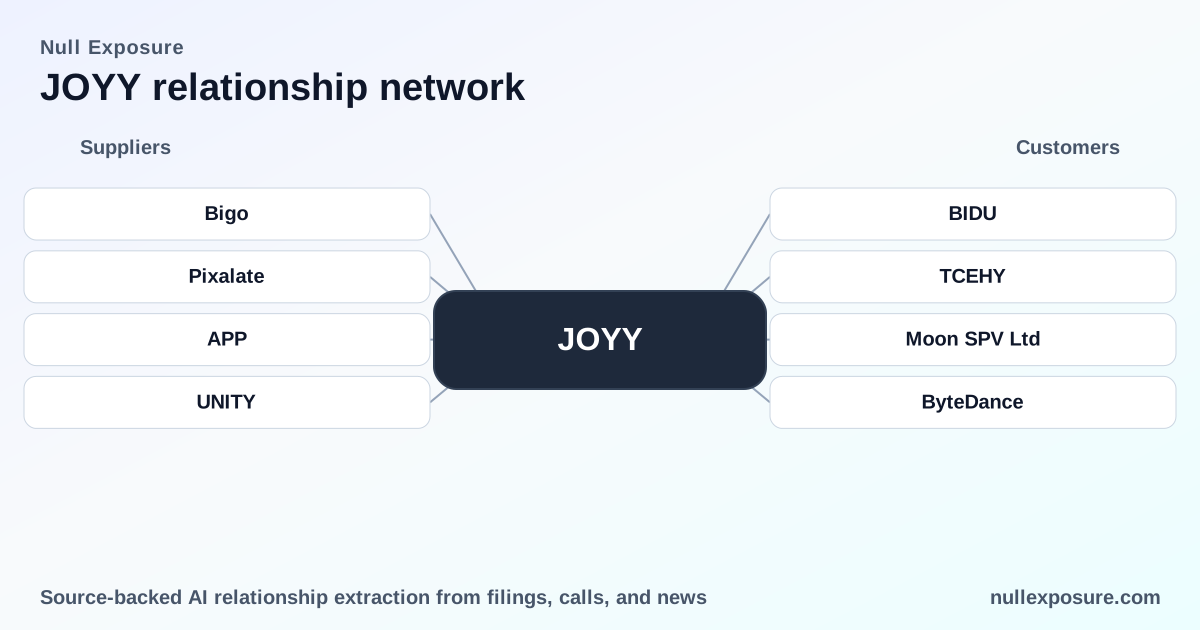
JOYY’s customer relationships: asset monetization, partner exits, and what that means for investors
JOYY operates global video-first social platforms and historically monetized through livestreaming virtual gifts, advertising and in-app purchases; over the last several years the company has shifted from operating a broad mix of domestic livestreaming assets to monetizing mature businesses through strategic sales and partnerships, redeploying capital into its overseas units and platform investments. For investors, the key thesis is simple: JOYY is executing a portfolio-shaping strategy that converts platform ownership into cash while preserving growth exposure in international markets. For detailed customer-intelligence and deal tracking on JOYY and comparable firms visit https://nullexposure.com/.
What the relationship data tells investors about JOYY’s operating posture
JOYY’s public relationship trail reads like a series of strategic divestitures and market reactions rather than a set of long-term enterprise contracts. The company has sold core domestic livestreaming assets to large Chinese technology buyers, signaling a contracting posture that prioritizes cash realization from mature properties over continuing to operate high-regulation domestic businesses. This behavior reduces concentration risk tied to a single product line in China, but increases reliance on M&A proceeds and the successful redeployment of capital to sustain investor returns.
- Contracting posture: JOYY’s willingness to negotiate and close sales (and to accept a terminated deal followed by a completed sale on different terms) shows an active M&A posture rather than a hold-and-grow stance.
- Concentration and criticality: Live-streaming was once central; after asset sales, the company’s revenue base is less concentrated on a single domestic platform but still connected to social-video monetization dynamics globally.
- Maturity: The pattern of deals signals a maturing company converting legacy platform value into cash — a capital strategy consistent with firms that have passed peak organic growth in their original product category.
Every relationship in the public record — concise, investor-focused summaries
Baidu (BIDU)
JOYY negotiated multiple transaction outcomes with Baidu across several years: a high-profile 2020 announcement of a planned USD 3.6 billion sale of YY Live, a later termination of that original purchase agreement, and ultimately a completed sale of YY Live to Baidu for a lower consideration in February 2025. These moves amount to a multi-stage monetization of JOYY’s domestic livestreaming franchise (coverage: CNN, KR-Asia, Fiji Times; JOYY filing reported via Stocktitan/QuiverQuant, Feb 25, 2025 / May 2026).
Moon SPV Ltd (Baidu affiliate)
Moon SPV Ltd, a Baidu affiliate, is the legal counterparty that terminated the earlier share purchase agreement with JOYY when closing conditions were not satisfied by the end of 2023, effectively pausing the first USD 3.6 billion transaction before a restructured deal was concluded. This termination is a material event in JOYY’s deal history because it created regulatory and timing risk that influenced the eventual sale dynamics (reported in Fiji Times, Mar 2026).
Tencent (TCEHY)
JOYY previously exited the domestic gaming livestream segment by selling its stake in Huya to Tencent, with Tencent subsequently brokering Huya’s merger with Douyu — a transaction that removed a legacy asset from JOYY’s operating scope and transferred a competitive livestream property into Tencent’s ecosystem. That sale was a defining early divestiture that reduced JOYY’s domestic exposure (coverage: KR-Asia, FY2020 reporting).
ByteDance
Industry reporting captured market rumors that ByteDance explored acquisition interest in JOYY’s overseas units; while these discussions were described as exploratory, they reflect strategic buyer interest from global short-form/video incumbents and underscore JOYY’s asset value to dominant content platforms (reported by KR-Asia in FY2020-era coverage).
Why these relationships change the investment calculus
The sequence of deals and counterparties demonstrates two enduring investor implications. First, JOYY proves it can monetize core assets to crystallize shareholder value, converting platform cash flows into transaction proceeds that can strengthen the balance sheet or fund international growth. Second, these divestitures expose JOYY to execution and timing risk: deal terminations, regulatory hurdles, and buyer negotiation dynamics materially affect proceeds and the company’s near-term cash profile.
From a customer and partner risk perspective, selling to large strategic buyers such as Baidu and Tencent reduces operational burden but creates a reliance on M&A markets and buyer appetite. Investors should treat JOYY’s revenue profile as increasingly driven by remaining international platform performance and less by the domestic livestreaming franchise sold to strategic customers.
Signals to track in the next 12 months
- Integration and monetization under Baidu: watch how Baidu integrates YY Live and whether JOYY retains any earnouts or contingent payments tied to performance — this affects realized value and future cash flow. (See JOYY 6‑K/press coverage, Feb 2025 / May 2026.)
- Regulatory and counterparty risk: terminated deals show regulatory/back-end closing conditions can derail transactions; ongoing oversight of conditions precedent and affiliate counterparties (for example, Moon SPV Ltd) is essential. (Fiji Times reporting, Mar 2026.)
- Reinvestment strategy: monitor capital allocation from sale proceeds—share buybacks, dividends (JOYY pays a meaningful dividend), or reinvestment into overseas product expansion will determine long-term growth prospects. Cash conversion is a feature; redeployment strategy determines the outcome.
Final read and investor takeaway
JOYY’s customer relationships are dominated by strategic exits to Chinese technology giants and periodic market interest from global platforms. The company has converted domestically concentrated, regulation-exposed assets into cash through M&A, reducing operational exposure but introducing deal and redeployment risk. For investors, the tradeoff is clear: lower operational concentration and healthier liquidity against the need for disciplined capital redeployment and vigilance over counterparty/closing risk.
For an ongoing, investor-grade feed of JOYY’s customer and counterparty activity, visit https://nullexposure.com/ — the platform tracks counterparties, filings and market coverage that shape valuation catalysts.