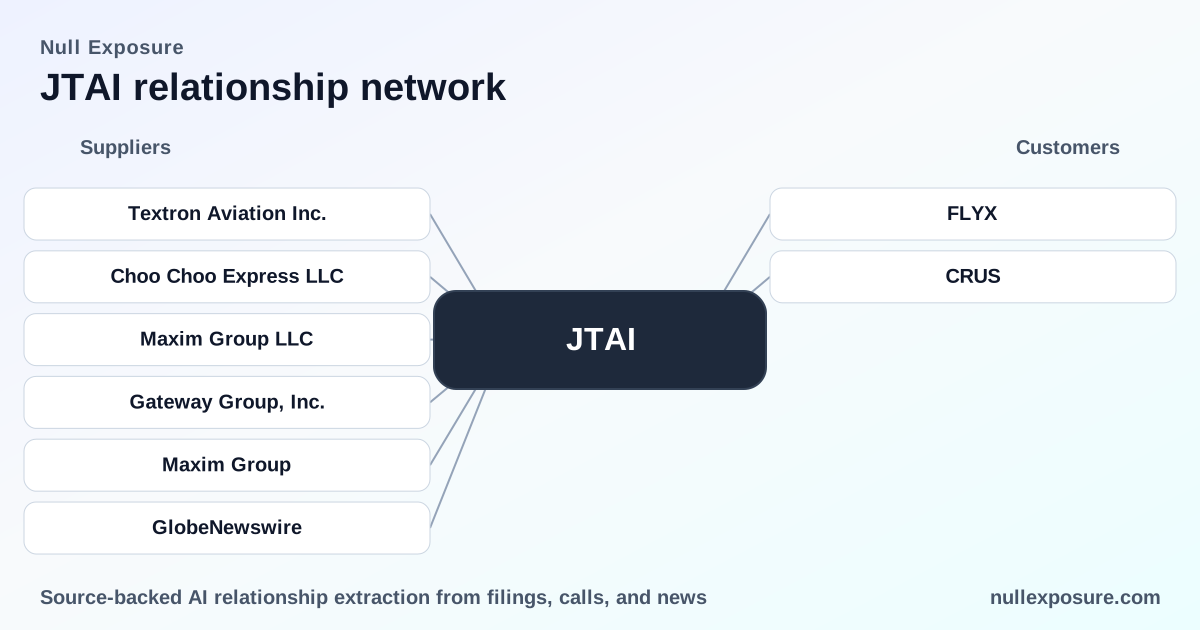
Jet.AI Inc. (JTAI): From Private Aviation Seller to AI Infrastructure Play
Jet.AI historically monetized through the private aviation economy — selling fractional ownership, jet cards, aircraft management and direct charter services — and is now executing a strategic divestiture of its aviation business to refocus on AI data centers and B2B SaaS. The company’s near-term economics have been a mix of upfront jet-card and fractional payments plus recurring management and hourly service revenue, while the pivot introduces new revenue models: subscription SaaS and data-center services. For a concise dossier on the company and its relationships, visit https://nullexposure.com/.
The headline: an aviation sell‑off and a strategic pivot
Jet.AI has publicly moved to exit the private-aviation operating business and transfer that franchise to flyExclusive. Multiple filings and market reports document an all‑stock transfer or sale and language that the transaction is either a spin/distribution or an outright sale, with the close targeted in mid‑2026. This transaction materially reduces Jet.AI’s operating exposure to aircraft operations and concentrates future upside on software, platform and data center initiatives, including a stated joint venture with Consensus Core Technologies to develop AI infrastructure. A StockTwits item dated March 10, 2026 and subsequent market write‑ups in May 2026 report the divestiture terms and timing.
How Jet.AI makes money — then and next
Jet.AI’s historical revenue model is transactional and upfront: jet cards are typically prepaid for 10–50 hours, fractional shares include down payments and monthly management fees, and the company also earns service revenue from aircraft management and hourly operations. The emerging model substitutes those cash flows with SaaS subscription revenue (Operator Platform) and longer‑term, capacity‑style revenue from AI data‑center operations. Company filings and commentary show revenue came from both services and software, and the pivot reweights revenue mix away from asset‑intensive aviation to higher‑margin recurring software and infrastructure contracts.
- Commercial drivers: Upfront jet‑card cash flow historically supported operations; software subscriptions and data center deals will drive recurring revenue if executed at scale.
- Key risk: Execution on the infrastructure JV and scaling B2B SaaS is required to replace aviation margins and revenue volume.
Documented customer and counterparty relationships
Below I list every relationship entry captured in Jet.AI’s customer‑scope results, with a short plain‑English takeaway and the source citation for each entry.
flyExclusive / FLYX (StockTwits — March 10, 2026)
Jet.AI sold its aviation business to flyExclusive as part of its transition plans; the market reacted positively when the company withdrew a public offering and confirmed the sale. A StockTwits report on March 10, 2026 noted the transaction and its role in the company’s strategic transition.
flyExclusive (alternate mention, StockTwits — March 10, 2026)
The same StockTwits item is cited again under the flyExclusive name, reinforcing that the company publicly characterized the divestiture to flyExclusive as a central component of its transition away from aviation operations.
flyExclusive Inc. (TradingView / market commentary — May 3, 2026)
TradingView and associated filings describe the transaction as a planned spin or distribution of the aviation business to flyExclusive, with closing expected in the second quarter of 2026, underscoring how Jet.AI is restructuring the aviation assets ahead of its new focus.
flyExclusive Inc. (GlobeNewswire legal filing mention — March 17, 2026)
A GlobeNewswire release (March 17, 2026) referenced the sale of Jet.AI’s aviation business to flyExclusive in the context of investor and legal notices, confirming the transaction’s prominence in investor communications and potential scrutiny.
flyExclusive (Intellectia.ai news feed — May 3, 2026)
Intellectia captured company commentary noting progress toward the sale of the aviation business to flyExclusive, indicating consistent public messaging across market services about the divestiture timeline.
FLYX (StocksToTrade news summary — February 25, 2025 / referenced May 2026)
A StocksToTrade news summary described Jet.AI offloading its aviation division to flyExclusive in an all‑stock transaction and characterized the corporate refocus toward AI solutions; this earlier item is consistent with later 2026 confirmations.
Cirrus / CRUS (MarketScreener disclosure — January 13, 2026)
MarketScreener’s January 13, 2026 filing references direct chartering of Jet.AI’s HondaJet aircraft by Cirrus, documenting a commercial charter relationship and indicating Jet.AI’s operational role as an aircraft provider prior to the divestiture.
CRUS (duplicate MarketScreener entry — January 13, 2026)
A second MarketScreener entry mirrors the same disclosure about direct charter arrangements with Cirrus; it corroborates that Jet.AI operated charters with OEM/partner participation.
flyExclusive (TradingView recap — May 3, 2026)
A separate TradingView news item reiterates that Jet.AI agreed to spin/distribute its aviation business to flyExclusive, with closing expected in Q2 2026, emphasizing market consensus around timing and structure.
Operating constraints and what they imply for investors
Company‑level signals from filings and public commentary reveal a consistent set of operating constraints that shape Jet.AI’s business risk profile.
- Contracting posture — long‑term and upfront: Jet.AI’s customer contracts include multi‑year aircraft management agreements (three‑year terms in some sale/management structures) and prepaid jet‑card programs with one‑year usage windows; this produced predictable near‑term cash but concentrated renewal risk.
- Customer concentration and type: Marketing is focused on high‑net‑worth individuals and US geographic concentration is strong; all long‑lived assets and a large portion of revenue are US‑based — this generates concentration risk tied to US private aviation demand cycles.
- Role and criticality: Filings indicate Jet.AI acted as principal (seller and service provider) across its aviation revenue arrangements, capturing margin but also carrying operational and liability exposure intrinsic to aircraft operations.
- Relationship maturity and stage: Many customer relationships were active and revenue‑generating through 2024–2025 (jet cards, managed aircraft), but the corporate pivot shifts the maturity profile toward early‑stage SaaS and infrastructure contracts that require new sales channels and longer ramp times.
- Segment mix: The company concurrently operated services (fractional, jet cards, management) and software (Operator Platform SaaS); the strategic move sells the services franchise and concentrates management attention on the software and data‑center segment.
These constraints imply that the company previously balanced predictable upfront cash with operational risk; the new strategy exchanges that profile for recurring, scalable revenue potential that will require capital, partnerships, and time to achieve comparable economics.
Investment takeaway
The sale to flyExclusive is the defining near‑term event — it removes a capital‑intensive, operationally risky business and refocuses Jet.AI on software and AI infrastructure. That transition reduces exposure to aircraft operations but introduces execution risk tied to scaling B2B SaaS and the data‑center JV. For active investors evaluating customer relationships, the central facts are: Jet.AI’s historical revenue sources are well‑documented (jet cards, fractional ownership, management fees and charters), the company has concentrated U.S. clientele and long‑term contract structures, and multiple market reports in early 2026 confirm the divestiture to flyExclusive with Q2 closing expectations.
For deeper relationship mapping and strategic signal tracking on Jet.AI and comparable transition stories, visit https://nullexposure.com/ for ongoing updates and source‑level briefs.