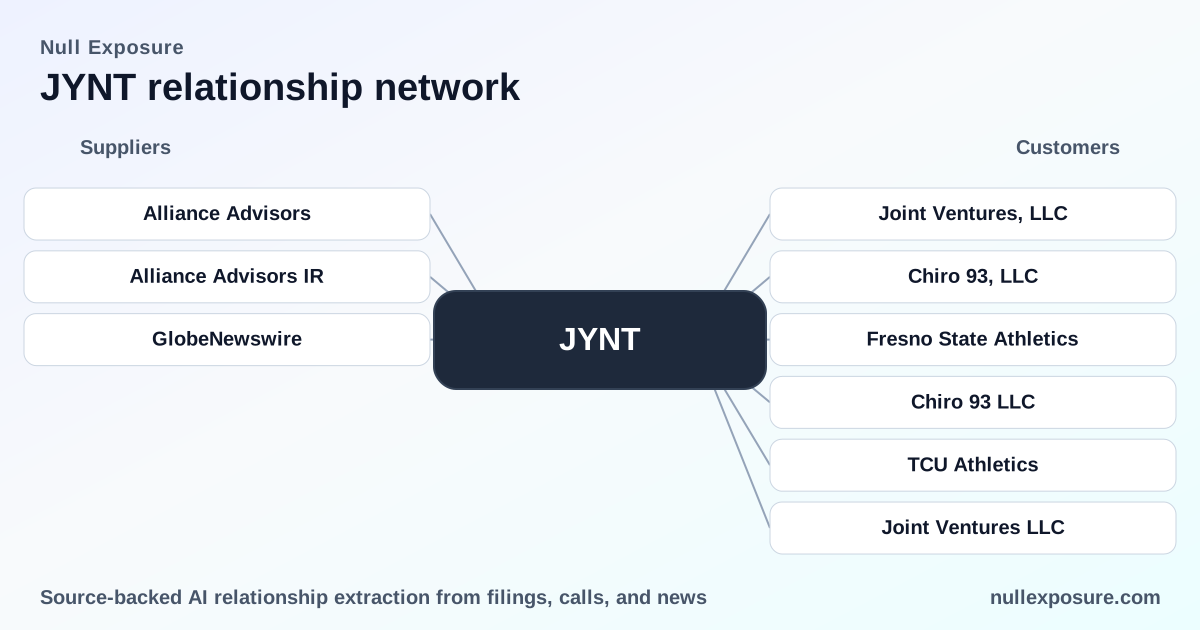
The Joint Corp (JYNT): franchisor economics and the partnership playbook investors should price in
The Joint Corp operates and monetizes as a franchisor and operator of cash-pay chiropractic clinics: it collects up-front franchise fees, ongoing usage-based royalties and marketing fees tied to gross sales, plus recurring software and membership charges, while selectively divesting corporate clinics to accelerate refranchising and sell strategic territory rights. This operating mix creates recurring, royalty-linked cash flows with leverage to system-wide same-store sales, and recent transaction activity confirms management’s shift from corporate ownership toward a franchise-first model. For further context on counterparties and deal counterparts, see our primary coverage at https://nullexposure.com/.
Why recent deals matter more than the headline price
Over the last 12–18 months The Joint accelerated refranchising and asset sales, not to materially de-risk revenue but to convert real-estate and operating capital into cash while gaining local development scale. Selling groups have paid modest cash consideration in return for clinic portfolios and developer territory rights—transactions that expand the franchised base and generate ongoing royalties and franchise fees for the company. This is a strategic pivot away from owning large clinic portfolios and toward a lower-capital, fee-driven model that should increase operating margin on corporate results over time.
- The refranchising program supports predictable royalty streams because royalties (7% of gross sales) and marketing fees (2% of gross sales) embed The Joint into franchisee economics.
- Sales of corporate clinics are typically priced to reflect local operating performance and the value of recurring franchise royalties rather than cure immediate profitability gaps.
If you want a consolidated view of these customer and partner relationships, review our dossier at https://nullexposure.com/ for source links and transaction timelines.
The contract and revenue posture investors should internalize
Company disclosures and filings set the framework for commercial exposure: initial franchise agreements typically carry a 10‑year term and require non‑refundable initial fees, creating long-dated contractual relationships with franchisees. The Joint’s monetization runs on three pillars: usage‑based royalties (7% of gross sales), a 2% marketing fee, and monthly subscription fees for proprietary software and support, plus patient-facing membership plans sold at clinic level. The net effect is variable, recurring cash flow tied to system-wide sales activity rather than fixed, lease-style income. Company filings show the model is North America‑centric and materially driven by franchise expansion—management cited a revenue increase of $4.9 million driven by franchise growth. These are company-level signals about contracting posture, revenue concentration, criticality of franchisee performance, and maturity of the franchise base.
Relationship roll call: counterparties, outcomes and sources
Below we list every counterparty referenced in recent public reports and the plain-English implication for investors.
Joint Ventures, LLC
The Joint signed a binding Asset Purchase Agreement to sell 31 corporate clinics in Arizona and New Mexico to Joint Ventures, LLC in exchange for cash and Northwest regional developer rights; the closed transaction generated $855,000 in royalties and franchise fees over the 12 months ended March 31, 2025. Source: GlobeNewswire press release and subsequent closing notice (June–July 2025).
Joint Ventures LLC
Independent coverage reports the same sale as a cash-plus-territory‑rights transaction—buyers acquired 31 clinics for $8.3 million in cash plus regional developer rights, reinforcing The Joint’s refranchising strategy. Source: ChiroEco article summarizing the transaction (reported March 2026).
Elite Chiro Group
The Joint executed an Asset Purchase Agreement effective April 20, 2026 to sell 45 corporate‑managed clinics in Southern California to Elite Chiro Group for approximately $2.3 million, a transaction described as advancing the company’s franchisor model. Source: GlobeNewswire and cross-posts on Yahoo Finance and other financial outlets (April 27, 2026).
Chiro 93, LLC
Management refranchised five Kansas City‑area clinics to Chiro 93, LLC as part of the company’s ongoing refranchising program, underlining the operational playbook of shifting clinics to experienced regional operators. Source: GlobeNewswire reporting on the refranchising (June 25, 2025).
Chiro 93 LLC
Industry coverage reiterates the refranchising of five clinics to Chiro 93 LLC in the Kansas City market; this is the same commercial action captured by multiple outlets and shows repeatable execution of the refranchising plan. Source: ChiroEco industry coverage (March 2026).
Miller Subaru of Utah
The Joint entered a partnership to provide chiropractic care for approximately 275 Miller Subaru of Utah employees, expanding its corporate‑benefits channel and showing incremental patient acquisition through employer partnerships. Source: PR Newswire and related coverage (April 7, 2026).
Mark Miller Subaru
Mark Miller Subaru’s wellness director publicly endorsed the partnership, noting the company views employee health as a priority and will provide The Joint’s services to team members—an example of the firm’s effort to win local corporate relationships that feed clinic utilization. Source: StockTitan coverage and PR releases (April–May 2026).
Subaru of Utah
Multiple outlets reported the April 2026 partnership under variations of the Subaru name; the arrangement covers chiropractic treatment for over 275 employees at The Joint’s Utah locations and illustrates the company’s use of local corporate arrangements to deepen utilization. Source: StockTitan, ChiroEco and other syndications (April–May 2026).
TCU Athletics
The Joint was named the Official Chiropractic Partner of TCU Athletics under a three‑year agreement through 2027, demonstrating the brand’s investment in visibility and community partnerships that can drive patient traffic. Source: PR Newswire announcement (reported 2026).
Fresno State Athletics
The company previously secured a partnership naming The Joint as the Official Chiropractor of Fresno State Athletics, an earlier example of collegiate sports sponsorships used to promote brand recognition and local clinic traffic. Source: PR Newswire (FY2023 announcement).
Constraints and what they signal for valuation and risk
- Contracting posture: Franchise agreements are long‑term (initial 10‑year terms) and include non‑refundable initial fees—this locks in long-dated relationships and supports upfront cash receipts. Company filings state the initial franchise agreement structure and fee policy.
- Revenue mix and predictability: The business is usage‑based and subscription‑augmented—royalties are calculated as a percentage of franchisee gross sales (7%) and a marketing fee (2%), while recurring monthly fees for software and clinic membership plans add stability. These terms align The Joint’s revenue with system-wide sales performance.
- Customer base and counterparty type: The ultimate consumers are individual patients (over 14.7 million visits in 2024), which drives variability tied to consumer demand and employment conditions.
- Geography and expansion: Operations are North America‑focused and franchise growth is the primary expansion lever; the company explicitly targets rapid franchise expansion in the U.S. market.
- Materiality: Management attributes recent revenue increases to franchise expansion, suggesting franchising is a material driver of revenue growth rather than a marginal channel.
- Relationship role and stage: The company functions as both seller and licensor—it sells clinics and grants franchise licenses while remaining actively engaged with a mature franchised base (842 franchised clinics as of Dec 31, 2024).
- Business segment: The Joint operates in services using a private‑pay, cash‑based model (no insurance/Medicare participation), which simplifies billing but concentrates exposure on consumer willingness to pay.
Investor takeaway
The Joint’s recent transactions and partnership activity demonstrate a deliberate shift to a lower‑capital, fee-focused franchisor model that converts clinic operations into recurring royalty and franchise‑fee income. Investors should value the stock based on system-wide sales growth and same-store metrics rather than corporate clinic profitability alone, because the company captures a slice of franchisees’ top-line through fixed percentage royalties and fees. Key risks to model include consumer demand for cash-pay chiropractic services and the company’s ability to recruit and retain high-quality franchise partners to sustain growth.
For a consolidated dossier of the primary sources and transaction timelines referenced above, visit our research hub at https://nullexposure.com/.