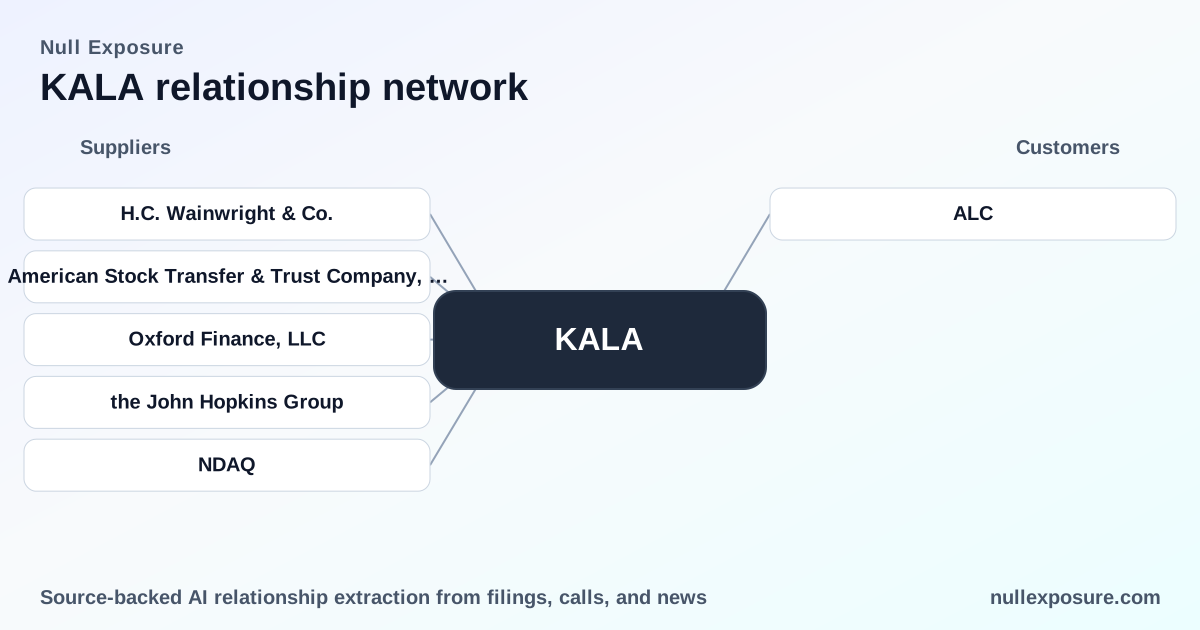
Kala Pharmaceuticals (KALA): Customer Relationships After the Commercial Business Sale
Kala Pharmaceuticals monetizes its proprietary AMPPLIFY mucus-penetrating particle technology primarily through the sale and licensing of commercial rights to third parties and by retaining a development pipeline for ophthalmic therapeutics. The company converted its commercialization capability into an upstream cash event by selling its Commercial Business to Alcon, while preserving upside through potential milestone receipts and continued R&D. For investor-grade customer intelligence, visit https://nullexposure.com/.
Quick thesis: monetization by disposition plus milestone and license economics
Kala transitioned from a commercial-stage seller to a smaller, development-focused biopharma after the asset sale to Alcon; near-term value is concentrated in contingent milestone receipts and IP licensing, and long-term value depends on successful clinical progress of retained candidates and the ability to monetize AMPPLIFY technology through additional partnerships.
The customer map: every relationship surfaced in external reporting
Alcon — the acquirer and commercial engine
Alcon signed an agreement to acquire Kala’s EYSUVIS product and associated commercial rights, effectively becoming the global manufacturer, distributor and marketer for the assets Kala sold. The Asset Purchase Agreement also structured commercial-based milestone payments tied to worldwide net sales, creating a contingent revenue stream for Kala and making the Alcon relationship the single most material commercial customer event in recent years (Business Wire via CityBiz, March 10, 2026). Additional company disclosures and press filings referenced ongoing uncertainty around receipt of milestone payments from Alcon (Yahoo Finance and GlobeNewswire filings, 2022–2026).
The Brinks mention — a software reference in an unrelated transcript
A transcript of The Brink’s Company earnings call referenced that “many of our ATMs already using KAL software,” noting a partnership to provide enhanced managed services; the quote ties Kala (or a KAL-branded offering) into a solution referenced by Brinks’ management (AlphaStreet earnings call transcript, Q2 2025 / reported March 2026). This mention is brief and operational in tone rather than financial; it indicates a technology touchpoint outside Kala’s core ophthalmology revenue path.
How each relationship practically affects Kala’s economics and risk profile
- Alcon is the dominant commercial counterparty: the sale of the Commercial Business to Alcon supplied Kala with financing and removed in-market commercialization costs and risks, but replaced them with concentrated counterparty exposure—Kala’s future receipts linked to Alcon’s commercial execution through milestone triggers. (CityBiz / Business Wire; GlobeNewswire, 2022–2026.)
- Brinks’ reference is operational, not a revenue anchor: the AlphaStreet transcript signals that a KAL-branded software is recognized in the ATM/managed services ecosystem, but there is no public evidence in the provided results that Brinks is a material revenue customer for Kala’s primary ophthalmic products (AlphaStreet, Q2 2025).
Contracting posture, concentration and criticality — constraints explained
The structured information extracted from filings and news provides the following company-level signals and Alcon-specific facts:
- Licensing and asset-sale posture (Alcon-specific). Alcon purchased rights to manufacture, sell, distribute and commercialize EYSUVIS and INVELTYS and to exploit AMPPLIFY; this is a classic intellectual property monetization through an asset sale plus license arrangement (evidence from the Asset Purchase Agreement cited in press reporting). That structure converts operating cash requirements into contingent receipts and removes Kala from direct commercialization responsibility.
- Global commercialization exposure (Alcon-specific). The Asset Purchase Agreement includes worldwide sales milestone triggers (examples in the filing reference $25,000 and $65,000 thresholds), so Kala’s upside is explicitly linked to Alcon’s global sales performance from 2023–2028.
- U.S. commercialization focus for pipeline (company-level). Kala signals it expects to commercialize any future approved candidates in the United States, indicating retained ambition to operate in the U.S. market while outsourcing existing commercial franchises.
- Regulatory and government risk (company-level). Kala’s operations are subject to U.S. federal healthcare statutes (Anti-Kickback, false claims, etc.), which raises compliance obligations across contracting and customer interactions with payors and providers.
- Materiality and concentration (company-level and Alcon-specific). The company has financed operations materially through proceeds from the Commercial Business sale to Alcon and other capital raises; that sale is a principal financing event, so counterparty performance on milestones is material to Kala’s near-term cash outlook.
- Relationship roles recorded (Alcon-specific and company-level). Filings characterize Alcon as licensee/manufacturer/distributor and Kala as the seller of the Commercial Business; separate financing purchase agreements with investors are recorded as well.
What this means for investors: risks and opportunity vectors
- Concentrated counterparty risk is the primary near-term downside. With commercialization delegated to Alcon, Kala’s revenue upside is contingent and concentrated in milestone and royalty-style receipts tied to a single large partner. The company’s cash runway and valuation sensitivity are therefore strongly linked to Alcon-driven sales metrics.
- Regulatory compliance creates persistent tail risk. Anti-kickback and payor-related statutes affect how Kala structures future partnerships and milestone recognition; investors must monitor compliance disclosures for potential liabilities.
- Re-rationalized cost base and optionality. By selling its Commercial Business Kala reduced operating burn associated with commercialization and preserved R&D optionality; this increases binary upside from clinical or licensing successes while limiting predictable revenue.
- Ambiguous non-core mentions (e.g., Brinks) warrant monitoring but not over-weighting. The Brinks transcript suggests the KAL brand shows up in enterprise software contexts; treat such references as potential diversification signals, not confirmed revenue drivers without corroborating contracts or filings.
Bottom line and next steps for analysts
Kala’s investment thesis is now squarely about milestone capture and pipeline de-risking. The Alcon transaction materially changed Kala’s operating model from a commercial seller to a partner-reliant licensor with concentrated counterparty exposure and compliance constraints. Short-to-medium term value depends on milestone realization and R&D progress; longer-term upside depends on successful further licensing or re-entry into commercialization under more diversified terms.
For a focused, investor-grade customer relationship report and alerts on counterparties like Alcon, visit https://nullexposure.com/ for subscription details and deeper signal workups.