Kingsoft Cloud (KC): Ecosystem revenue is the growth engine — and the balance-sheet risk
Kingsoft Cloud operates as a China-focused cloud infrastructure and intelligent-computing provider that monetizes through cloud services (IaaS/PaaS), related-party ecosystem contracts, and external enterprise customers. Revenue is driven by AI and intelligent-computing demand, while profitability is constrained by heavy infrastructure and leasing costs; investors should price both the top-line growth from ecosystem partners and the margin volatility that accompanies capital-intensive scale. For a concise, data-driven view of the company’s customer dynamics and what to watch next, visit https://nullexposure.com/ for ongoing signals and primary sources.
Quick corporate snapshot every investor needs
Kingsoft Cloud is listed as KC on NASDAQ and reports roughly $4.55 billion market capitalization with trailing revenue around 9.56 billion (TTM) and gross profit of ~1.50 billion (TTM). The company shows negative profitability metrics (operating margin and net margin both below zero) and a high beta (2.03), underlining sensitivity to market sentiment and cyclicality in capital spending. These headline figures frame why customer concentration and contract terms have outsized impact on valuation and near-term returns.
Customer relationships that define KC’s trajectory
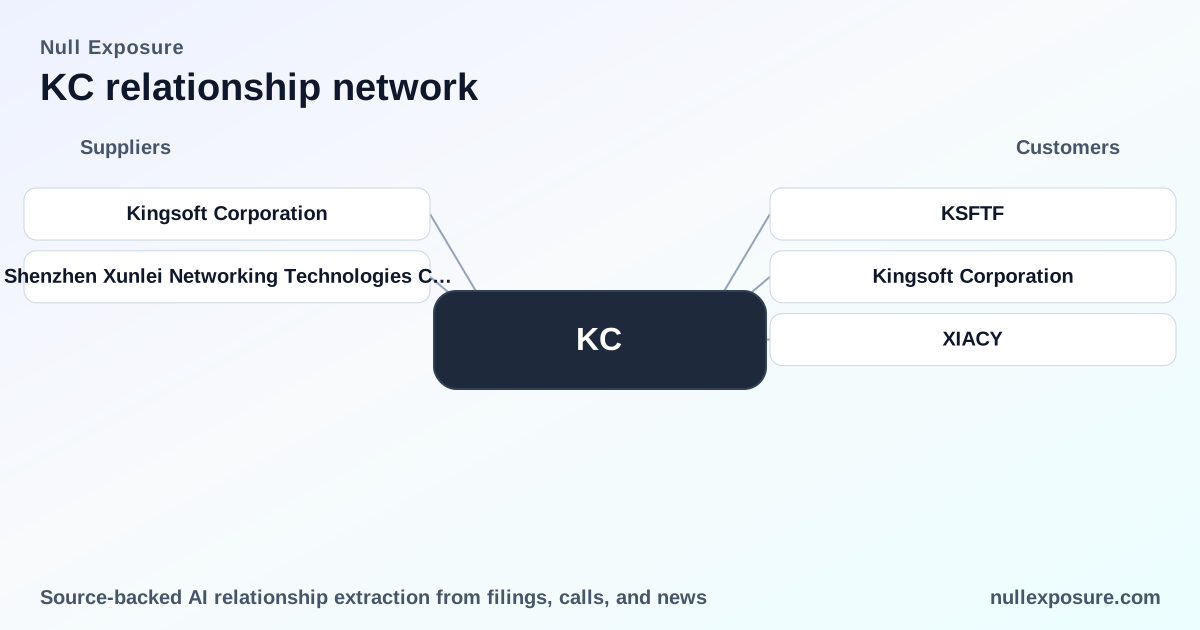
The available coverage consistently references two customer relationships that dominate the narrative: Kingsoft (the legacy group) and Xiaomi. The following summaries cover each relationship in plain language and cite the public reporting that underpins them.
Kingsoft (ecosystem partner)
Kingsoft Cloud reports ongoing high-quality service delivery to Kingsoft as an ecosystem customer and explicitly prepares capacity to support Kingsoft’s intelligent-computing expansion. According to the company’s earnings commentary captured in Q3/Q4 transcripts (InsiderMonkey coverage, FY2025–FY2026 earnings call excerpts published March–May 2026), Kingsoft remains an embedded ecosystem partner that contributes materially to cloud demand.
Xiaomi (large related-party customer)
Xiaomi is a major ecosystem client for Kingsoft Cloud; Q4 commentary states Xiaomi and Kingsoft ecosystem revenue totaled RMB 804 million, up 63% year-over-year and representing 29% of total revenue (InsiderMonkey, Q4 2025 transcript reported May 3, 2026). Analysts and brokers have flagged Xiaomi as a concentration risk but also a growth lever: Goldman Sachs expects a renewal of the related‑party arrangement that could increase Xiaomi’s revenue cap by 10–15% for 2026–2027 under refreshed terms (reported by Investing.com and secondary financial outlets, March–May 2026).
What the relationship mix implies for the operating model
The customer structure creates distinct, investor-relevant operating dynamics:
-
Contracting posture: Kingsoft Cloud’s revenue mix includes related‑party ecosystem agreements that are more strategic than spot commercial deals; renewal timing and contract economics with Xiaomi and Kingsoft materially influence top‑line stability. (Source: company earnings call transcripts and analyst coverage, March–May 2026.)
-
Concentration: With ~29% of revenue coming from Xiaomi and Kingsoft in the referenced quarter, concentration is high and creates single-client exposure risk if ecosystem terms shift or usage patterns normalize. (Source: InsiderMonkey Q4 2025 transcript, May 2026.)
-
Criticality: Ecosystem customers are driving rapid AI compute demand, which positions Kingsoft Cloud as a critical supplier for customers’ AI roadmaps and therefore enables scale—but at the cost of substantial upfront infrastructure and lease commitments. (Source: SimplyWall/analyst summaries and earnings call excerpts, FY2026 coverage.)
-
Maturity and margin structure: The company is still in a scale-up phase for AI infrastructure: revenue growth coexists with margin pressure from high infrastructure and leasing costs, producing negative net margins that will only recover if unit economics improve or customer pricing shifts. (Source: SimplyWall analysis and company filings reflected in March–May 2026 reporting.)
Because the dataset provided no explicit third‑party operational constraints beyond these relationship signals, these observations serve as company-level indicators of how contracts, concentration, criticality, and maturity influence operating leverage and risk.
Why this mix creates both asymmetric upside and concentrated downside
Kingsoft Cloud’s customer profile produces a clear investment trade-off:
-
Upside: High-growth ecosystem demand—illustrated by a 63% yoy jump in combined Xiaomi/Kingsoft ecosystem revenue—supports re-rating if the company converts AI compute momentum into durable external enterprise wins and if related‑party contracts are renewed on favorable terms. (Source: InsiderMonkey Q4 transcript; UBS/Goldman commentary referenced in analyst coverage, March–May 2026.)
-
Downside: Margin erosion from infrastructure and lease costs and client concentration create a scenario where a contract renewal that is delayed or renegotiated unfavorably leads to a disproportionate revenue shock. Multiple analyst notes flagged this pressure in FY2026 coverage. (Source: SimplyWall analysis and analyst commentaries, March–May 2026.)
A notable broker view underpins both outcomes: analysts who upgraded or raised targets emphasized AI spending tailwinds and ecosystem lift, while others stressed margin sensitivity to capital intensity and client mix. (Source: UBS/GOLDMAN reporting and summary articles, March 2026.)
Risk checklist and monitoring signals for investors
To navigate KC as a position, prioritize the following signals:
- Related‑party contract renewals with Xiaomi/Kingsoft (timing and pricing). Reported expectations from Goldman put renewal before mid‑year as a catalyst. (Source: Investing.com / broker reports, March–May 2026.)
- Quarterly disclosure of ecosystem revenue (percentage of total and absolute RMB contribution). The Q4 figure of RMB 804 million is the baseline to beat or defend. (Source: InsiderMonkey Q4 2025 transcript.)
- Infrastructure and lease cost trends—CAPEX cadence and EoM capacity utilization that affect unit gross margins. Analysts cite these as the main margin pressure point. (Source: SimplyWall FY2026 commentary.)
- Mix shift toward external enterprise customers—evidence of diversified contract wins reduces concentration risk and increases valuation multiple optionality. (Source: UBS/Finviz analyst coverage, March 2026.)
For ongoing signal monitoring and a curated feed of primary coverage, see https://nullexposure.com/.
Bottom line — what investors should price in now
Kingsoft Cloud is a growth story powered by ecosystem AI demand with material single-client exposure and capital-intensive margin headwinds. Pricing should reflect both the path to margin improvement (through scale, better cost efficiency, or stronger external client mix) and the binary risk that related-party renewals or usage normalization produce a revenue shortfall. Short-term catalysts are contract renewals and quarterly ecosystem revenue trends; the longer-term value case requires demonstrable progress on external customer diversification and infrastructure unit economics.
If you are building a model or due diligence plan, focus on contract renewal language, quarterly ecosystem disclosures, and infrastructure cost trajectory; these are the levers that determine whether KC’s growth translates into sustainable returns.