KeyCorp (KEY‑P‑J) — Customer relationships that move the balance sheet
KeyCorp operates through its principal banking subsidiary, KeyBank, monetizing customer flows via lending margins, fee income from specialty and affinity platforms, and capital-market actions that reshape the balance sheet; depositary preferred shares such as KEY‑P‑J are hybrid capital instruments that provide predictable dividend-like payouts to holders while supporting KeyCorp’s regulatory and funding profile. For investors evaluating customer and counterparty exposure, the recent relationship activity highlights three practical levers Key uses to manage credit risk, capital and growth: loan portfolio sales, strategic share placements, and affinity-brand launches. Learn more at https://nullexposure.com/.
How KeyBank structures counterparty engagements in practice
KeyBank demonstrates a transactional posture that leans on large, discrete deals to optimize balance‑sheet capacity and to target niche revenue streams. The examples below show a bank that:
- Uses portfolio sales to de-risk and free capital quickly when needed.
- Partners with large institutional buyers and peers for financing and equity-related arrangements.
- Leverages affinity digital brands to capture specialized fee income and deposit relationships.
No explicit customer-contracting constraints are recorded in the provided data; that absence itself is a signal at the company level that the visible public record for these customer interactions centers on executed transactions and strategic launches rather than on disclosed long-term contractual limitations.
Customer relationships in focus
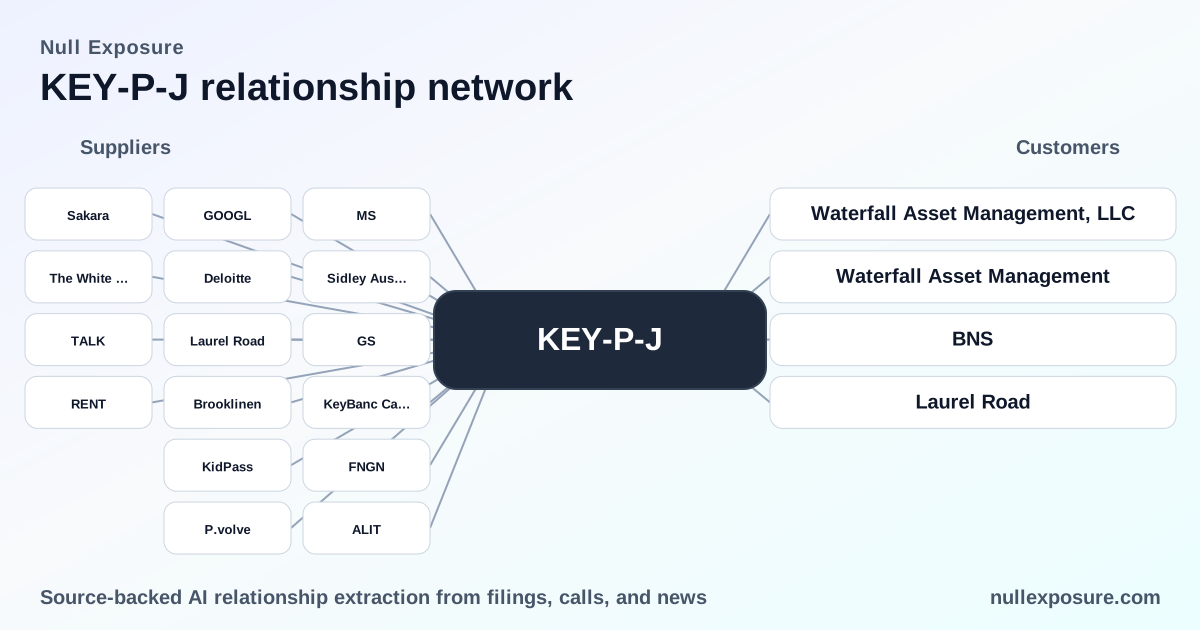
Waterfall Asset Management / Waterfall Asset Management, LLC
KeyBank sold a substantial indirect retail auto loan portfolio to a vehicle managed by a wholly‑owned subsidiary of Waterfall Asset Management, representing a $3.2 billion portfolio divestiture executed to remove credit exposure and reclaim balance‑sheet capacity. According to a PR Newswire release dated September 10, 2021, the transaction transferred the portfolio to a Waterfall-managed vehicle; AutoRemarketing covered the same sale in FY2021 and echoed the PR disclosure. Takeaway: Key uses large portfolio sales to actively manage credit concentration and liquidity.
Sources: PR Newswire release (Sept 10, 2021) and AutoRemarketing coverage (FY2021).
The Bank of Nova Scotia (BNS)
KeyCorp issued shares to The Bank of Nova Scotia under an Investment Agreement disclosed in a prospectus supplement, a capital-markets action recorded in FY2025 that reflects bilateral equity-related arrangements with a global banking peer. TradingView’s reporting of KeyCorp’s prospectus supplement indicates the transaction structure involved issuance of shares under the Investment Agreement to BNS. Takeaway: Key engages peer banks for strategic capital and investor relationships that can support balance‑sheet flexibility.
Source: TradingView summary of KeyCorp prospectus supplement (FY2025).
Laurel Road
KeyBank launched a national digital affinity bank under the Laurel Road brand targeted at doctors, positioning the franchise to capture specialized deposit and lending relationships within a high‑value professional segment. Crain’s Cleveland covered the launch as part of KeyBank’s strategy to expand its digital affinity offerings in FY2021. Takeaway: Key pursues targeted digital brands to diversify fee and deposit sources and to deepen customer lifetime value in select professional niches.
Source: Crain’s Cleveland coverage (FY2021).
What the relationships collectively say about operating constraints and posture
The provided records include no explicit contractual constraints tied to customer engagements; treated as a company‑level signal, that absence indicates the public footprint for these relationships emphasizes executed deals and strategic initiatives over binding multi-year customer constraints. From the transaction set, the following operating model characteristics are evident:
- Contracting posture: Project-based and opportunistic. Key uses one-off portfolio sales and targeted investment agreements rather than a proliferation of disclosed long-term customer constraints.
- Concentration: The $3.2 billion auto portfolio sale demonstrates that Key sometimes executes high‑concentration transactions to materially affect balance‑sheet metrics in a single move.
- Criticality: Counterparties such as large asset managers and peer banks play material roles in liquidity, risk transfer, and capital placement — these are strategic, high‑impact relationships rather than marginal vendor ties.
- Maturity: Relationships span mature market participants (global banks, established asset managers) and emerging digital channels (affinity brands), indicating a mix of established and growth‑oriented partner types.
All of the above are company‑level signals derived from the transaction activity; no constraint record in the source data explicitly ties a contractual limitation to any named relationship.
Investment implications and risk checklist
- Balance‑sheet flexibility: Portfolio sales such as the Waterfall transaction are a reliable tool for rapid de‑risking and capital relief; investors should view these as liquidity levers rather than recurring revenue sources.
- Counterparty dependence: Issuances and investment agreements with peers like BNS are critical for capital strategy — monitor disclosures for expanded use of bilateral funding or strategic equity placements.
- Franchise diversification: Laurel Road’s affinity model strengthens fee income potential but increases execution risk tied to digital customer acquisition economics; success depends on sustainable deposit and cross‑sell metrics.
- Visibility risk: The absence of disclosed contractual constraints reduces transparency around long‑term customer commitments — investors should prioritize ongoing filings and news flow for signs of recurring or embedded obligations.
For deeper coverage and daily updates on customer‑level relationships for financial instruments like KEY‑P‑J, visit https://nullexposure.com/.
Conclusion: position and priorities for investors
KeyCorp’s documented customer relationships reflect deliberate balance‑sheet governance: sell large portfolios to transfer risk, partner with institutional counterparties for capital, and launch targeted digital brands to broaden revenue. For investors in KEY‑P‑J, the preferred instrument is supported by a bank that actively manages capital and credit exposure through discrete, high‑impact transactions and strategic partnerships. Monitor future prospectus supplements and transaction disclosures closely — those documents will show whether these patterns continue as Key refines its funding and franchise strategy.