OrthoPediatrics (KIDS): Customer Placements and Distribution Moves that Shape Growth
OrthoPediatrics (NASDAQ: KIDS) is a specialized medical-device company that designs, markets and sells pediatric orthopedic implants, instruments and braces. The company monetizes through direct sales in the U.S., independent distributors internationally, and service revenues from its O&P clinics; revenue recognition is product- and procedure-driven and relies on third‑party payor billing for fitted braces and clinic services. Investors should view recent customer placements and the company’s distributor acquisition as operational catalysts that de‑risk market access in key geographies while leaving payor complexity and U.S. concentration as ongoing business constraints. For further background or to review comparable coverage, visit https://nullexposure.com/.
Quick operating snapshot investors need
OrthoPediatrics reports $243.3M revenue TTM with gross margin strength but still negative EBITDA (-$4.6M) and a diluted EPS of -$1.68 (latest quarter 2026-03-31). The business is hardware-centric, sells into hospitals and specialty clinics, and scales internationally through distributors. Market capitalization is roughly $405M, reflecting investor expectations for continued penetration of pediatric orthopedics and margin expansion. Institutional ownership is significant (about 67%), with insiders retaining roughly 33% of shares.
Customer and distributor activity: the items investors should track
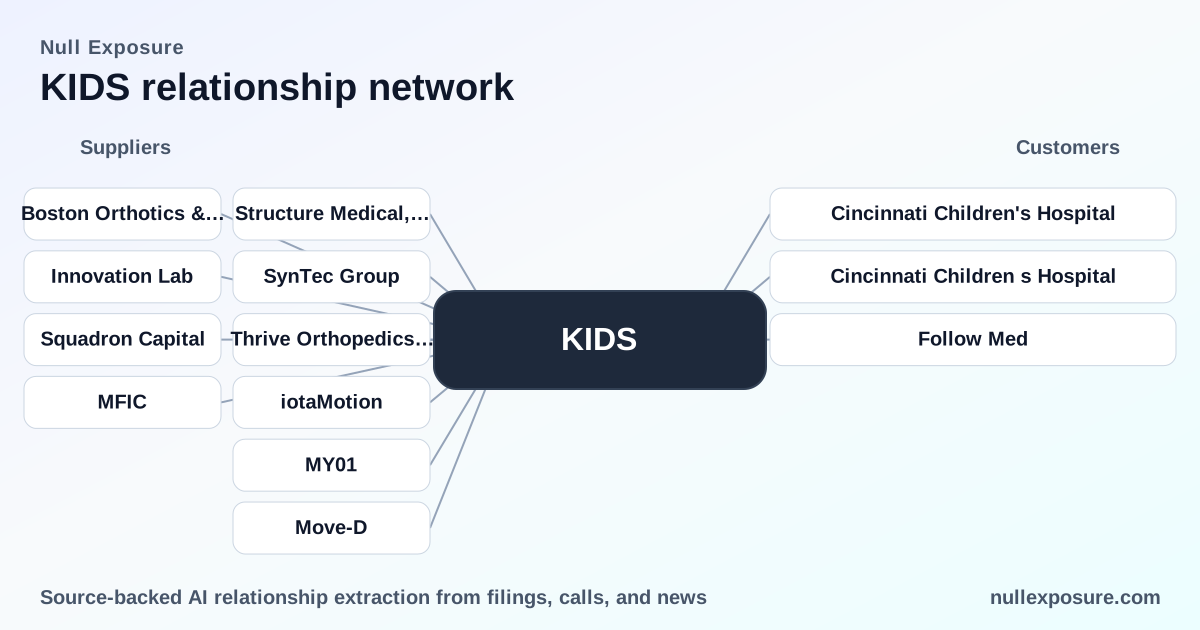
Below I list every relationship result surfaced in the recent collection of company disclosures and media, with concise, plain-English summaries and source notes.
Cincinnati Children’s Hospital — Q4 2025 earnings call placement
OrthoPediatrics disclosed that it placed its first iotaMotion unit at Cincinnati Children’s Hospital, signaling initial clinical adoption of this new device within a major pediatric health system. This placement represents a clinical validation milestone for device uptake in tertiary pediatric centers. Source: Q4 2025 earnings call transcript (statement recorded 2026-03-08).
Cincinnati Children’s Hospital — coverage in online transcript reporting
Journalistic coverage of the earnings call reiterated the Cincinnati placement—confirming public reporting of the iotaMotion deployment and providing the same operational fact for investors tracking product rollouts. Source: InsiderMonkey coverage of the Q4 2025 earnings call transcript (published 2026-03-10).
Follow Med — Brazil distributor acquisition referenced in earnings commentary
Management stated they purchased Follow Med, one of their Brazilian distributors, in late November, describing this as a structural improvement to Brazil operations and distribution control. This is a strategic move to internalize distribution in a growth market, reducing channel friction and improving local execution. Source: InsiderMonkey coverage of the Q4 2025 earnings call transcript (published 2026-03-10).
What the relationship items imply about the business model
- Clinical placements like the iotaMotion at Cincinnati Children’s are validation events: placements into top pediatric centers accelerate surgeon familiarity and help the company build case volume for reimbursement and surgeon preference.
- Acquiring distributors is a deliberate channel strategy: buying Follow Med indicates a shift toward tighter control of international distribution in Brazil—consistent with the company’s stated approach of selling through independent distributors outside the U.S.
- Public reporting and third-party transcripts corroborate management messaging, improving transparency for investors tracking commercial milestones.
Constraints and company-level signals that determine execution risk
The structured constraint excerpts in filings and disclosures give a clear picture of OrthoPediatrics’ operating posture and risks:
- Contracting posture and payor complexity: Revenue from O&P clinics is recognized when braces are fitted and accepted and is primarily billed to third‑party payors, including commercial insurers, Medicare, Medicaid and private payers. This requires sophisticated billing operations and exposes cash flows to reimbursement dynamics.
- Channel mix and concentration: The company sells directly in the U.S. and relies on independent distributors overseas, with the bulk of implant/braces revenue generated in the U.S.; this structure concentrates commercial risk domestically while creating execution risk abroad that the Follow Med acquisition is intended to address.
- Geographic scale with U.S. skew: OrthoPediatrics reports sales in more than 75 countries, signaling global reach, but the majority of revenue remains North America‑centric—an important nuance for growth forecasts.
- Role breadth—seller and service provider: The company acts as a hardware seller (implants, instruments, braces) and as an operator of O&P clinics delivering non‑surgical care—this hybrid model increases addressable revenue per patient but adds operational complexity.
- Product maturity and criticality: The product line is specialized, hardware-focused and clinically critical for pediatric orthopedic procedures; clinical adoption cycles will drive near-term revenue, but institutional purchasing processes and training timelines shape the cadence.
These signals together create a profile of a specialist hardware company that is scaling internationally through acquisition and selective clinical placements while navigating payor complexity and U.S. revenue concentration.
Investment implications — clear, actionable takeaways
- Near-term upside drivers: Continued placements of new devices (like iotaMotion) at major pediatric centers and successful integration of acquired distributors in Latin America should accelerate revenue growth and reduce international execution risk.
- Operational risks: The billing mix—heavy third‑party payors for clinic and brace revenues—creates reimbursement sensitivity that can compress cash collection and margins if reimbursement environments shift.
- Execution focus: Watch metrics tied to commercial adoption (number of device placements, surgeon training programs) and international revenue growth post‑Follow Med acquisition; these will indicate whether the company is translating channel control into revenue gains.
- Capital and profitability context: With negative EBITDA but strong gross profit and institutional investor backing, management has runway to invest in commercialization; profitability hinges on scaling volume and improving operational leverage.
For a direct view of OrthoPediatrics’ public disclosures and to compare this company against peers, see https://nullexposure.com/.
Bottom line: what investors should monitor next
OrthoPediatrics is executing a classic commercialization playbook: validate in high‑profile clinical centers, then consolidate distribution in key international markets to unlock growth. The Cincinnati placement and the Follow Med acquisition are distinct but complementary signals—validation of product utility at a top children’s hospital and a strategic effort to reduce channel risk in Brazil. The company’s outcomes over the next four quarters—device placements, revenue contribution from Brazil, and billing/collection trends—will determine whether the current market valuation captures future margin expansion.
Key near-term data points to watch: quarterly device placement counts, international revenue growth (Brazil specifically), O&P clinic revenue and receivables behavior, and any updates on reimbursement or pricing dynamics.