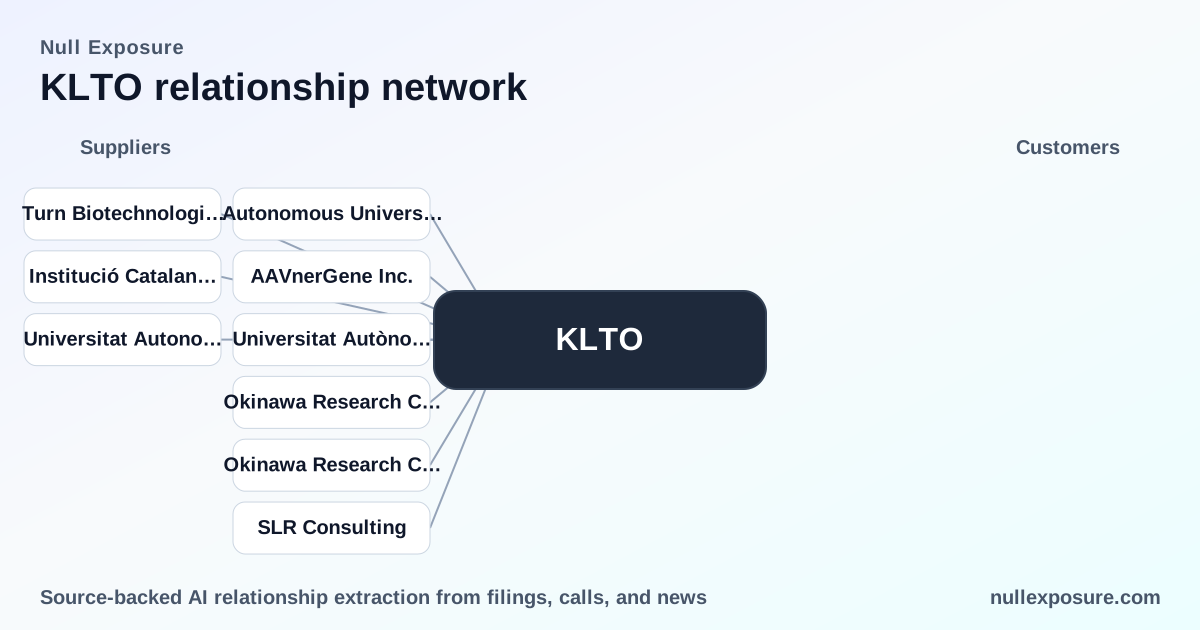
Klotho Neurosciences (KLTO): Funding-driven R&D story with early-stage capitalization dynamics
Klotho Neurosciences is an early-stage biopharma focused on therapies for neurological and age-related disorders plus specialty diagnostics; the company does not generate product revenue today and funds operations through equity issuances and private placements. The investment thesis is simple: KLTO is a research-stage play whose value will be created by scientific milestones and financing events rather than recurring sales in the near term. For investors and operators assessing counterparties and customer/investor relationships, the key is to prioritize financing cadence, dilution risk, and the strategic intent behind each capital partner. Learn more about how we surface relationship signals at https://nullexposure.com/.
How Klotho operates and how that shapes commercial relationships
Klotho runs as a single operating and reporting segment: research and development of therapeutics for chronic diseases including neurodegeneration, cancer, and cardiovascular conditions. This one-segment structure concentrates corporate resources on pipeline advancement and makes external funding the operational lifeline. The company is pre-revenue and does not generate product income, which forces a contracting posture that prioritizes equity capital and partnership deals over customer or product sales.
Operational and business-model characteristics that follow from those facts:
- Contracting posture: Predominantly capital-constrained; the company will contract with investors and strategic partners for funding and milestone-based collaborations rather than for volume-based commercial supply agreements.
- Concentration: Single-segment R&D concentration increases dependency on successful trial outcomes and on a small set of financing counterparties.
- Criticality: External capital relationships are mission-critical: each financing event can materially affect runway, dilution, and the pace of development.
- Maturity: Early-stage company dynamics—no recurring revenue, negative returns on assets and equity—make the business immature relative to commercial-stage peers.
These characteristics shape the types of counterparties likely to be involved: venture investors, private-placement participants, and potential strategic pharma partners rather than recurring product customers.
The relationships we found and what they mean for investors
The public record for KLTO’s customer-style relationships in the examined window is limited; the single material relationship identified is a capital investor transaction. Below I describe each relationship in plain language and provide the source for verification.
Sigma9 Capital, Ltd.
- Klotho agreed to issue and sell 3,400 shares of newly created Series C Preferred Stock to Sigma9 Capital, Ltd. in a private placement reported in early May 2026; the transaction is a direct equity infusion intended to support operations. According to an Investing.com news item dated May 3, 2026, the company completed the private placement of shares and warrants, and the Sigma9 purchase was disclosed as part of that financing announcement.
- Source: Investing.com coverage of the SEC filing, May 3, 2026.
That is the full set of named counterparties surfaced in the review window. The transaction is an investor financing relationship rather than a classical customer contract; nonetheless, for a pre-revenue R&D company the role of such investors is functionally similar to customers because they directly finance the company’s ability to execute its development program.
Why the Sigma9 transaction matters beyond the headline
The Sigma9 purchase signals three concrete points for investors evaluating KLTO’s commercial and financing posture:
- Immediate runway relief and dilution mechanics: Any preferred-stock issuance increases capital but alters capitalization and potential liquidation preferences; investors must track conversion terms and anti-dilution protections disclosed in the filings. The Investing.com report indicates the transaction was part of a broader private placement that included shares and warrants.
- Investor profile and follow-on potential: Participation by a named capital vehicle can indicate willingness to engage with future financings or to act as a cornerstone investor, which is valuable for syndication and investor confidence.
- Negotiating leverage: The company’s pre-revenue status gives new equity purchasers negotiating leverage on price and preferred terms; that dynamic is embedded in Series C issuances at this stage.
Constraints and company-level signals investors should price
The available constraint-level evidence should be read as company-level operating signals rather than attributes of any one counterparty.
- The firm is pre-revenue and does not generate product income. This places capital dependency at the center of the business model and makes each financing event a determinative corporate lever (relationship_stage: prospect; confidence 0.60).
- Klotho manages operations as a single R&D segment, focused on essential medicines for chronic diseases. This is a concentration signal: success or failure in the pipeline will disproportionately determine corporate outcomes (segment: core_product; confidence 0.80).
Both constraints underscore that investor relationships perform the function of customers for the near-term — they supply the funds that enable R&D and pipeline progression.
Practical risk checklist for investment and partnership decisions
- Dilution risk: Series C preferred issuances and accompanying warrants will alter cap table and potential future returns; examine conversion and liquidation terms.
- Runway sensitivity: Pre-revenue status means runway is dictated by financing cadence; missing financing milestones creates binary outcomes for trial continuity.
- Concentration risk: Single-segment focus amplifies binary scientific risk; no product diversification exists to offset trial failures.
- Ownership structure: Insider ownership is meaningful (approximately 13.1%) while institutional ownership is modest (about 4.1%), indicating concentrated insider influence and limited institutional validation.
These are the factors that determine whether a capital partner is strategic or simply transactional.
For more context on how to interpret capital partner disclosures and prioritize counterparties in early-stage life-science companies, see the research and tools at https://nullexposure.com/.
Investment takeaway: capital-driven upside, binary clinical risk
Klotho is an early-stage, pre-revenue R&D company whose near-term value is driven by funding events and clinical milestones rather than product sales. The Sigma9 preferred-stock purchase is a funding event that reduces immediate financing pressure but increases capital complexity and potential dilution. Investors should focus on (a) the economics and protective features of the issued preferred shares and warrants, (b) the company’s disclosed runway and the timing of future financing needs, and (c) upcoming scientific readouts that will reprice risk into the equity.
This is a high-risk, high-reward profile typical of clinical-stage biotechnology: allocate capital only with clear expectations about dilution pathways and milestone-driven value realization.