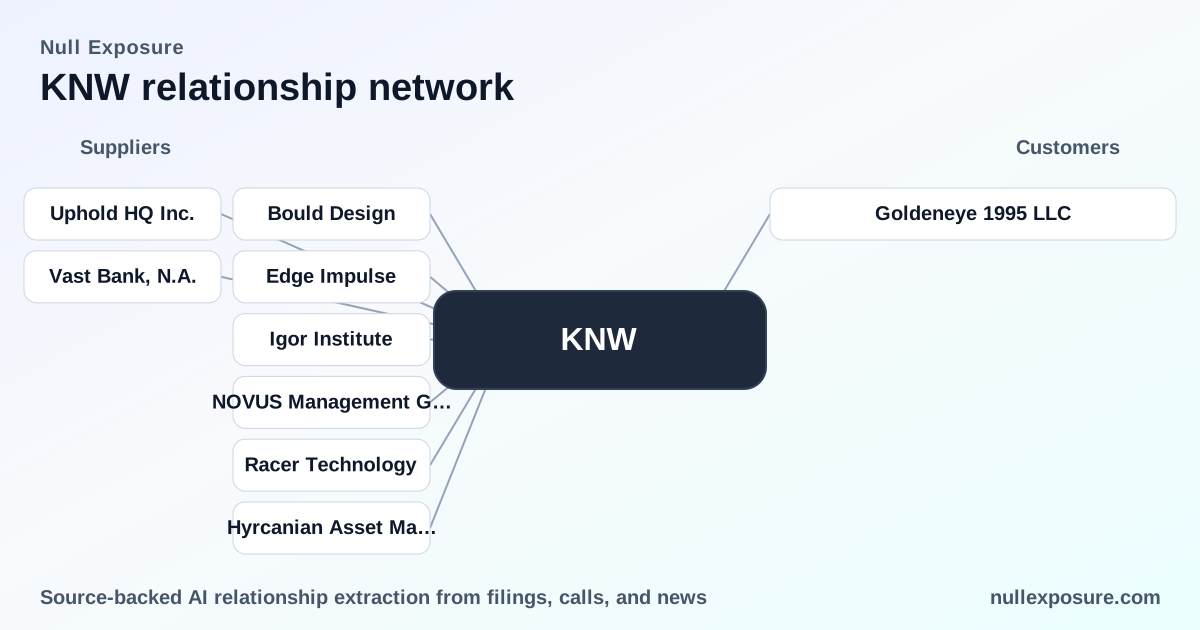
Know Labs (KNW) — Investor Brief: Strategic Control, Treasury Pivot, and What It Means for Customers
Know Labs develops non-invasive health monitoring technologies and is positioned to monetize through product commercialization, licensing of core sensing technology, and strategic capital transactions that reshape governance and balance sheet priorities. Recent transactions put a concentrated investor — Goldeneye 1995 LLC, affiliated with fintech executive Greg Kidd — into controlling position, and public reporting highlights a concurrent shift toward a cryptocurrency treasury strategy; both changes materially reframe customer, partner, and capital-deployment dynamics. For quick access to ongoing tracking and primary filings, visit the Null Exposure homepage: https://nullexposure.com/.
A decisive control change landed in early 2026
Two independent news reports, published in March–May 2026, document an agreement for Goldeneye 1995 LLC to acquire a controlling interest in Know Labs. This is not a marginal investor adding capital — it is a governance shift that directly affects strategic priorities and capital allocation.
- According to a Yahoo Finance announcement on May 3, 2026, Know Labs entered into an agreement with Goldeneye 1995 LLC — an affiliate of Greg Kidd — for Goldeneye to acquire a controlling interest in the company. (Source: Yahoo Finance, May 3, 2026)
- Bitcoin Magazine reported on March 10, 2026 that Know Labs entered into the same agreement with Goldeneye 1995 LLC and Greg Kidd; that report also framed the transaction alongside a public statement about a new treasury posture. (Source: Bitcoin Magazine, March 10, 2026)
Both reports confirm the controlling-interest transaction; each item below gives the explicit relationship disclosure from the dataset.
Relationship records (each item in the public record)
- Goldeneye 1995 LLC — report in Yahoo Finance (first seen May 3, 2026): Know Labs announced an agreement for Goldeneye 1995 LLC, an affiliate of fintech investor Greg Kidd, to acquire a controlling interest in the company. This press release serves as the company-facing disclosure of the control transaction. (Source: Yahoo Finance, May 3, 2026)
- Goldeneye 1995 LLC — report in Bitcoin Magazine (first seen March 10, 2026): Bitcoin Magazine covered Know Labs’ agreement with Goldeneye 1995 LLC and Greg Kidd to acquire a controlling interest, and placed the deal in the context of a stated change in treasury policy. (Source: Bitcoin Magazine, March 10, 2026)
What this control change implies for customers and partners
The infusion of a single controlling investor produces several concrete, investor-relevant operating shifts for Know Labs:
- Concentration of decision-making. Control by Goldeneye 1995 LLC creates a high-concentration governance posture where a single investor can accelerate strategic pivots, reallocate capital, or reset commercialization priorities without the slower consensus processes of a diffused shareholder base. This increases execution speed but concentrates strategic risk for customers and suppliers.
- Balance-sheet and treasury reorientation. Public reporting associates the new control structure with an explicit treasury strategy change — notably the adoption of a bitcoin treasury strategy reported at the time of the transaction — signaling that capital management will be an active lever for the new owners rather than a passive administrative function.
- Customer criticality and contracting posture. Customers should expect tighter alignment between product roadmaps and investor priorities; contractual terms negotiated going forward will reflect a company posture that prioritizes balance-sheet flexibility and rapid strategic iteration over long-tail legacy commitments.
Constraints and company-level signals
The dataset returned no explicit contractual constraints tied to customer relationships or long-term supplier obligations. That absence is itself a company-level signal: there are no flagged long-term contractual dependencies in the reviewed records, which suggests Know Labs’ current public disclosures do not document binding, customer-driven lock-ins that would limit strategic reorientation by new majority owners.
Risks and opportunities investors and operators should track
- Governance risk vs. execution upside. Concentrated control accelerates decisions that can unlock product commercialization or strategic partnerships — or reallocate capital away from R&D cycles that customers rely on. Evaluate contractual protections and milestone clauses in active customer agreements.
- Treasury volatility. The reported move to hold bitcoin introduces balance-sheet volatility that can affect liquidity, credit lines, and supplier confidence; counterparty stability becomes a financial consideration as well as an operational one.
- Regulatory and reputational exposure. A fintech-heavy owner and a public bitcoin treasury strategy increase regulatory scrutiny and could influence partner willingness to engage depending on their risk profiles.
- Commercial maturity. Customers should assess actual product readiness and delivery timelines separately from headline governance changes; investor-driven pivots can accelerate go-to-market or extend pre-commercial phases depending on capital priorities.
Practical signals for customer diligence and monitoring
- Request confirmation of contractual protections (term lengths, termination rights, IP licenses) that remain intact under new ownership.
- Monitor quarterly filings and press releases for treasury disclosures and any asset reallocation events that impact cash available for operations.
- Evaluate counterparty appetite for working with a firm that has adopted a crypto-backed treasury, especially where regulatory compliance or fiduciary constraints apply.
For ongoing tracking of these developments and consolidated source access, visit Null Exposure: https://nullexposure.com/.
Bottom line: concentrated ownership changes the playbook
The Goldeneye 1995 LLC controlling agreement is a material corporate governance event that redefines Know Labs’ strategic levers. Investors and customers must treat the company as actively re-prioritizing both governance and balance-sheet strategy, with direct implications for contracting posture, counterparty risk, and the timing of commercialization. The public reports cited above provide the primary documentation of the transaction and the associated treasury signals; diligence should begin with those disclosures and extend into contractual review and liquidity monitoring.
Primary reporting reviewed: Yahoo Finance announcement (May 3, 2026) and Bitcoin Magazine coverage (March 10, 2026).