Kodak’s customer tapestry: how relationships drive revenue and where risk concentrates
Eastman Kodak operates as a diversified supplier of hardware (platesetters, printers), film and chemicals, software and services, and brand licensing to commercial printers, packaging firms, filmmakers and consumer channels. The company monetizes through a mix of equipment sales and leases, consumables and film sales, SaaS/subscription software, and licensing arrangements, with more than half of revenue generated outside the U.S.; this hybrid model creates recurring consumables economics alongside lumpier equipment and licensing receipts. For investors, the critical question is whether Kodak’s recurring consumables and licensing streams are large and stable enough to offset cyclical capital sales and legacy pension transactions. Learn more on our homepage: https://nullexposure.com/
How Kodak really contracts and scales — constraints that shape cash flow
Kodak’s customer relationships reflect a mix of contracting styles. Licensing is a strategic revenue pillar—the company records deferred revenue from long-term brand licensing and monetizes patents and symbolic IP—which drives high-margin, low-capex cash flows over time. Service and maintenance agreements are often short-term (one-year initial terms with annual renewals), producing annual renewal risk but steady service revenue. Kodak also sells SaaS arrangements, recognizing revenue over contract terms and creating predictable recurring receipts when adopted at scale.
Geographically, Kodak is global with meaningful exposure to North America, EMEA and APAC; more than half of sales come from outside the U.S., so currency and regional demand cycles matter. Revenue concentration is mixed: no single external customer exceeds 10% of total net revenue, but Kodak’s Prepress (printing) business remains a material portion of sales—over half of total net revenue—so end-market pressure in printing is a systemic risk. Operational roles reported in filings show Kodak acts as seller, licensor and service provider, and it uses channel partners and distributors, which introduces single-distributor risks in certain consumable lines. These constraints shape capital allocation: favor licensing and consumables for steady margins, remain cautious on large, lumpy equipment rollouts.
The customer roll call — every relationship in the public results
Below I cover each relationship referenced in the provided results, with a concise plain-English summary and source note.
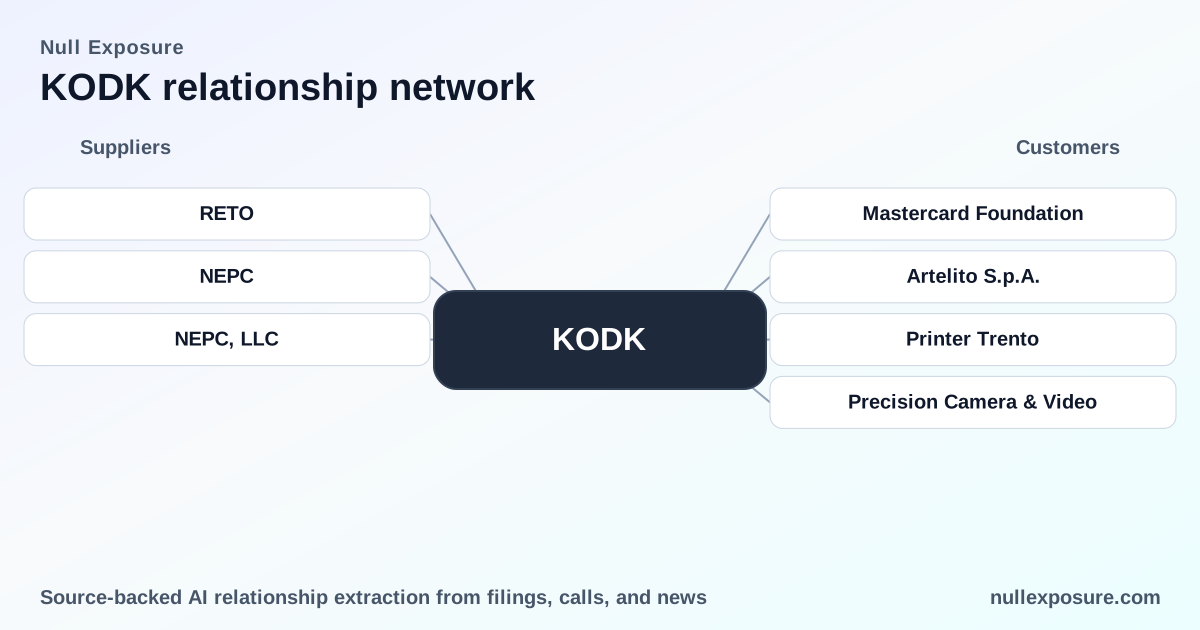
Mastercard Foundation
Kodak agreed to sell illiquid assets from its Kodak Retirement Income Plan to the Mastercard Foundation—an arrangement involving $764.4 million in assets sold for $550.6 million with a planned December 31 closing—reflecting a pension plan transaction rather than routine commercial customer business. This was reported in an 8-K summarized by PlanSponsor in March 2026.
HBO Max (press & web summaries)
HBO Max used more than one million feet of Kodak’s VERITA 200D film in 35mm and 65mm for Season 3 of Euphoria, demonstrating high-profile adoption of Kodak’s cinema film product in major streaming production. Kodak’s press release and multiple media summaries in May 2026 highlight this usage and its marketing value for the Motion Picture segment (WebWire and Kodak press materials, May 2026).
Artelito S.p.A.
Italian commercial and packaging printer Artelito purchased a KODAK MAGNUS Q800 Platesetter with a Single Cassette Unit, signaling continued fleet refresh and equipment replacement demand in European packaging printing. Kodak announced this customer win on its corporate site in March 2026.
Printer Trento
Printer Trento purchased another high-performance platesetter from Kodak, which illustrates repeat equipment buying by established print customers and supports the recurring consumables and maintenance aftermarket. Kodak documented this customer transaction in a March 2026 press release.
Kodak Alaris
Kodak Alaris is being shut down and integrated into Eastman Kodak, with Kodak historically manufacturing film while Alaris distributed it; integration consolidates distribution channels back under Kodak’s control and may simplify go-to-market for film products. Industry reporting on this transition appeared in April 2026 (The Phoblographer, April 2026).
CineStill
Brands like CineStill have begun selling Kodak film following distribution shifts, indicating third-party brands and specialty retailers are active resellers of Kodak’s film and that Kodak’s channel strategy is evolving post-Alaris integration. This market commentary was included in April 2026 coverage of Kodak Alaris’s wind-down (The Phoblographer, April 2026).
A24
A24 and several film productions used VERITA 200D in advance of its formal release, including A24’s upcoming The Death of Robin Hood, showing Kodak’s film is being adopted by independent studio cinematographers and can drive prestige use cases. Kodak’s promotional materials and industry outlets cited A24 involvement in May 2026 (Kodak press release; ASC coverage).
HBO (network)
HBO (distinctly cited in some outlets) commercialized VERITA 200D in motion-picture formats for Euphoria Season 3 production, reinforcing the same production-level customer adoption cited for HBO Max and underlining cross-platform studio reliance on Kodak film. This was covered in Kodak’s press release and industry commentary in May 2026 (Kodak press release; The ASC, May 2026).
Precision Camera & Video
Retailers such as Precision Camera & Video stock and display Kodak Gold film on shelves, reflecting continued consumer retail demand and brand presence in specialty camera stores; this retail-level visibility was noted in a broader CNBC feature about Gen‑Z interest in film in August 2025.
What these relationships imply for investors
- Brand and film product adoption by premium studios (HBO/HBO Max, A24) is a strong marketing lever for Kodak’s Motion Picture segment and supports higher-margin film sales and IP prestige. High-visibility wins translate into modest near-term revenue but meaningful brand equity and aftermarket consumable demand.
- Repeated equipment purchases by printers (Artelito, Printer Trento) confirm the resilience of Kodak’s Prepress hardware funnel and the importance of consumables/services follow-on revenue. The Prepress business remains material to Kodak’s top line—over half of net sales—so strength here underpins profitability.
- Channel and distribution changes (Kodak Alaris, CineStill, Precision Camera) indicate Kodak is consolidating control of film distribution, which could improve margins but introduces execution risk during integration.
- The Mastercard Foundation pension transaction is a balance-sheet and cash-event story rather than a commercial revenue relationship; it affects Kodak’s reported pension funding and liquidity profile and should be watched for one-time cash impacts disclosed in 8‑K filings.
Risk and opportunity — concise takeaways
- Opportunity: Studio and indie filmmaker adoption of VERITA 200D creates high-margin motion picture sales and marketing momentum. Repeat equipment customers sustain a consumables aftermarket.
- Risk: Heavy exposure to the Prepress segment (material to sales) concentrates commercial risk in printing demand cycles; single-distributor inventory issues in consumables are a known vulnerability. Integration of Kodak Alaris into Kodak introduces execution and channel risk.
- Contracting posture: A mix of long-term licensing revenue (deferred, high-margin) and short-term service contracts produces a balanced but complex cash flow profile—licensing supports margins while short-term service contracts keep renewal risk elevated.
If you want a concise mapping of these customer ties into revenue buckets and balance-sheet impact, visit https://nullexposure.com/ for tailored exposure reports and dashboarding.
Conclusion: Kodak’s customer relationships are a mosaic of high-visibility film wins, repeat industrial equipment buyers, evolving distribution channels, and the occasional large balance-sheet transaction. For investors, the core diligence is whether recurring consumables and licensing growth can offset cyclicality in equipment sales and absorb execution risk from distribution integration.