Coca‑Cola FEMSA (KOF) — local partnerships as strategic soft power for a bottling giant
Coca‑Cola FEMSA operates as a large franchise bottler: it produces, markets, sells and distributes Coca‑Cola branded beverages across its territories and monetizes through product sales, distribution margins and long‑term franchise agreements tied to concentrate supply and trademark licensing. Revenue stability and local distribution reach are the business’s primary engines; incremental value comes from route density, pricing power in retail and out‑of‑home channels, and community relationships that protect access to scarce resources and social license. For deeper relationship intelligence and monitoring, see https://nullexposure.com/.
Quick investor thesis
KOF is a mature, cash‑generative bottler with a large geographic footprint and established franchise ties to The Coca‑Cola Company; the company’s value derives from scale in distribution, predictable beverage demand, and local operating advantages. Financials through the March 31, 2026 quarter show Revenue TTM ~$292.5 billion and EBITDA ~$51.3 billion, supporting a meaningful dividend yield and institutional ownership. These fundamentals create a stable base, while localized partnerships and infrastructure projects function as strategic risk management and brand protection rather than primary revenue drivers.
How a community water project fits into the playbook
Coca‑Cola FEMSA routinely invests in community access and resource projects because such initiatives protect factory and distribution access to water, reduce regulatory friction, and strengthen the brand in core markets. The reported connection of one of FEMSA’s wells to Mexico City’s public network is a classic example of a bottler converting private infrastructure into a public benefit that secures operational continuity and improves stakeholder relations.
A local news report from Edomex al Día on March 10, 2026 documents the action: FEMSA connected one of its wells to the Sistema de Aguas de la Ciudad de México to supply about 15,000 residents of Atlampa, Mexico City, as part of FY2023 activity.
Relationship detail: Sistema de Aguas de la Ciudad de México (SACMEX)
Coca‑Cola FEMSA connected a company-operated well to the City of Mexico’s public water network to provide potable water to roughly 15,000 residents in the Atlampa neighborhood. This is a community access arrangement executed and reported in March 2026 that reflects FEMSA’s local infrastructure engagement. Source: Edomex al Día, March 10, 2026.
Key takeaway: this is an operationally strategic community partnership — it secures water access in a dense urban market while delivering visible social value that protects the company’s license to operate.
All customer relationships covered in this review
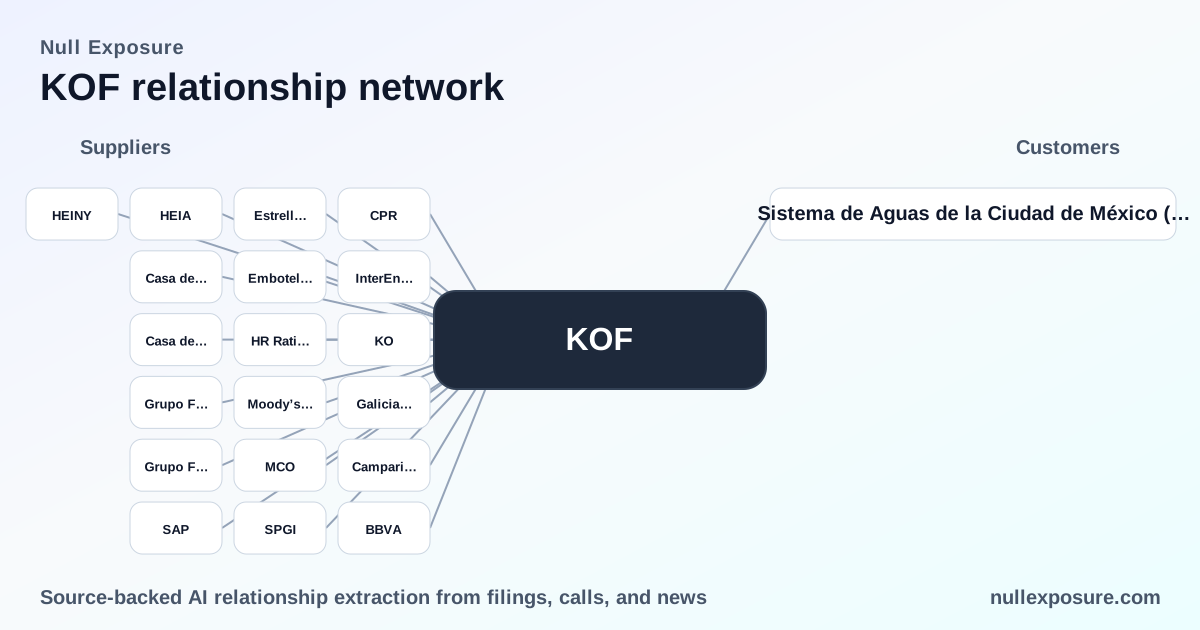
The available relationship feed returned a single, discrete municipal partner: Sistema de Aguas de la Ciudad de México (SACMEX). The connection project described above is the only reported relationship in the reviewed results and is summarized directly above with source attribution. Source: Edomex al Día (news report), first seen March 10, 2026.
What the relationship signals about KOF’s operating model
- Contracting posture: FEMSA acts as both operator and community infrastructure provider in local markets, demonstrating an active, on‑the‑ground contracting stance with municipal entities rather than a purely arm’s‑length commercial posture.
- Concentration and geographic exposure: the company operates across multiple Latin American markets; localized arrangements like the SACMEX project reflect territory‑level risk management rather than dependence on a single municipal counterparty.
- Criticality: access to water is operationally critical for a beverage bottler; projects that integrate private wells into public networks are highly strategic for continuity and regulatory relations.
- Maturity: the firm’s scale (Revenue TTM ~$292.5 billion; Market Cap ~$21.26 billion; EBITDA ~$51.3 billion as of latest quarter) underscores an established, capital‑intensive operation capable of funding infrastructure partnerships without reallocating core growth capital.
Note: there are no explicit constraints returned in the reviewed relationship feed, which itself is a company‑level signal — the public feed for customer relationships did not show contractual limitations or flagged counterparty risks in this sample.
Operational and investor implications
- ESG and reputational upside: visible municipal partnerships reduce political and regulatory tail risks while bolstering the brand among consumers and local authorities.
- Operational resilience: integrating private water sources with municipal systems reduces the probability of supply interruptions for production and highlights direct control over a critical input.
- Capital allocation tradeoffs: such projects are typically modest compared with enterprise capital needs, but they compete against productivity and growth investments; investors should track disclosures on capex mix and project economics in periodic filings.
- Monitoring indicators: watch municipal permits, water usage disclosures, local regulatory changes, and any changes to franchise terms with The Coca‑Cola Company that could shift capital priorities.
Risks highlighted by the relationship
- Regulatory exposure in water‑stressed jurisdictions is a real operating risk for beverage bottlers; community projects reduce immediate friction but do not eliminate policy or scarcity risks.
- Reputational linkage: operational missteps in water projects generate outsized reputational damage given public sensitivity; governance and transparency around such projects are essential.
- Limited revenue impact: while strategically valuable, these partnerships are not material revenue sources; investors should differentiate between strategic mitigation and top‑line growth.
How to act on this signal
- For equity investors: treat the SACMEX engagement as positive ESG signal and incremental protection for operating continuity in Mexico City, but continue to prioritize macro consumption trends, pricing power, and concentrate agreements in valuation work.
- For operators and partners: the project is a model for public‑private cooperation in water‑scarce urban settings; replicateable approaches could lower local operating risk across FEMSA’s footprint.
For a structured view of KOF’s partner network and to track relationships across markets, explore more intelligence at https://nullexposure.com/.
Bottom line
Coca‑Cola FEMSA’s reported connection to SACMEX is a strategic, localized initiative that strengthens operational continuity and social license in a key urban market. Investors should treat this as risk mitigation and reputational capital rather than a material commercial arrangement, while continuing to focus valuation and monitoring on core beverage economics, franchise terms, and capital allocation decisions.