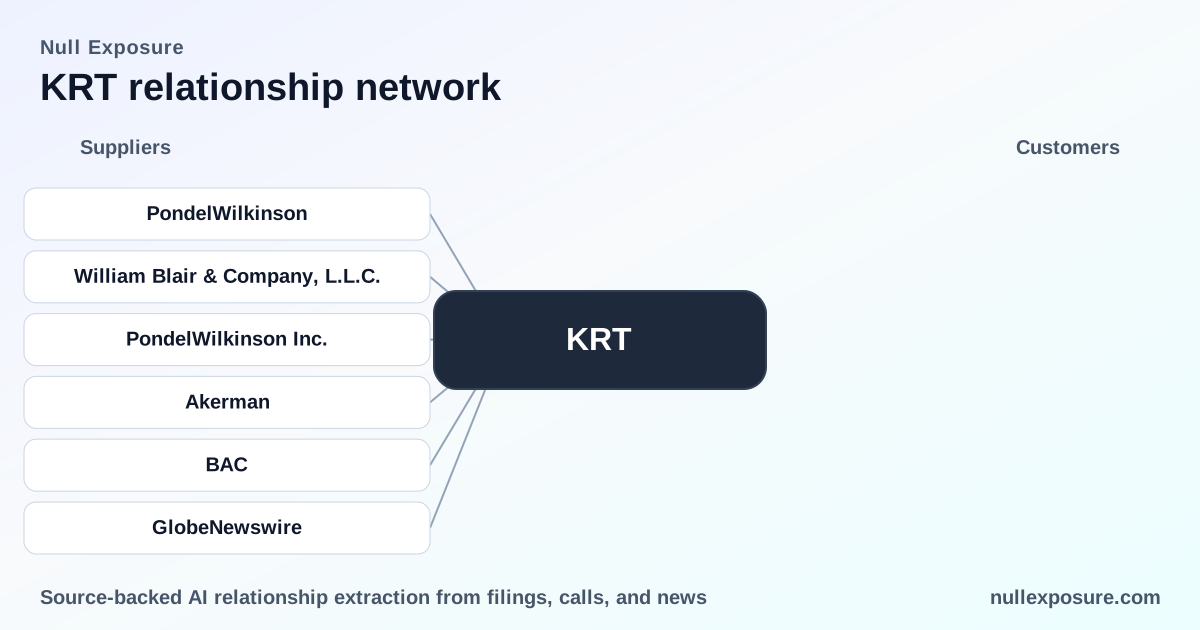
KRT: Platform expansion and distributor reach underpin a scaled, low-concentration revenue model
Karat Packaging (NASDAQ: KRT) manufactures and distributes single‑use disposable foodservice products and monetizes through a mixed model of direct e‑commerce sales and wholesale distribution to national and regional channels. Revenue growth is being driven by digital channel expansion (Shopify and third‑party marketplaces) while distribution partnerships (Sysco, Cheney Brothers, national retailers) preserve broad market access; no single customer exceeds 10% of revenue, which supports predictable cash flows and mitigates counterparty concentration risk. For an investor, the ongoing shift to owned fulfillment and platform rollouts is the principal operational lever for margin improvement and revenue diversification.
Learn more at https://nullexposure.com/.
How KRT is changing the route to market — a concise operational read
Karat operates as both a manufacturer and a distributor, but the business is increasingly oriented toward third‑party distribution and direct online fulfillment. Management has disclosed a deliberate move away from Amazon‑fulfilled sales toward driving traffic to the company’s own Lollicup/Shopify storefront and selective third‑party platforms, which preserves gross margin while expanding reach. At the same time, adding commerce placements on major distributor and retail portals increases wholesale volume without creating a concentrated counterparty risk profile.
Customer relationships called out on the Q4 2025 earnings call
Below I cover every customer relationship referenced in the available transcripts and press summaries. Each entry is a plain‑English summary with the source cited.
Cisco (Cisco.com)
Karat announced that it had added a Cisco.com platform as a sales channel, listing Cisco.com alongside other online storefronts as part of its planned platform expansion in FY2026. Source: Q4 2025 earnings call transcript reported on InsiderMonkey and the Globe and Mail (May 3, 2026).
Target (Target.com)
Management confirmed that Target.com will be added as a retail channel, reflecting a push into large national retail e‑commerce portals in FY2026 to broaden consumer and small‑business access. Source: Q4 2025 earnings call transcript reported on InsiderMonkey, Investing.com, and the Globe and Mail (May 3, 2026).
Amazon
Amazon remains a meaningful online presence for Karat, but management explained a strategic shift: the company is reducing reliance on Amazon‑fulfilled listings and prioritizing fulfillment through its own Shopify store and selective third‑party platforms to optimize margins and customer economics. Source: Q4 2025 earnings call transcript reported on Investing.com and InsiderMonkey (May 3, 2026).
Sysco (Sysco.com)
Karat has added the Sysco.com platform to its distribution mix, signaling deeper penetration into national foodservice distributor channels that serve restaurants, cafes, and institutional buyers. This is positioned as part of the company’s strategy to reach both large chain buyers and foodservice operators. Source: Q4 2025 earnings call transcript reported on Investing.com (May 3, 2026).
Cheney Brothers / ChenneyBrothers.com
Karat referenced Cheney Brothers (also written as CheneyBrothers.com and ChenneyBrothers.com in call notes) as a targeted distributor channel being added in FY2026, reinforcing the company’s emphasis on national/regional foodservice distributors. Source: Q4 2025 earnings call transcript reported on Investing.com, InsiderMonkey, and the Globe and Mail (May 3, 2026).
What the relationship map implies about the business model
- Contracting posture: KRT operates primarily as a seller—both manufacturer and distributor—and contracts across a mix of large distributors, national retailers, and small business customers. Management language highlights active channel expansion rather than dependence on bespoke strategic partnerships, implying standard supplier‑buyer contracting rather than long‑term exclusive agreements.
- Concentration: No single customer generated more than 10% of revenue in 2024, a company disclosure that signals low customer concentration and reduced counterparty credit risk for investors.
- Criticality to customers: Karat supplies consumables for restaurants and foodservice — products are repeatable and reorder‑driven but not single‑source critical; the company benefits from recurring demand, though competitive suppliers can substitute.
- Maturity and mix shift: Manufacturing accounted for roughly 11% of net sales in 2024 (down from 20% the prior year), indicating a pivot toward distribution and commerce channels; this signals a company in transition from vertically integrated manufacturing toward a higher‑margin distribution and branded direct‑to‑consumer model.
- Geographic footprint: The company’s assets and revenues are almost entirely U.S.‑based, reinforcing a domestic market focus and corresponding exposure to U.S. foodservice trends.
Investment implications: growth levers and risks
- Upside levers
- Platform expansion (Target.com, Cisco.com, Sysco.com, Cheney Brothers) creates scalable SKU exposure to national buyers and consumers, supporting double‑digit online growth management forecast for FY2026 as stated on the call.
- Margin improvement from shifting fulfillment in‑house and reducing Amazon‑fulfilled sales should incrementally lift operating margins as direct fulfillment economics improve.
- Key risks
- While no single customer is material, the business still relies on a fragmented mix of small businesses and distributors; a prolonged downturn in foodservice activity would compress reorder frequency.
- The move away from Amazon‑fulfilled listings improves margins but concentrates logistics execution on Karat; execution missteps in fulfillment could temporarily impair service levels to third‑party channels.
Bottom line and what to watch next
Karat’s relationship strategy is a deliberate orchestration of distribution and platform exposure: broad, low‑concentration wholesale relationships combined with a push to higher‑margin, owned online fulfillment. For investors, monitor two leading indicators: (1) reported online revenue mix and margin contribution from Shopify/own fulfillment versus marketplace fulfillment; and (2) incremental volume secured via major distributor portals (Sysco, Cheney Brothers) and large retail e‑commerce placements (Target.com). These metrics will show whether the company’s platform additions convert into sustainable revenue and margin expansion.
If you want a concise, analyst‑grade briefing on KRT’s customer map and operational posture, visit https://nullexposure.com/ for deeper coverage and ongoing updates.