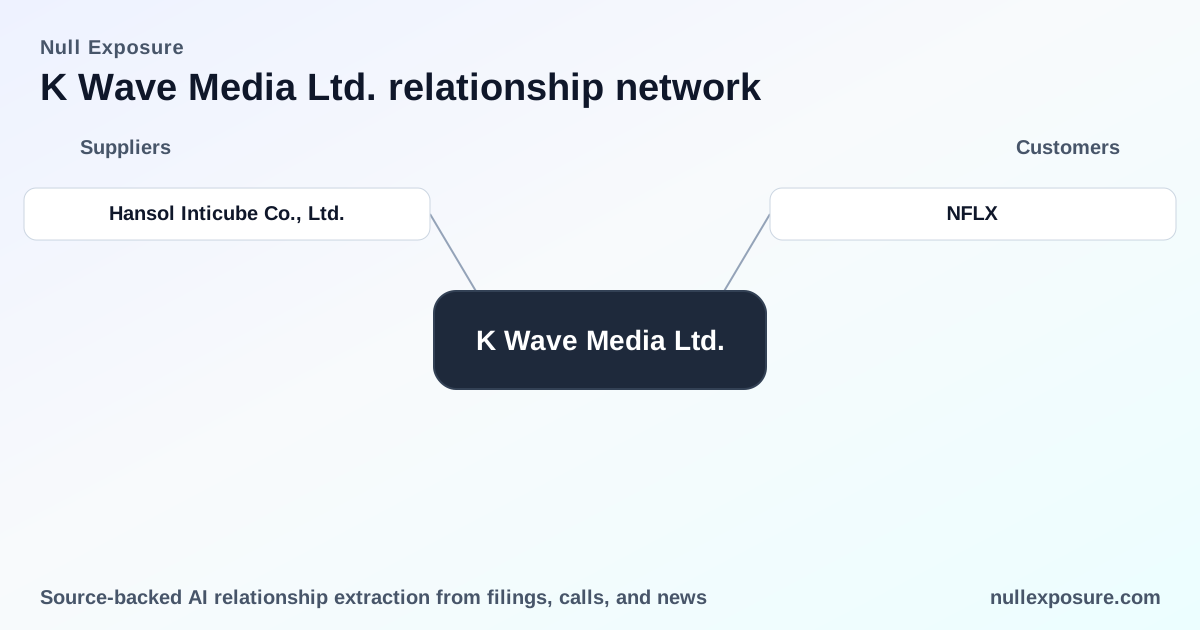
K Wave Media (KWM): Content-first customer relationships that monetize through global distribution and K‑pop partnerships
K Wave Media operates as a vertically integrated content and IP merchant: it develops and finances film and television projects through subsidiaries, then monetizes via global distribution deals, licensing, and merchandising tied to K‑content and K‑pop IP. Revenue comes from content sales and distribution agreements with major OTT platforms plus partnership-driven merchandising and entertainment investments; the company's financial profile shows large top-line scale alongside negative operating performance and a micro‑cap market valuation, creating a classic high‑growth / high-risk bifurcation for investors.
If you want a quick read on KWM’s relationship map, visit https://nullexposure.com/ for an overview of our coverage and signals.
How KWM’s customer relationships are structured in practice
K Wave Media’s reported customer relationships cluster into two commercial buckets: (1) global OTT distribution partners that license finished projects (notably Netflix) and (2) major K‑pop companies that supply artist IP and collaboration channels (HYBE, SM, JYP, KQ). This mix underpins a production-and-distribution contracting posture: KWM funds or creates content through subsidiaries and then sells or licenses finished projects to platform customers while leveraging K‑pop firms for talent, cross‑promotion, and merchandising.
Below I cover every relationship reported in the available coverage with concise, plain-English summaries and source notes.
Netflix / NFLX / Netflix Inc.
KWM delivered its first Netflix original release, the series “Trigger,” produced by subsidiary Bidangil Pictures, and subsequently launched a major project described as having a production budget exceeding Squid Game S1; those releases demonstrate direct distribution monetization via Netflix and validate KWM’s capacity to deliver large‑scale global shows. Source: Futunn news and Koreajoongang Daily reporting on KWM’s Netflix releases (March 2026; August 2025).
HYBE
Through its subsidiaries, KWM currently works with HYBE as one of several major K‑pop entertainment partners, a relationship that supports cross‑promotion, artist access and merchandising opportunities rather than direct platform distribution. Source: Manila Times / GlobeNewswire press release summarizing KWM subsidiary partnerships (May 3, 2026).
SM Entertainment (STEAF)
KWM lists SM Entertainment among the K‑pop firms it works with via subsidiaries; this relationship provides access to established artist IP and industry networks that can feed content projects, events, and licensing streams. Source: Globe and Mail and Bitget coverage of KWM subsidiary activity (May 2026).
JYP Entertainment
JYP Entertainment is cited as another partner KWM engages through subsidiaries, further broadening the company’s artist and IP pipeline and creating multiple merchandising and promotional channels for produced content. Source: Manila Times / press syndications reporting on KWM’s subsidiary partnerships (May 3, 2026).
KQ Entertainment
KQ Entertainment appears alongside JYP, HYBE and SM as a collaborator through KWM subsidiaries, representing additional artist relationships that support content tie‑ins and IP commercialization. Source: Bitget and Globe and Mail distributed press coverage (May 2026).
What these relationships imply for revenue and contracting posture
- Content licensing to global OTTs is the primary monetization lens for distribution revenue. Netflix placements and originals convert production investments into licensing receipts, geographic reach, and platform promotional support.
- K‑pop firms function as strategic content and merchandising suppliers. HYBE, SM, JYP and KQ are not listed as purchasers of content in these reports; they are strategic partners that supply talent and IP, enabling merchandising, soundtrack, cameo and co‑production opportunities.
- Contracting posture is production‑led and partner‑dependent. KWM finances or incubates content via subsidiaries and then secures distribution contracts; success depends on winning platform slots and leveraging K‑pop partnerships for audience lift.
These dynamics create concentration and execution risks: landing recurring distribution agreements with a small number of global OTTs (notably Netflix) matters materially, while the K‑pop partnerships reduce artist sourcing risk but increase dependency on music/entertainment ecosystem relationships.
Financial and operational context investors need to weigh
K Wave Media reports substantial revenue (RevenueTTM: 12,276,888,000) alongside a negative operating picture (OperatingMarginTTM: -1.186, DilutedEPSTTM: -0.47) and a market capitalization that is small relative to revenue (MarketCapitalization: 21,029,100). That divergence—large reported top line with negative margins and micro‑cap valuation—frames KWM as a company with significant scale in revenue channels but operational losses and valuation stress. Use those numbers as a direct input to downside sensitivity and recovery scenarios.
There are no internal constraints flagged in the relationship data set for KWM; that absence is itself a company‑level signal that the publicly surfaced relationship set is focused on announced partnerships and distribution placements rather than explicitly disclosing long‑term exclusive supply contracts or concentration limits.
Risks and what to watch next
- Distribution concentration: Netflix is the most visible OTT partner in the reporting; dependence on a single global platform for flagship releases is an execution risk if renewal or repeat bookings do not materialize. Source: multiple press items describing Netflix originals (Futunn, Manila Times, Koreajoongang Daily; March 2026 / Aug 2025).
- Operational leverage: High revenue with negative margins requires monitoring of content costs and amortization timing; investors should track subsequent releases, licensing fees, and merchandising revenue tied to K‑pop partnerships.
- Transparency and governance: KWM’s Cayman Islands headquarters and limited analyst coverage (no consensus target price in the provided data) require extra diligence on reporting cadence and subsidiary arrangements.
Bottom line and next steps for investors
K Wave Media combines production financing with strategic artist partnerships to monetize content through global OTT distribution and merchandising. The Netflix relationship validates KWM’s ability to place large‑budget, globally competitive content, while multiple major K‑pop partners provide an IP pipeline for merchandising and cross‑promotion. However, valuation, negative margins and platform concentration are the dominant investment risks.
For a structured deep dive into KWM’s relationship signals and comparable content‑company coverage, visit https://nullexposure.com/ to access our research portal and signal tracking.
If you want further analysis—model scenarios on recurrent licensing revenue, or a focused review of distribution concentration and subsidy economics—I can assemble a follow‑up brief that quantifies downside scenarios and partner‑dependency thresholds.