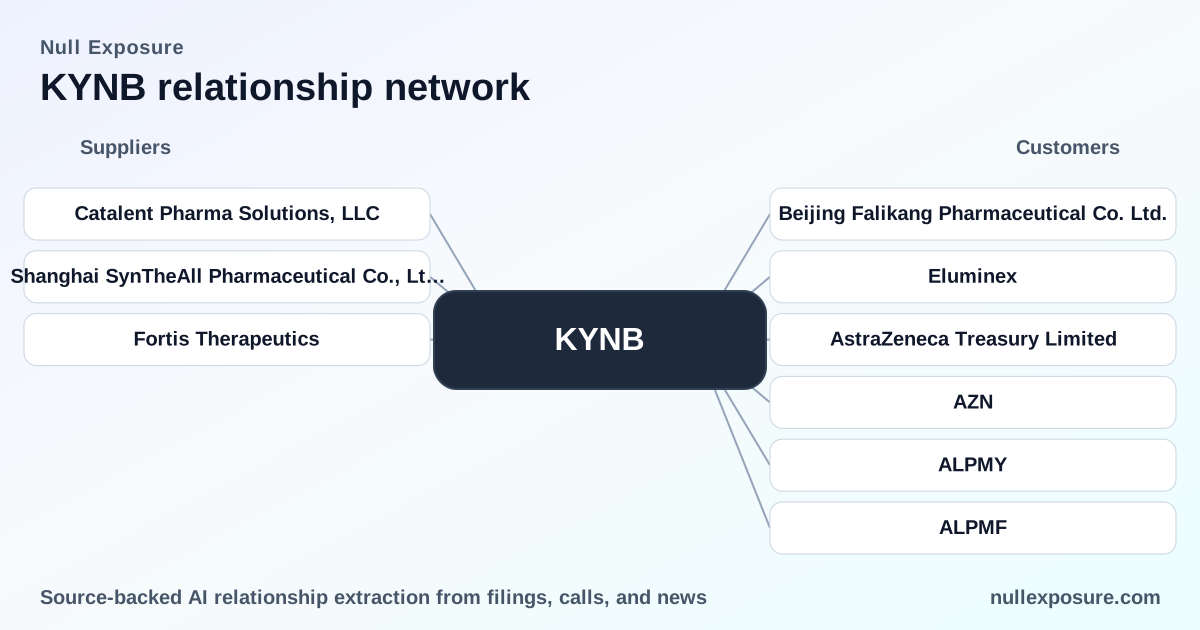
Kyntra Bio (KYNB): Customer map, revenue concentration, and operational constraints
Kyntra Bio monetizes by licensing, collaboration income and product sales tied to its roxadustat franchise and related programs; its commercial footprint historically centered on large pharma partners who buy drug product, settle milestone and termination considerations, and — in China — operate through a local distributor structure. Revenue is highly partner-concentrated and transaction-driven, with material proceeds from AstraZeneca-related agreements and discrete commercial sales to regional distributors. For a concise corporate data snapshot, see Kyntra’s public filings or visit https://nullexposure.com/.
Business model and what investors should focus on
- Kyntra’s near-term cash generation is driven by partner settlements and product transfers rather than diversified end-market selling; collaboration receipts, divestiture proceeds and variable drug product revenue dominate reported revenue.
- The operating posture is contracting and transitional: Kyntra has executed a sale of its China business and settled legacy balances with AstraZeneca, which materially reshapes its revenue base and cash runway.
- Commercial risk concentrates in APAC (China, Japan) with EMEA exposure via partner agreements; manufacturing and distribution flows are arranged through third-party and joint-venture channels rather than broad direct-to-market presence.
Customer relationships: the counterparties that drive Kyntra’s revenue Below I cover every customer/counterparty cited in the available relationship results; each entry includes a direct source reference.
Eluminex
Kyntra reported that Eluminex accounted for approximately 18% of total revenue in FY2024, making it a material collaboration revenue source for that period. According to Kyntra Bio’s FY2024 Form 10‑K, Eluminex was one of the collaboration partners that individually represented 10%+ of revenue for the year.
AstraZeneca Treasury Limited
Kyntra executed a Share Purchase Agreement with AstraZeneca Treasury Limited to sell its FibroGen China Anemia Holdings equity interests for roughly $160 million under the February 20, 2025 agreement. The transaction is documented in Kyntra’s FY2024 10‑K’s description of post‑period events and sale agreements.
Beijing Falikang Pharmaceutical Co. Ltd.
Beijing Falikang was Kyntra’s primary Chinese commercial customer for roxadustat product, with substantially all China distributor sales routed through Falikang; product revenue in discontinued operations primarily reflected sales to this entity. This role is described in Kyntra’s FY2024 10‑K discussion of product revenue and Chinese distribution.
AstraZeneca / AZN (global AstraZeneca plc) — commercial and settlement counterparty
AstraZeneca accounted for the vast majority of Kyntra’s revenue in FY2024 (about 88%) under legacy collaboration and settlement arrangements, and Kyntra disclosed aggregate consideration received under AstraZeneca agreements totaling $439.0 million through December 31, 2024. The FY2024 10‑K states AstraZeneca’s outsized revenue share, and subsequent corporate commentary and press coverage describe the sale of China operations to AstraZeneca and the related financial settlements (earnings call Q3 2025; news coverage in 2026).
AstraZeneca (news & earnings coverage of the China divestiture)
Kyntra’s management publicly described completing the sale of FibroGen China to AstraZeneca for approximately $220 million and the repayment of secured debt, a point reiterated in the Q3 2025 earnings call and in multiple 2026 press reports. See Kyntra’s Q3 2025 earnings call transcript and contemporaneous news reports (March–May 2026).
Astellas / ALPMF / ALPMY
Astellas is a listed collaboration counterparty that accounted for a meaningful portion of prior years’ revenue (12% in FY2024, previously 54% in FY2023), and Kyntra supplies drug product to Astellas to support pre‑commercial and ongoing commercial activities in Japan and Europe. This relationship and the variable nature of drug product revenue to Astellas are discussed in Kyntra’s FY2024 10‑K and management remarks in the Q3 2025 earnings call.
How to read these relationships together: concentration, criticality, and contract posture
- Concentration is the dominant structural feature. AstraZeneca and Astellas together represented a majority of reported revenues in recent filings; in FY2024 AstraZeneca alone was approximately 88% of revenue. That level of dependency makes Kyntra’s near-term financial profile sensitive to single‑counterparty settlements and divestitures.
- Revenue composition is non-recurring and transactional. Material components include termination/transition considerations, divestiture proceeds and product transfers recognized as variable consideration; this yields step‑function results (large one‑time receipts rather than stable recurring sales).
- Commercial distribution is regionally fragmented and partner‑centric. China sales have historically been executed through Falikang (a joint venture arrangement), while Japan and Europe flows are managed via partner contracts and drug product supply to global partners.
- Contracting posture is defensive and transitional. Kyntra has been monetizing legacy assets (e.g., China sale) and settling historical balances; this shifts the company from a cash‑hungry development posture toward cash‑stabilization via disposals and partner receipts.
Operating constraints and company‑level signals
- Geography: APAC concentration with EMEA exposure. Kyntra’s revenue generation has been concentrated in China and Japan, with European sales recognized through partner channels, signaling regional concentration risk and exposure to APAC commercial dynamics (Kyntra FY2024 10‑K).
- Seller role and distribution mechanics: Kyntra recognizes product revenue when control transfers to counterparties; in China, substantially all direct product sales are made by Falikang to distributors, which relegates Kyntra to a supplier/transfer role for the local market (FY2024 10‑K).
- Manufacturing and supply: The company-level disclosure identifies manufacturing activity centered in FibroGen Beijing, which manufactures and supplies commercial product to Falikang — an operational detail that links production to the China distribution pathway (FY2024 10‑K).
Implications for investors and operators
- Earnings volatility is structural. Expect lumpy P&L patterns tied to partner settlements and divestiture recognition rather than smooth commercial ramping. Management has already used asset sale proceeds to extend runway and retire secured debt.
- Counterparty risk is concentrated but partially mitigated by completed transactions. The AstraZeneca settlement and China divestiture materially reshaped exposure, but legacy dependencies warrant monitoring for remaining milestone, supply, or settlement flows.
- Operational focus should be on redeploying proceeds and stabilizing recurring revenue. Convert one‑time proceeds into durable R&D execution or commercial capabilities that dilute single‑partner exposure.
For a direct look at company disclosures and additional relationship detail, visit https://nullexposure.com/ for linked filing summaries and relationship analytics. If you want a focused briefing on Kyntra’s post‑divestiture financial runway and partner obligations, Kyntra’s FY2024 10‑K and the Q3 2025 earnings call transcript are the primary source documents cited above.