How Lithium Americas Converts the Thacker Pass Asset into Revenue: an investor thesis
Lithium Americas Corp (LAC) develops large-scale lithium projects and monetizes through long-term offtake contracts, joint-venture funding and project financing tied to production milestones. The company’s commercial model centers on securing capital and revenue visibility via strategic industrial partners — most prominently General Motors — and automating plant operations with selected vendors, thereby turning an early-stage mining asset into contracted cashflow. For a concise view of relationship risk and concentration, see Null Exposure’s coverage: https://nullexposure.com/.
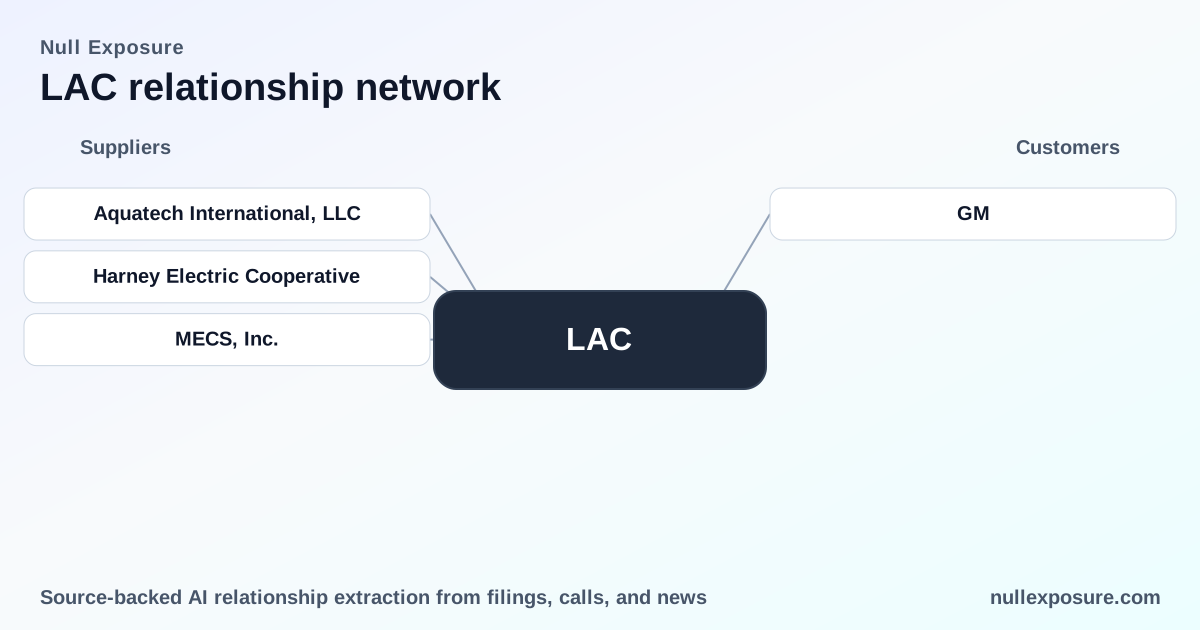
Why the GM tie-up dominates the customer map
General Motors functions as the cornerstone commercial partner for Lithium Americas at Thacker Pass. Contract disclosures and media reporting show multi-decade offtake coverage and material capital commitments from GM, which materially de-risks Phase 1 and creates predictable revenue for the project. The commercial posture is highly concentrated: a single large auto OEM has secured primary purchase rights and committed capital, which both stabilizes near-term cashflow forecasts and introduces single-counterparty dependency.
Operational and business-model constraints that matter for investors:
- Long-term contracting posture: Phase 1 offtake arrangements have been extended to 20 years in connection with project financing, signaling the company prioritizes extended revenue visibility to underpin loans and JV structures. (Company/transaction disclosures, 2024–2025.)
- Counterparty role clarity: The evidence explicitly identifies General Motors as the long-term buyer under offtake agreements and describes Lithium Americas as the seller for Phase Two documentation. This formalizes revenue rights and obligations between the parties. (Contract excerpts dated December 2024 and February 2023.)
- Concentration risk but high criticality: Reliance on a single strategic buyer reduces market-price exposure but increases counterparty concentration risk; however, GM’s capital commitment increases the probability of project completion and debt drawdowns.
- Maturing commercial structure: The mix of DOE loan, JV transactions and extended offtake tenors indicates the company is shifting from pure development toward contract-backed production, improving bankability and access to non-dilutive financing.
Explore more registry-level relationship intelligence at https://nullexposure.com/.
Relationship evidence — every item in the source list, with a short takeaway
-
General Motors — Finviz news piece (March 10, 2026): The article reports that GM committed $650 million to the project and holds an offtake agreement for 100% of Phase 1 production, underscoring GM’s role as lead capital partner and the primary Phase 1 buyer. (Finviz, March 10, 2026: https://finviz.com/news/186847/lithium-americas-why-this-31-rally-is-more-than-just-a-headline)
-
GM (duplicate entry) — same Finviz source (March 10, 2026): The duplicated listing reiterates that GM’s financial commitment and Phase 1 offtake secure early production volumes, reinforcing the single-counterparty concentration observed across filings. (Finviz, March 10, 2026: https://finviz.com/news/186847/lithium-americas-why-this-31-rally-is-more-than-just-a-headline)
-
General Motors — TS2.Tech article (March 10, 2026): The report highlights that the amended GM contract allows for additional offtake agreements beyond GM, creating optionality to expand commercial partners while GM retains preferential rights under the current structure. (TS2.Tech, March 10, 2026: https://ts2.tech/en/lac-stock-on-december-2-2025-government-stake-doe-loan-drawdown-and-lithium-price-rally-full-2026-2030-outlook/)
-
GM (duplicate entry) — same TS2.Tech item (March 10, 2026): This repeated mention restates that the amended contract framework contemplates further offtake counterparties at favorable pricing, a structural point investors should track for de-concentration and revenue upside. (TS2.Tech, March 10, 2026: https://ts2.tech/en/lac-stock-on-december-2-2025-government-stake-doe-loan-drawdown-and-lithium-price-rally-full-2026-2030-outlook/)
-
LAC-W / Emerson — The Globe and Mail press release excerpt (March 10, 2026): A corporate filing/press release noted Emerson was selected to automate Lithium Americas’ Thacker Pass lithium project, signaling investment in industrial control systems and vendor partnerships that support plant ramp and operational efficiency. (The Globe and Mail / company press release, March 10, 2026: https://www.theglobeandmail.com/investing/markets/stocks/LAC/pressreleases/36074366/jp-morgan-sticks-to-its-hold-rating-for-lithium-americas-corp-lac/)
What these relationships imply for performance and risk
-
Revenue visibility is strong on Phase 1: A 20-year orftake tenor and GM’s capital commitment give lenders and equity holders clear cashflow anchors, improving project bankability. The shift from development to contract-backed production materially lowers execution risk that underwriters price into developer-stage miners.
-
Counterparty concentration is the primary risk: With GM absorbing most Phase 1 output and holding rights on Phase 2, Lithium Americas’ near-term price realization and volume offtake depend heavily on one OEM’s commercial and credit posture; diversification of purchasers will be a key value driver if executed.
-
Operational execution is now the focus: Vendor selection such as Emerson for automation is a signal the firm is investing in operational maturity to meet contract delivery standards, reducing operational risk that could otherwise trigger offtake or financing penalties.
-
Contract optionality exists: Public reporting suggests the amended GM contract allows for additional offtake partners — a structural upside if management can realize alternative buyers at favorable pricing without breaching GM’s priority rights.
Bottom line and next steps for investors
Lithium Americas has converted a development story into a contract-centric industrial project — anchored by GM — which substantially reduces market-volume risk but introduces single-counterparty concentration. Investors should monitor execution milestones tied to DOE loan drawdowns, JV closings, and the company’s ability to commercialize Phase 2 volumes beyond GM. For a deeper dive into customer concentration analytics and ongoing relationship tracking, visit Null Exposure: https://nullexposure.com/.
Key documents to watch next: the Phase 1 and Phase 2 offtake agreements (contract tenors and pricing mechanics), any subsequent offtake announcements beyond GM, and vendor delivery schedules tied to automation and commissioning.