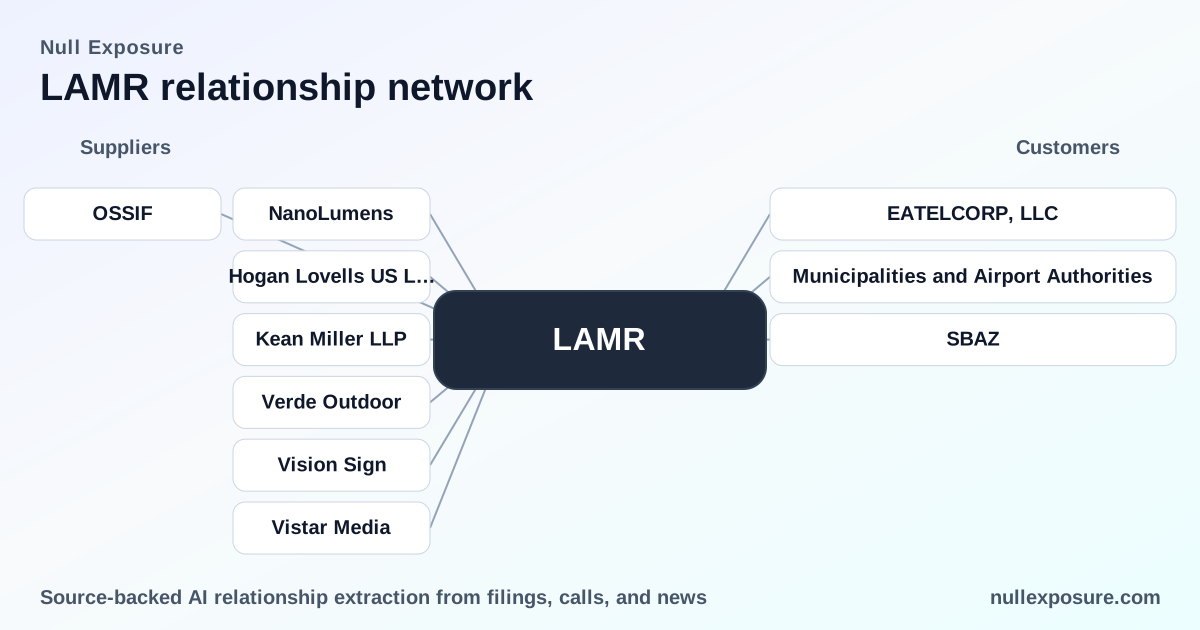
Lamar Advertising (LAMR) — Customer Relationship Profile
Lamar Advertising monetizes a geographically diversified portfolio of outdoor advertising inventory by renting display space and selling integrated media services to advertisers and institutional contract holders. The company generates revenue through short-term advertising rentals across billboards, transit assets, shelters, benches and airport placements, supplemented by specialty programs such as state-awarded logo signs that contributed roughly 4% of revenue in 2024. This profile aggregates publicly disclosed customer and counterparty relationships from Lamar’s 2024 Form 10‑K and interprets the implications for investors and operators. For relationship signals and vendor-level exposure analysis, see Null Exposure at https://nullexposure.com/.
Quick take — a one-paragraph investor thesis
Lamar is a high‑quality specialty REIT operating as a seller of outdoor advertising services with short-term contract exposure, broad North American geographic diversification, and low single-customer concentration. These characteristics produce strong pricing flexibility and operational scale, while creating revenue volatility tied to advertising cycles and contract renewals with municipal and state authorities. State logo sign revenue (~4% in 2024) and transit contract renewals are the most visible counterparty concentrations to watch.
Complete relationship inventory (each disclosed relationship)
-
EATELCORP, LLC
Lamar was a customer of EATEL for data back‑up and recovery services during 2023–2024, indicating a standard IT outsourcing relationship for operational continuity. According to Lamar’s 2024 Form 10‑K, the company procured data back‑up and recovery services from EATEL in the years ended December 31, 2024 and 2023. -
Municipalities and Airport Authorities
Lamar’s transit advertising business depends on obtaining and renewing contracts with municipalities and airport authorities, creating exposure to local procurement cycles, political decisions, and concession processes. The company discloses in its 2024 Form 10‑K that its transit advertising contracts are subject to its ability to obtain and renew favorable contracts with municipalities and airport authorities. -
SBAZ (state‑awarded logo sign contracts)
In 2024 Lamar generated approximately 4% of revenues from state‑awarded logo sign contracts, representing a material program-level revenue stream though not a single-customer dependency. The 2024 Form 10‑K notes the roughly 4% revenue contribution from state‑awarded logo sign contracts. -
State (state awards / logo sign programs)
Separate mention of “State” reiterates the same point: state‑awarded logo sign programs accounted for about 4% of revenue in 2024, underscoring programmatic exposure to state procurement and concession renewals. This disclosure also comes from Lamar’s 2024 Form 10‑K.
What the disclosed constraints reveal about Lamar’s operating model
The company-level constraints disclosed in the 2024 filing provide high‑signal guidance on operating posture and risk:
-
Contracting posture — short‑term and transactionally priced. Lamar’s customer contracts generally range from one week to one year and are billed on a regular short cadence, which gives the company pricing agility but limits multi‑year revenue visibility.
-
Geographic spread — concentrated in North America. The advertising footprint is diversified across the United States and Canada, supporting national advertiser relationships and cross‑market selling but exposing Lamar to regional economic cycles and regulatory regimes across 45 U.S. states and Canada.
-
Counterparty concentration — low single‑tenant risk. No individual tenant accounted for more than 2% of billboard advertising net revenues in the period, which reduces the financial risk of advertising client churn.
-
Role and segment — seller of advertising services. Lamar acts as the seller/lessor of advertising space and offers integrated services from copy production through placement and maintenance, positioning it as an operational service provider rather than a passive landlord of real estate alone.
-
Maturity and stage — active, service‑oriented business. The company actively operates approximately 159,000 billboard displays (per the 2024 disclosure) and provides ongoing services to advertisers, confirming an operating business rather than a legacy asset wind‑down.
These constraints combine into a profile of a service‑led REIT with high operational engagement, short contract tenor, broad geography, and low customer concentration, which drives both resilience in advertiser diversification and sensitivity to short‑term advertising demand.
Investment implications — risk, reward and observables
-
Revenue cyclicality vs. pricing agility: Short contract terms give Lamar the ability to reprice inventory quickly, which is beneficial in tight advertising markets and inflationary environments, but the same short tenor produces greater sensitivity to macro advertising cycles and temporary advertiser demand shocks.
-
Political and contract renewal risk for transit and state programs: Transit placements and state logo sign programs are governed by municipalities and state procurement, so regulatory changes, concession rebids, or shifts in public policy can materially affect revenue streams associated with those programs. The 4% revenue contribution from state logo signs in 2024 is notable — not dominant, but large enough to require active monitoring.
-
Operational resilience and vendor dependencies: Standard IT and infrastructure outsourcing (for example, EATEL’s backup and recovery services) introduces operational counterparty risk, but these relationships are generally typical and not revenue‑facing. Lamar’s 10‑K confirms the EATEL arrangement for 2023–2024.
-
Low customer concentration reduces counterparty credit risk: No single billboard tenant exceeded 2% of net billboard advertising revenue, which lowers the probability that the loss of one advertiser would materially disturb cash flows.
-
Geographic diversification: Operating across U.S. states and Canada provides scale and national advertiser reach, but investors should track regionally concentrated economic slowdowns and any jurisdictional regulatory trends that could constrain inventory placement or pricing.
Tactical monitoring checklist for investors and operators
- Track municipal and airport contract renewals and concession award calendars in key markets.
- Watch state procurement outcomes for logo sign programs and renewal terms given the historical ~4% revenue share.
- Monitor short‑term ad demand indicators (national ad buys, Q‑over‑Q traffic trends) because contract tenure compresses revenue visibility.
- Review vendor continuity plans and IT vendor contracts (e.g., backup/recovery providers) for operational risk mitigation.
Bottom line
Lamar’s business model is a service‑oriented, short‑term contracting REIT with strong North American scale and low single‑customer concentration. The most actionable counterparty exposures for investors are renewal outcomes with municipalities, airport authorities, and state logo sign programs — the latter representing a visible ~4% revenue slice in 2024 — while operational vendors like EATEL are standard infrastructure partners rather than core revenue counterparties. For ongoing relationship intelligence and counterparty scoring, visit Null Exposure at https://nullexposure.com/.