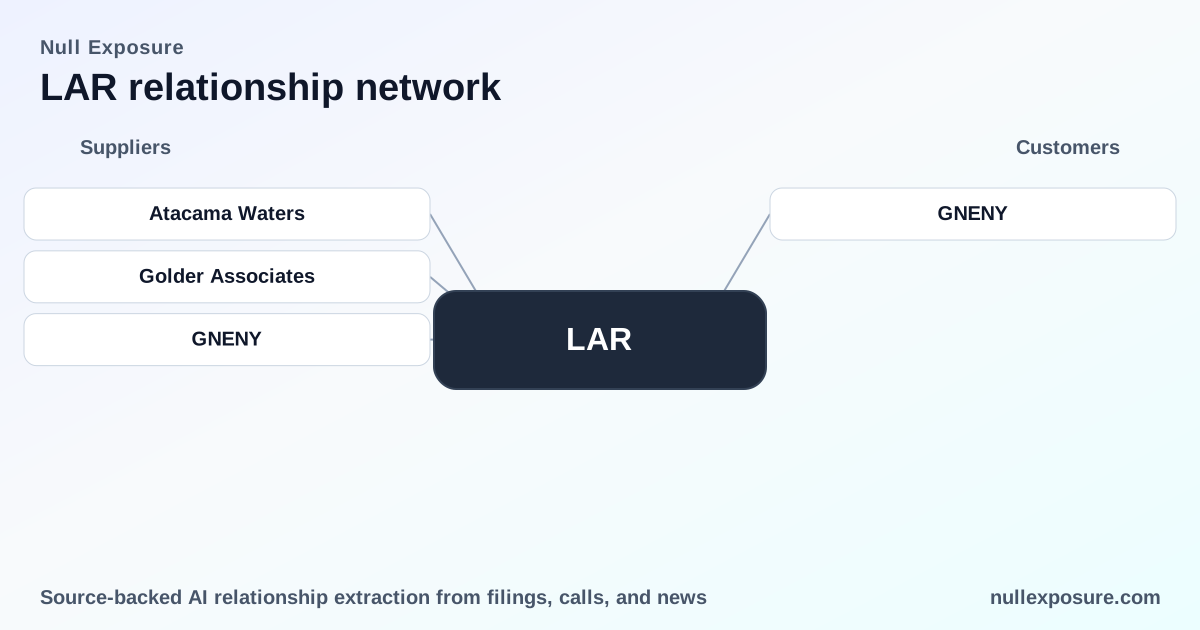
Lithium Argentina (LAR) — customer relationships that shape near-term cash flows
Lithium Argentina AG develops and monetizes salar-based lithium projects in Argentina by selling lithium carbonate and related products, entering offtake contracts, and securing project finance tied to production entitlements. Revenue generation is driven by offtake allocations and pre-production loan structures that convert future mine output into near-term liquidity, while operational partner commitments determine the cadence of commodity sales.
If you want a concise, transaction-level view of LAR’s customers and counterparties, visit https://nullexposure.com/ for the full platform overview.
Big-picture investor takeaways
Lithium Argentina trades as a growth-stage resource company with a market capitalization roughly in the low‑single billions and negative operating earnings. The company is dependent on contractual sales and financing arrangements to convert project-scale mineral endowments into cash flow, creating concentration and counterparty risk that investors must underwrite alongside development execution risk. Recent public filings and media reports show material production and sales activity in 2025 and explicit loan-and-offtake arrangements announced in 2026 that reshape near-term supply commitments.
Relationship log: loans, offtake and sales (each reported item)
Below are plain-English summaries of every relationship item reported in the source set, with the original publication noted.
GFL International — loan and offtake allocation (The Globe and Mail / Tipranks, May 2026)
Lithium Argentina entered a loan agreement with GFL International (a Ganfeng subsidiary) for up to US$130 million over six years at SOFR + 2.5%, and committed to allocate up to 50% of offtake from PPG’s initial development phase—capped at 6,000 tpa LCE—to the lender at market prices, plus the option to sell up to 6,000 tpa from unallocated Cauchari‑Olaroz entitlement before PPG production starts. According to The Globe and Mail (Tipranks) reporting in May 2026, this is a financing-for-offtake structure that materially encumbers a portion of early production.
Ganfeng Lithium Group Co. Ltd. — purchases of lithium chloride concentrate (InvestingNews, May 2026)
Lithium Argentina reported that a portion of its reported production included 359 tpa LCE sold as lithium chloride concentrate to Ganfeng in H1 2025 to support start‑up of Ganfeng’s Mariana project. InvestingNews (May 2026) documents this operational sale, indicating active commercial flows between the parties during start‑up stages.
Ganfeng Lithium Group — offtake allocation in the loan agreement (The Globe and Mail / Tipranks, May 2026)
The loan terms require Lithium Argentina to allocate part of PPG phase offtake to Ganfeng, up to the 6,000 tpa cap, and permit pre‑PPG sales of Cauchari‑Olaroz entitlement to Ganfeng. The Globe and Mail (Tipranks, May 2026) reported these contractual allocations, signaling strategic alignment between lender and buyer roles.
GNENY — production sold to Ganfeng (GlobeNewswire / ManilaTimes reporting, March 2026)
Lithium Argentina’s 2025 production total (approx. 34,100 tonnes LCE) includes the 359 tpa LCE sold to Ganfeng in H1 2025; ManilaTimes/GlobeNewswire coverage published in early 2026 lists this as part of the 2025 production mix. This confirms that commercial sales to Ganfeng occurred during the production ramp.
Ganfeng — demand pull and offtake mentioned in earnings commentary (The Globe and Mail / Motley Fool, May 2026)
Company commentary highlights strong demand from China and the role of the offtake agreement with Ganfeng in absorbing production. A May 2026 press reporting of the earnings transcript (The Globe and Mail / Motley Fool) emphasizes that Ganfeng is a primary offtaker for current carbonate sales.
Ganfeng — earnings call confirmation of sales to LFP market (LAR 2024 Q4 earnings call, March 2026)
In the company’s Q4 2024 earnings call transcript (published March 7, 2026), management confirmed that lithium carbonate sold from Cauchari‑Olaroz is largely destined for partner Ganfeng for use in the LFP battery market. The transcript documents a single‑sentence operational confirmation tying current carbonate sales to Ganfeng’s supply chain needs.
GNENY — duplicate earnings-call reference (LAR 2024 Q4 earnings call, March 2026)
A second earnings call record reiterates that lithium carbonate from Cauchari‑Olaroz is being directed to Ganfeng for LFP production, underlining consistent messaging across investor communications (earnings call, March 2026).
Ganfeng — ManilaTimes / GlobeNewswire production disclosure (ManilaTimes / GlobeNewswire, Jan–Mar 2026)
ManilaTimes/GlobeNewswire coverage repeats that the 2025 production total includes product sold to Ganfeng in H1 2025 to support their Mariana project start‑up. This reinforces the operational customer relationship documented elsewhere in the public record.
Ganfeng — earnings transcript press release (The Globe and Mail, May 2026)
The earnings transcript press release published to The Globe and Mail in May 2026 again underscores that Chinese demand and the Ganfeng offtake are material factors for LAR’s sales profile, confirming the strategic buyer role of Ganfeng in 2025–2026.
GNENY — another earnings-call indexed reference (earnings call record, March 2026)
The repeat indexing of the earnings call under the GNENY ticker entry repeats the operational statement that current carbonate sales principally flow to Ganfeng for LFP applications, reinforcing the commercial concentration trend.
(Each entry above references the publicly reported materials: The Globe and Mail/Tipranks coverage (May 2026), InvestingNews (May 2026), ManilaTimes/GlobeNewswire (Jan–Mar 2026), and Lithium Argentina’s 2024 Q4 earnings call transcript published March 2026.)
What these relationships imply for LAR’s operating model
- Contracting posture: Loan-for-offtake structures (the US$130 million GFL arrangement) create a financing model where near-term liquidity is secured against future output, producing binding sales allocations ahead of full ramp‑up. This makes early production partially pre-sold and reduces market exposure for that tranche.
- Concentration: Multiple disclosures show Ganfeng as the dominant early counterparty—both as a buyer of chloride concentrate and as the effective recipient of allocated offtake—creating single‑counterparty concentration risk for initial production.
- Criticality: Ganfeng’s dual role as buyer and lender affiliate (through GFL International) elevates its strategic importance: execution delays or demand shifts at Ganfeng would directly affect LAR’s near‑term cash conversion.
- Maturity and commerciality: Reported H1 2025 sales and the inclusion of those volumes in 2025 production totals demonstrate that LAR has moved beyond pure exploration into operational sales, albeit with much of early output tied to partner commitments rather than open‑market spot sales.
Key investor takeaway: LAR’s near‑term cash flows are materially shaped by a limited set of counterparties and by financing agreements that allocate a portion of early production to lenders and partners; investors should price concentration and counterparty execution risk accordingly.
For a structured, searchable view of these counterparties and the underlying source documents, see https://nullexposure.com/.
Final read
Lithium Argentina’s commercial profile in 2025–2026 is defined by active production sales and a lending structure that converts future output into present financing, with Ganfeng playing a central buyer and lender‑linked role. That configuration accelerates monetization but concentrates counterparty exposure—an explicit trade investors must evaluate alongside resource scale and project execution capability.