LandBridge (LB): Who Pays the Bills — Customer Map and Strategic Implications
LandBridge monetizes contiguous surface acreage in the Delaware Basin by leasing and licensing land use, collecting surface use royalties, selling brackish water and other resources, and taking usage‑linked royalties on produced‑water handling that are often captured through long‑dated SURAs and SUAs. The company’s cash flow is concentrated among a handful of large energy customers and a growing set of infrastructure partners (water handlers, battery storage and data center developers); that mix drives both high-margin recurring royalties and exposure to customer operating choices in the basin.
For a deeper read on relationship-level signals and how they translate into revenue risk, visit https://nullexposure.com/ for structured intelligence and primary‑document sourcing.
What the operating model looks like in plain terms
LandBridge is a land manager and seller of access. The core economics are royalty and fee based: surface use royalties (the largest revenue source), volumetric royalties on produced‑water handling, sales of brackish water, and occasional resource and mineral receipts. Company disclosures show SURAs commonly run five to ten years and provide usage‑based revenues early in customer engagement, while brackish water contracts are frequently short‑term or spot. The company is heavily concentrated in the Delaware Basin (Texas and New Mexico), and its top customers account for the majority of revenue — the top ten represented 78% of total revenues for FY2024. (LB 2024 Form 10‑K)
- Contracting posture: Predominantly longer‑dated SURAs and lease development agreements (5–10 year initial terms), supplemented by short‑term brackish water sales and spot pricing. The company also takes non‑refundable deposits for multi‑year site selection and pre‑development (an $8.0m deposit was recorded in Dec 2024). (LB 2024 Form 10‑K)
- Concentration and criticality: High customer concentration with very large counterparty exposure; top three customers were material (24%, 14% and 10% of revenue) and top ten accounted for 78% of revenues in FY2024. This makes each major counterparty strategically critical to near‑term cash flows. (LB 2024 Form 10‑K)
- Revenue mix and maturity: The business combines stable, royalty‑style receipts with transactional water sales; surface royalties drive the bulk of revenue while water handling royalties provide growth optionality if infrastructure builds out successfully. (Market commentary and LB filings)
Customer list and what each relationship contributes
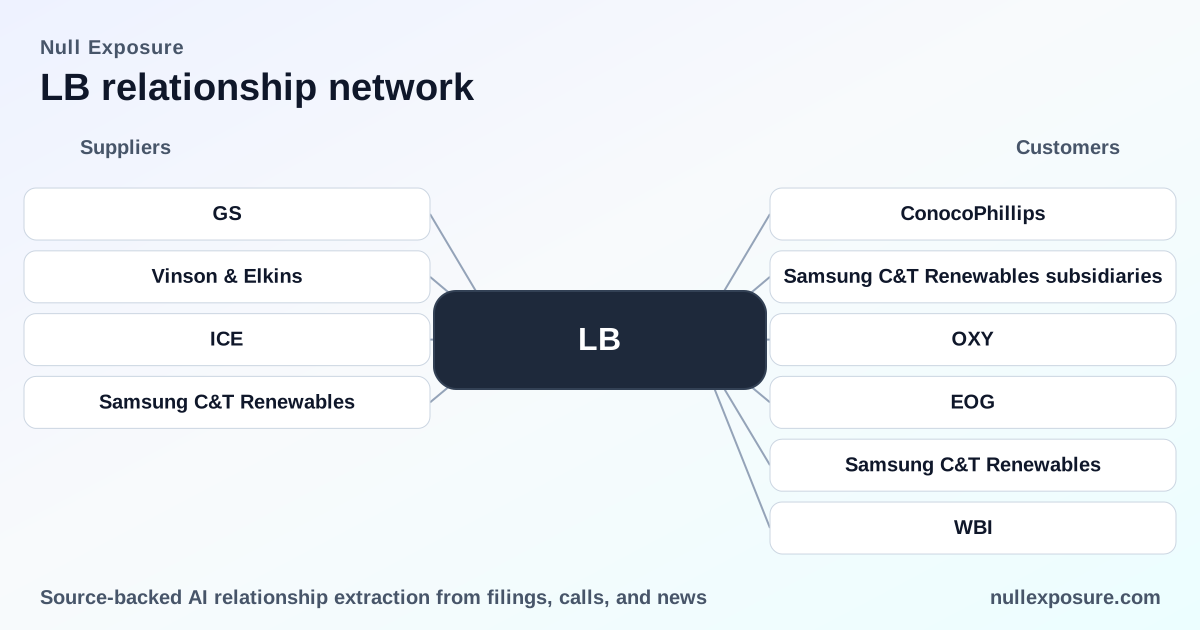
Below are the company’s cited customer and partner relationships drawn from filings and market reports; each entry delivers a concise plain‑English take and the source.
-
ConocoPhillips — LandBridge reports that revenues from ConocoPhillips individually comprised more than 10% of total revenues in FY2024, reflecting long‑term SURAs and associated royalties on operations conducted on LB acreage. (LB 2024 Form 10‑K, FY2024)
-
WaterBridge Infrastructure LLC (WBI) — WaterBridge is a strategic infra partner that constructs and operates produced‑water and brackish‑water facilities on LandBridge acreage; LandBridge receives per‑barrel royalties and surface use payments tied to WaterBridge operations. (StreetInsider Form 424B3; LB 2024 Form 10‑K, FY2024)
-
WBI (WBI filings and earnings commentary) — WBI has described preferential access to underutilized pore space supplied by LandBridge and confirmed material access to pore space for disposal and storage, underlining the sister‑company commercial linkage that drives a meaningful share of LB’s surface use royalties. (WBI SEC filing, Aug 2025; WBI Q3 2025 earnings call)
-
EOG Resources — EOG individually accounted for more than 10% of revenues in FY2024 and operates on LandBridge acreage under long‑term contracts and SURAs that generate royalties and fees. (LB 2024 Form 10‑K, FY2024)
-
Occidental Petroleum (OXY) — Occidental accounted for a material portion of accounts receivable and generated revenues for LB through damage payments under SUAs and easements, brackish water sales, produced water handling royalties and oil & gas royalties, indicating diverse revenue touchpoints with that counterparty. (LB 2024 Form 10‑K, FY2024)
-
Samsung C&T Renewables (and subsidiaries) — LandBridge has executed BESS development agreements to lease acreage for two battery storage projects in Pecos and Loving counties (350 MW total) targeting commercial operation as early as year‑end 2028, representing a diversification into grid and renewable infrastructure leases. (SahmCapital / Finviz coverage, Dec 2025 / Mar 2026)
-
PowerBridge LLC — LandBridge entered a lease development agreement with PowerBridge for a 2 GW powered data center campus, demonstrating the firm’s pivot to digital and power infrastructure use cases for its acreage. (MarketScreener press notice, Apr 2026)
-
Fairstone — Market commentary in May 2026 reported a takeover proposal by Fairstone that offers a premium and targets closing in late 2026; this is an acquiror‑side development rather than an operating customer but is material to LB’s equity story and governance. (TipRanks, May 2026)
How these relationships shape risk and upside
-
Revenue visibility is strong but concentrated. Long‑term SURAs provide a revenue floor and are complemented by multi‑year development deposits (an $8m deposit was booked in Dec 2024), yet three customers together drove a material share of revenue, so any operational pause by a large producer would have outsized impact. (LB 2024 Form 10‑K)
-
Mix of contract tenors reduces volatility but does not eliminate counterparty discretion. While SURAs typically run five‑to‑ten years, many contracts lack minimum usage commitments; customers retain the right to reduce operations, creating demand risk despite contract terms. Where the company sells brackish water on a spot basis, prices are explicitly variable (per‑barrel spot ranges disclosed). (LB 2024 Form 10‑K)
-
Strategic upside from adjacent infrastructure partners. Relationships with WaterBridge, Samsung C&T Renewables and PowerBridge expand LandBridge’s revenue base beyond oil & gas royalties into water handling royalties, grid‑scale BESS leases, and data center land leases, which improves optionality if energy transition infrastructure projects scale as planned. (WBI filings; SahmCapital; MarketScreener)
-
Geographic concentration is a structural constraint. LandBridge owns ~273,000 surface acres concentrated in the Delaware Basin; that focus creates operational scale but also single‑basin exposure to commodity cycles, permitting, and basin‑specific regulatory changes. (LB 2024 Form 10‑K)
For detailed, document‑level tracking of these counterparties and to map contractual tenors against revenue line items, visit https://nullexposure.com/ for a primary‑source driven view.
What investors and operators should watch next
- Execution on WaterBridge infrastructure buildout and permitting timelines — these determine whether volume‑based water royalties scale as forecasted (WBI filings and earnings calls).
- Commercial milestones for the Samsung BESS leases and PowerBridge data center pre‑development windows; both are multi‑year and tied to site selection deposits and development agreements (news reports, 2025–2026).
- Customer operating cadence among ConocoPhillips, EOG and Occidental — given their combined weight on receivables and revenue, any shift in their Delaware Basin activity will immediately affect LB cash flow (LB 2024 Form 10‑K).
- The Fairstone transaction timetable and terms, as a closing could change capital allocation and strategic priorities later in 2026 (market reports, May 2026).
Bottom line
LandBridge operates a highly concentrated, royalty‑driven land monetization platform with clear revenue levers tied to both long‑dated SURAs and shorter‑term resource sales; its strategic partnerships into produced‑water infrastructure, battery storage and data centers materially change the optionality profile but do not eliminate customer concentration risk. Investors should weigh durable royalty cash flows and infrastructure upside against the concentration of receipts and single‑basin exposure.
If you want the underlying filing excerpts and a relationship dashboard built from primary filings and company disclosures, see https://nullexposure.com/ — the source base used to compile the relationship map above.