Lineage Cell Therapeutics (LCTX): Customer relationships that drive near‑term value
Lineage Cell Therapeutics builds value by developing allogeneic cell therapies and monetizing through milestone‑driven collaborations, fee‑for‑service support arrangements, and occasional equity financings; collaboration revenue and services agreements with large biopharma partners are the primary near‑term cash conversion points. The company recognizes milestone and collaboration fees tied to development progress (not product sales), while preclinical partnerships fund parts of its pipeline — a commercial model that converts scientific validation into recurring short‑term revenue and long‑term upside. For an interactive view of counterparty maps and source-level evidence, visit https://nullexposure.com/.
Why customers matter: concentrated, partner‑led commercialization
Lineage is not selling finished therapeutics into the market today; its revenue base is built from partner milestones, services and R&D cost contributions. That structure creates concentration of cash inflows around a handful of strategic collaborators, elevating the impact of each milestone and operational decision on reported revenue and runway. The company’s trajectory is therefore tied to the contracting posture and development choices of large partners that control late‑stage studies and commercial strategy.
- Contracting posture: Lineage records collaboration/milestone revenue and provides services under separate agreements rather than through direct product sales.
- Concentration & criticality: A small number of partners generate the bulk of near‑term revenue and validation; disruptions or changes in partner programs materially change the revenue profile.
- Maturity: Relationships are a mix of preclinical funding (cost‑sharing for early programs) and later‑stage development services and milestone payments tied to OpRegen’s progress.
Relationship map — consolidated narrative of every counterparty in the results
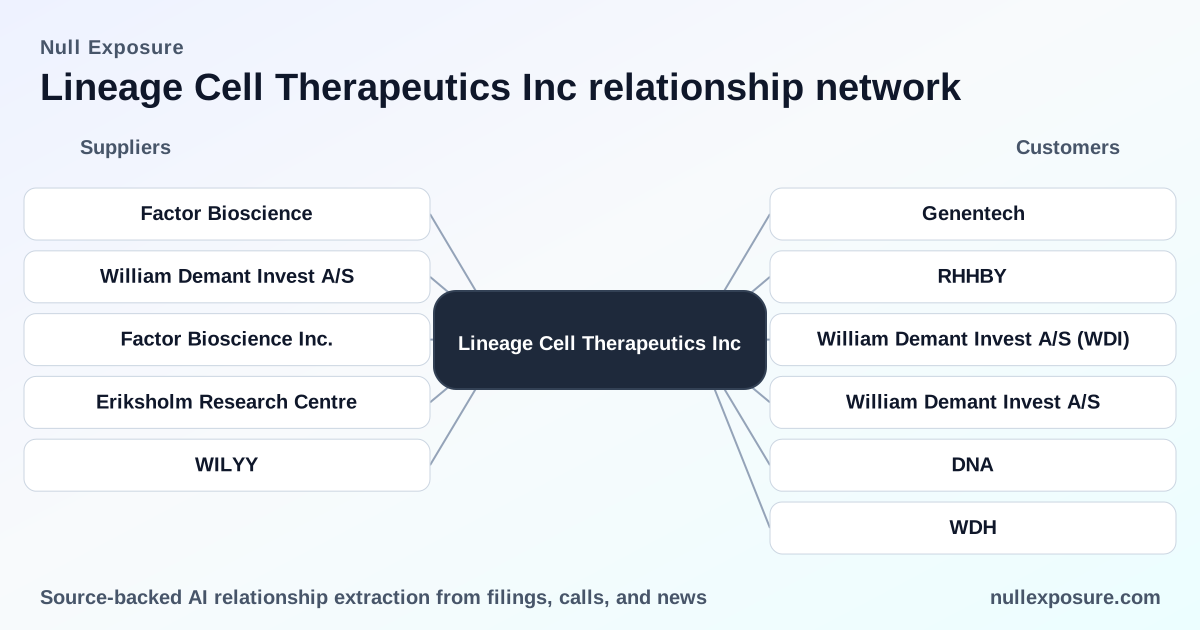
Below I summarize every counterparty referenced in public filings, press releases and calls in the provided results. Each entry is short, plain English, and linked to the primary source reference.
Roche (listed also as RHHBY / RBO.PAR)
Lineage reported increased collaboration revenue in FY2026 driven by the achievement of the first milestone under its worldwide collaboration and license agreement with Roche, reflecting manufacturing and clinical progress on the OpRegen program. According to the company’s FY2025 results and related press releases (InvestingNews and PharmiWeb, Mar 2026), Roche/Genentech’s program achieved a milestone that materially affected Lineage’s revenue recognition. (InvestingNews / PharmiWeb, Mar 2026; earnings calls 2025Q3–Q4)
Genentech
Genentech is engaged through services agreements that expand support for OpRegen development, including technical training and activities to support Phase 1/2a long‑term follow‑up and the Phase 2a GAlette study. Lineage described an additional and expanded services agreement with Genentech in its 2025 earnings commentary and in FY2025/2026 corporate updates (earnings calls 2025Q3 and FY2025/FY2026 press material). (LCTX 2025 Q3/Q4 earnings calls; InvestingNews, 2026)
William Demant Invest A/S (WDI / WDH)
Lineage entered a research collaboration with William Demant Invest A/S to advance ReSonance (ANP1), with WDI committing to contribute up to $12 million of preclinical development costs over a three‑year term. That arrangement is structured to cover cell manufacturing, proof‑of‑concept work, delivery development and related regulatory/market analyses, and was disclosed in Lineage’s FY2026 press releases and supporting media coverage (InvestingNews, Hearing Review, PharmiWeb, Mar 2026). (InvestingNews / HearingReview / PharmiWeb, Mar 2026)
Janus Henderson Investors (JHG)
Janus Henderson purchased 12 million common shares from Lineage at $1.75 per share in FY2025, a financing event that delivered immediate balance‑sheet capital rather than strategic collaboration value. The share sale was reported in SEC‑filing coverage and market press in May 2026. (Investing.com coverage of SEC filing, May 2026)
Symbols reported as separate entries: RHHBY, DNA, RBO.PAR, WDH
The dataset includes symbol variants that correspond to the parties above: RHHBY and RBO.PAR are Roche identifiers; DNA appears as a symbol associated with Genentech references in results; WDH is a symbol variant for William Demant. The underlying relationships these symbol entries reflect are captured in the Roche, Genentech and WDI summaries; each symbol reference was recorded in Lineage’s press releases and earnings call transcripts (earnings calls 2025Q3/Q4; InvestingNews/PharmiWeb, Mar 2026). (LCTX earnings calls and March 2026 press material)
What this relationship set implies for investors
Lineage’s revenue pattern is strongly partner‑dependent. Milestone recognition from Roche/Genentech and cost‑sharing from WDI are the dominant near‑term drivers of reported revenue, while financings such as the Janus Henderson share purchase shore up liquidity without altering the customer concentration dynamic. The company’s model currently generates services and collaboration receipts rather than product sales; that means valuation sensitivity is high to pipeline progress communicated by its partners.
Key operational constraints and company‑level signals
- Geographic concentration: Lineage’s revenue has historically been generated in the United States, indicating limited geographic diversification in realized cash inflows. This is a company‑level signal drawn from disclosures that none of the company’s revenue for 2024 and 2023 was generated outside the U.S. (company filings, FY2024/2023).
- Relationship role and commercialization timing: Lineage functions primarily as the developer and seller of development services/collaboration rights rather than a market seller of approved therapies; its investigational products cannot be marketed until regulatory approvals are obtained. This constraint informs the firm’s classification of revenue and its reliance on partner‑driven milestones (company disclosure).
Risks and value levers to watch
- Concentration risk: A small number of collaborators produce outsized swings in revenue recognition. Watch milestone qualification language, timing of site expansions (Roche/Genentech’s recent increase in GAlette sites), and any changes to service agreements.
- Regulatory dependency: Material value conversion hinges on regulatory progress (e.g., RMAT designations and Phase 2 outcomes) and on partners’ commercial decisions.
- Financing cadence: Equity placements such as the Janus Henderson transaction are pragmatic runway moves; they are not substitutes for diversified recurring revenue.
Bottom line for investors
Lineage’s near‑term valuation is driven by partner milestones and service agreements rather than product sales. Positive operational signals — milestone payments, expanded services agreements, and preclinical co‑funding — translate directly to revenue and validation, but they also concentrate execution risk in a few counterparties. For a verification‑grade map of these customer relationships and source documents, see https://nullexposure.com/.
For a deeper merchant‑grade view of counterparty exposure and a linked source library, visit https://nullexposure.com/ — the underlying evidence set makes it straightforward to track how each partner converts scientific milestones into recognized revenue.