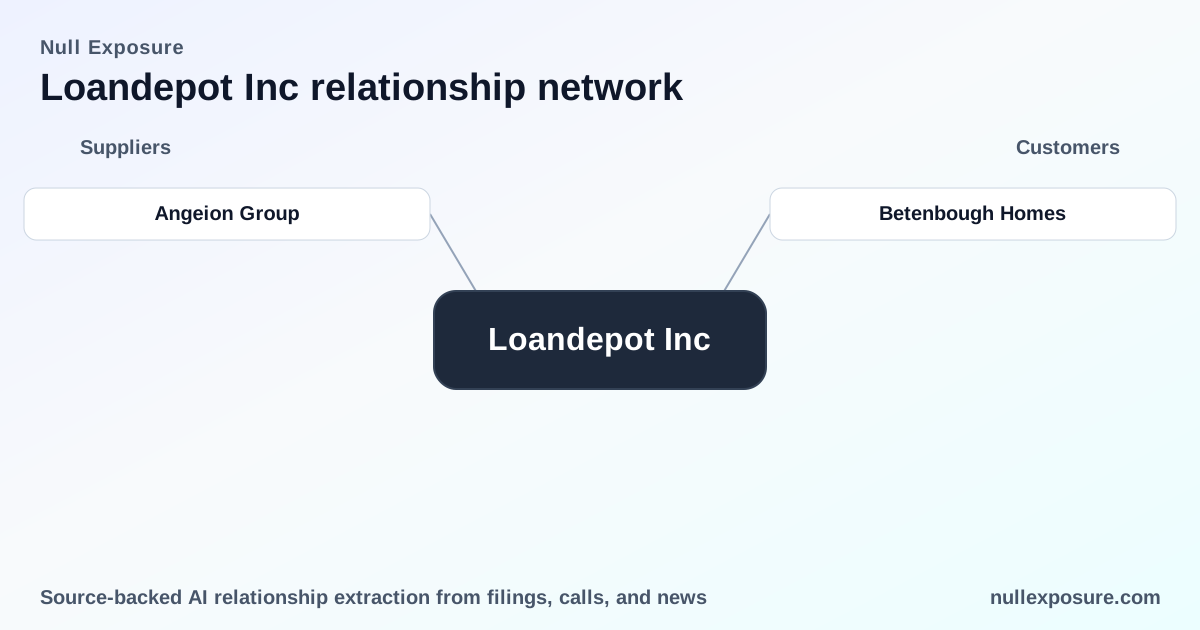
LoanDepot (LDI) — Customer Relationships and What They Signal for Investors
LoanDepot operates a vertically integrated mortgage platform that originates, sells and services residential mortgage loans across the United States. The company monetizes through origination fees, loan sales to third‑party investors and ongoing servicing fees, while retaining exposure through mortgage servicing rights and occasional warehouse financing. Recent disclosures show a strategic push into homebuilder partnerships alongside large, material relationships with government agencies and a concentrated set of loan buyers — all of which shape both revenue stability and balance‑sheet dynamics. For further institutional intelligence on counterparties and relationship signals, visit https://nullexposure.com/.
Quick investor thesis: originations, servicing economics, and counterparty concentration
LoanDepot generates revenue in three linked ways: originate loans (fee revenue), sell loans to investors (lock in margin and reduce funding needs), and service loans for ongoing fee income and ancillary cash flows. The company’s economics depend on high origination throughput, predictable servicing cash flows, and access to investor channels and agency programs that reduce credit and funding cost. Recent commentary shows management investing in direct homebuilder relationships to drive originations and onshore distribution.
What managers announced about builder partnerships
Betenbough Homes — a new builder relationship
LDI publicly highlighted a new relationship with Betenbough Homes as part of its drive to “provide value to our homebuilder partners,” with the program referenced in the company’s Q3 2025 earnings call. The mention signals a deliberate push to secure production through exclusive or preferred lender arrangements with builders. According to LDI’s Q3 2025 earnings call (transcript March 2026), Dan [management] framed the Betenbough partnership as a recent addition to their builder pipeline.
Every customer relationship captured in the results
- Betenbough Homes: LoanDepot named Betenbough Homes as a newly added homebuilder partner in its Q3 2025 earnings call, indicating management focus on direct distribution via builder channels (LDI Q3 2025 earnings call, March 2026).
(That is the full set of named customer relationships captured in the released results.)
What the relationship set — and absence of others — implies
The single disclosed customer relationship in the results is informative because it reflects management’s growth posture: pursue higher‑touch, originations‑driving relationships with builders to sustain volume in a low‑rate or refinancing‑muted market. The limited number of public, named partners in the disclosure suggests management emphasizes commercial terms and selective partnerships rather than broad, public pronouncements about every channel relationship.
Company‑level operating characteristics investors should internalize
- Contracting posture and role mix: LoanDepot acts as both a seller and a service provider — it sells loans into investor channels (including Fannie Mae and Freddie Mac) and performs servicing for agency and private investors for fees. These dual roles mean revenue derives from transaction execution and long‑dated servicing economics.
- Concentration of buyers: The company disclosed that four buyers accounted for 33%, 18%, 16% and 6% of loan sales in FY2024, indicating material concentration risk in loan sale channels that can affect margins if counterparties change buying behavior (company FY2024 filings).
- Counterparty types and criticality: The business interacts with government entities (FHA/VA/USDA and Ginnie Mae) and individual borrowers at scale — as of December 31, 2024, LoanDepot serviced 417,875 customers with $116.0 billion in UPB, with 79% of those borrowers having FICO scores above 680 — a signal of borrower credit quality within its servicing book (company disclosures as of Dec 31, 2024).
- Geographic footprint: Origination and servicing exposures are national but concentrated in certain states: California, Texas and Florida drive a substantial portion of originations and servicing UPB, which elevates regional housing and regulatory risk (company filings).
- Materiality of agency relationships: The Agencies (Fannie, Freddie, Ginnie Mae) are material to LoanDepot’s economics — agency programs reduce credit exposure and inventory financing costs and underpin much of the sell‑through model (FY2024 filings).
- Maturity and stage of relationships: The servicing portfolio and active borrower base indicate established, operating relationships rather than nascent agreements; new builder relationships, like Betenbough, are augmenting an already mature servicing/ origination engine.
Key strengths and risk vectors for investors
- Strength — diversified monetization: Origination fees, loan sale gains and servicing fees create multiple cash flow levers; servicing UPB ~ $116 billion creates locked‑in fee streams and ancillary cash benefits (company disclosures).
- Strength — access to agency programs: Participating in FHA/VA/USDA and Ginnie Mae pipelines reduces credit risk and supports securitization and liquidity.
- Risk — buyer concentration: Four buyers accounting for two‑thirds of loan sales increases vulnerability to shifts in investor appetite or pricing. This is a primary operational risk that investors should stress‑test.
- Risk — geographic concentration: Heavy exposure to California, Texas and Florida ties results to regional housing cycles and regulatory regimes.
- Risk — macroeconomic sensitivity and funding: Originations are rate‑sensitive; sustaining volume requires working with builders, franchise channels and investor buyers to offset cyclical slowdowns.
Tactical takeaways for research and operations teams
- Focus diligence on the identity and credit appetite of the top loan buyers and how those relationships are contractually structured; buyer pricing and capacity drive realized origination margins.
- Monitor agency program participation and any regulatory or pricing changes at Ginnie/Fannie/Freddie because these affect both credit risk and inventory funding economics.
- Evaluate the economics of builder partnerships (like Betenbough) in terms of take rates, conversion lift, and the degree to which the relationship is exclusive or preferred — these determine how much volume is incremental versus displaced from other channels.
For a concise counterparty map and transaction‑level signals that matter to credit and operations teams, see our platform at https://nullexposure.com/.
Bottom line
LoanDepot’s model is originations‑driven but stabilized by a large servicing footprint and agency access. The newly announced Betenbough Homes relationship confirms management’s strategy to secure originations through builder partnerships, while company disclosures highlight material concentration among loan buyers and geographic concentration that create identifiable operational risks. Investors should weigh the upside from stable servicing cash flows and builder‑led origination lift against counterparty concentration and regional housing exposure when assessing valuation and credit risk.