Lionsgate (LGF-B) — who pays for the movies and why that matters to investors
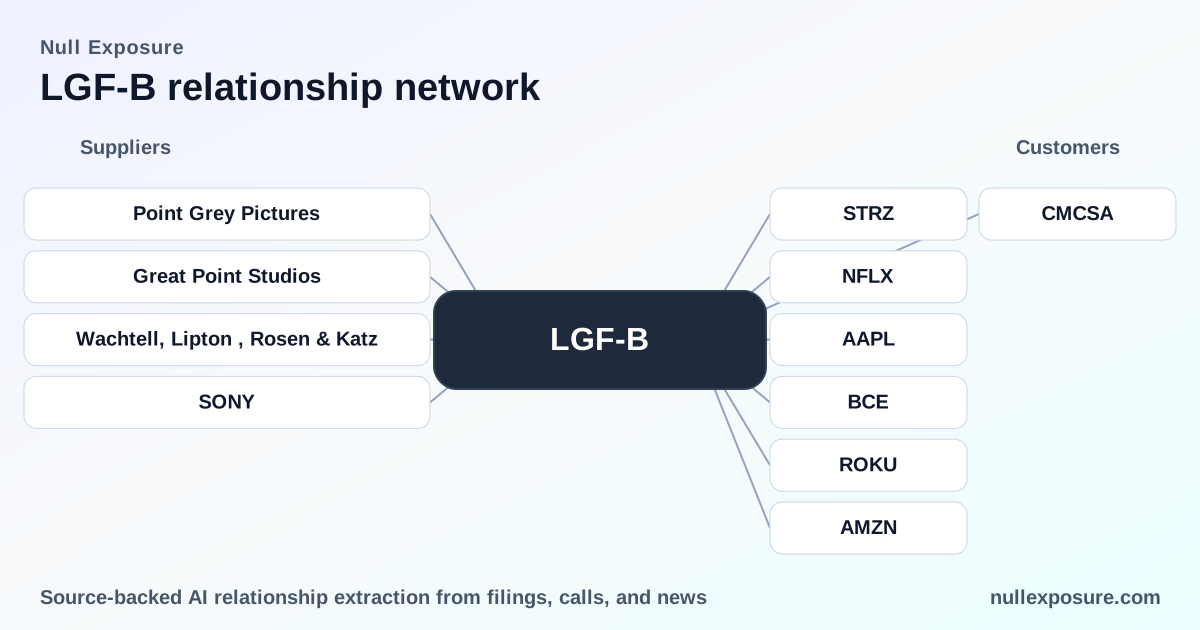
Thesis: Lionsgate monetizes its studio output through multi-year output and licensing deals with premium pay-TV and streaming platforms, selling first-pay and subsequent windows for theatrical releases and series; revenue is driven by strategic partnerships with Starz, Roku, Netflix, Apple TV+, Bell Media/BCE, Peacock, USA Network and MGM+, which convert production investment into predictable licensing cash flows and catalog value. For investors and operators evaluating LGF-B customer relationships, the critical question is how exclusive windowing, term length and partner concentration shape near-term cash generation and long-term library economics. For a focused view of partner-level exposure, see more at https://nullexposure.com/.
The commercial model in plain English
Lionsgate executes a classic studio playbook: finance or produce theatrical and TV content, then monetize through a sequence of exclusive theatrical windows, first-pay television/SVOD windows, and downstream streaming/AVOD deals. Multi-year output agreements with platform partners convert variable box office risk into contracted licensing revenue and predictable timing of cash receipts. Windowing control and title counts per year (for example, exclusives for nearly 20 theatrical titles a year to a single partner) materially influence revenue concentration and renewal leverage.
What investors need to watch about Lionsgate’s contracting posture
Lionsgate’s deals skew toward multi-year, output-style agreements rather than one-off license transactions, which delivers firmness on revenue timing but increases counterparty concentration risk when a single partner controls a material portion of first-pay rights. Contract maturity is mixed: some arrangements date to the FY2022 era while new output/extension activity surfaces through FY2025–FY2026 press coverage, indicating an active renewal cadence that shapes near-term liquidity and leverage metrics.
Partner-by-partner breakdown — where Lionsgate sells its content
Starz / STRZ — the anchor first-pay partner
Lionsgate has a multi-year output relationship with Starz that gives Starz exclusive rights in the first pay-television and SVOD windows on an accelerated schedule closer to theatrical release, and Starz gains access to roughly 20 theatrical titles per year under the arrangement. This is a high-impact commercial tie that concentrates first-pay revenue and preserves Lionsgate’s theatrical-to-pay sequencing (source: TheWrap and Yahoo Finance coverage of the Starz separation and output deal, FY2025–FY2026).
(Also see Deadline coverage from FY2024 discussing tailored lower-budget films for Starz as the streaming/linear property split, which underlines the strategic role Starz plays in Lionsgate’s portfolio.)
The Roku Channel / ROKU — an AVOD/FAST downstream window
Lionsgate closed a multiyear theatrical output agreement with The Roku Channel beginning with the studio’s 2022 theatrical releases; Roku receives two windows per film, with the first window following Starz’s first-pay exclusivity. This arrangement demonstrates Lionsgate’s model of sequential monetization across premium pay and ad-supported/free streaming windows (source: PR Newswire announcement, FY2022).
Netflix — licensed series and franchise extensions
Lionsgate supplies Netflix with series content connected to its IP (for example, an upcoming “Twilight” spinoff) and other TV projects, positioning Netflix as an important SVOD buyer for mid‑cycle licensing of franchise-adjacent material. These relationships support downstream catalogue monetization beyond the first-pay window (source: TheWrap and Yahoo Finance articles referencing Lionsgate TV projects for Netflix, FY2025–FY2026).
Apple TV+ — original series commissioning
Lionsgate produces content that platforms like Apple TV+ commission or license, notably Point Grey and Lionsgate’s half-hour comedy The Studio slated for Apple TV+ distribution. This shows Lionsgate’s role as a content supplier for premium subscription services and diversifies revenue beyond theatrical output deals (source: Bell Media press and TheWrap coverage, FY2024–FY2025).
Bell Media / BCE — territorial distribution and co-productions
Bell Media has an established strategic alliance with Lionsgate and Starz to distribute the first pay window of Lionsgate theatrical releases in Canada and has made commitments to co-develop scripted series with Lionsgate and partners. This represents a dependency on local distributors for international monetization and localized co-development (source: Bell Media press releases referencing the Starz alliance and the Point Grey collaboration, FY2018 and FY2024).
Peacock — event specials and franchise spin-offs
Lionsgate executed a multi-year deal with Peacock for The Continental (a John Wick prequel special event), illustrating Lionsgate’s ability to monetize high-value franchise derivative content through platform licensing beyond theatrical releases. Such deals capture platform demand for eventized IP extensions (source: PR Newswire coverage of the Peacock agreement, FY2022).
USA Network (Comcast / CMCSA) — cable commissioning for TV projects
Lionsgate supplies projects to cable brands such as USA Network (noted for titles like The Rainmaker), which reflects the studio’s placement strategy for linear and cable buyers alongside streaming partners. Cable relationships remain a component of mixed-window monetization (source: Yahoo Finance and TheWrap references for USA Network projects, FY2025).
MGM+ — premium cable/SVOD commissioning for series
MGM+ licensed series such as Lionsgate-produced Robin Hood, evidencing Lionsgate’s active licensing to premium cable/SVOD platforms in parallel with other buyers. This contributes to revenue diversity across platform types (source: Yahoo Finance and TheWrap mentions of MGM+ projects, FY2025).
How these relationships shape LGF-B’s risk and upside profile
- Concentration vs. diversification: Multi-year output deals (notably with Starz and Roku) create predictability but concentrate first-pay economic exposure. Investors should weigh the strength of those partners’ balance sheets and renewal incentives.
- Criticality of window sequencing: Starz’s priority first-pay window status is commercially critical; downstream buyers (Roku, Netflix, Apple TV+) depend on that sequencing to acquire titles later, which locks in stepwise monetization.
- Contract maturity and renewal dynamics: Deals span FY2022 to FY2026 in public reporting; active renegotiation and split-related restructuring (Starz separation) imply renewal events that will set pricing and cash timing.
- Business model flexibility: Lionsgate balances tentpole theatrical risk with series licensing and franchise spin-offs, reducing single-title volatility while keeping upside from successful franchises.
Bottom line for investors and operators
Lionsgate’s customer relationships are structured to convert production into staggered licensing cash flows, with Starz as a deliberate anchor and a diversified set of downstream partners (Roku, Netflix, Apple TV+, Peacock, cable networks and international distributors) capturing later windows. That structure produces predictable near-term licensing revenue while concentrating first-pay economics in a small set of strategic partners — an essential tension when modelling LGF-B’s cash flow stability and renewal risk.
For a deeper cross‑partner exposure analysis and to model window revenue timing across renewals, visit https://nullexposure.com/ for the full partner mapping and historical deal timelines.