LGL Group: customer dynamics, concentration and what investors should price in
LGL Group designs, manufactures and sells frequency and spectrum control products, monetizing primarily through product sales to OEMs, distributors and end customers, with supplemental administrative and transitional services tied to corporate separations. Revenue is hardware-driven, geographically split between North America and Europe/Canada, and concentrated among a small number of buyers—a structure that converts modest top-line volatility into material counterparty risk and concentrated cashflow levers for the business. For a closer look at relationship details and constraints, visit https://nullexposure.com/.
The headline relationship: GGCP, Inc. and a financing action that matters to shareholders
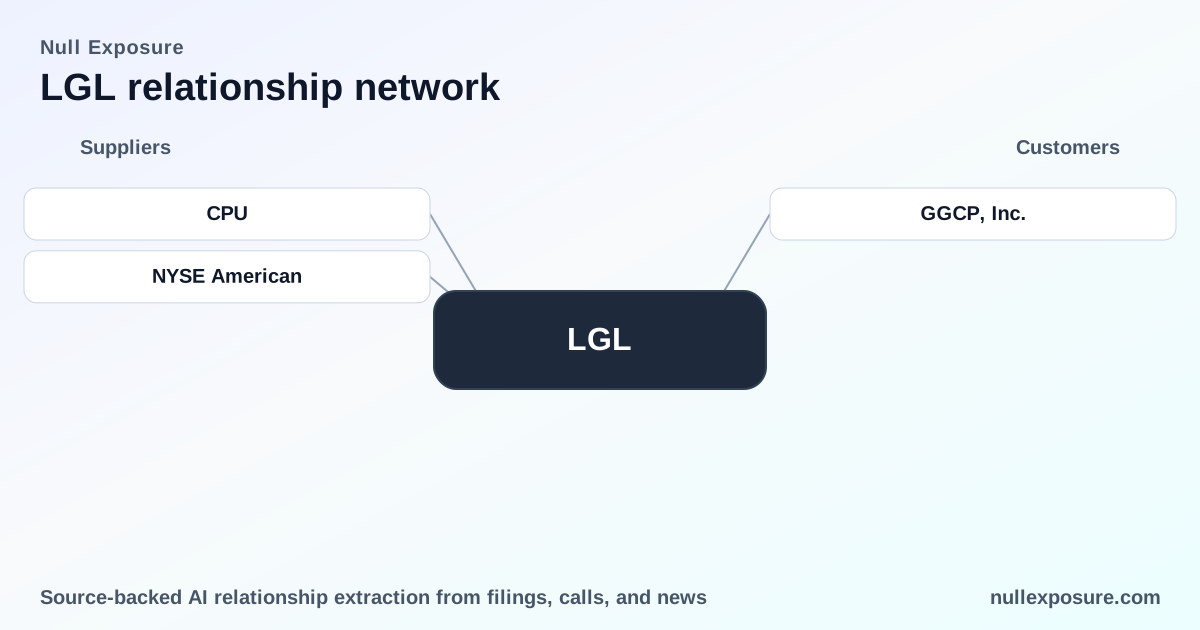
GGCP, Inc., an affiliate and stockholder associated with Chairman Marc Gabelli, indicated it intends to exercise warrants in full and participate in any over-subscription privilege following allocation by the transfer agent. This action is an equity/financing event tied to insider ownership rather than a product-sale relationship, and it directly affects LGL’s capital structure and insider stake. Source: Newsfile press release, March 10, 2026 (https://www.newsfilecorp.com/release/278039/The-LGL-Group-Inc.-Announces-Extension-of-Warrant-Expiration).
How LGL’s customer model actually works — sales channels and product focus
LGL sells time and frequency instruments through a mix of direct OEM sales, franchised representatives and distributors, and direct-to-end-customer transactions. The company’s Electronics Instruments segment (PTF) is hardware-first, meaning revenue and margins are tied to product cycles, backlog conversion and channel inventory management. According to LGL’s public disclosures covering the 2023–2024 period, international revenues are significant and derived primarily from Europe and Canada. Source: LGL filings and annual disclosures (2024).
Channel posture and contracting behavior
- Short-term contracting and backlog rotation: LGL’s backlog is defined against a 12‑month horizon and the company discloses that cancellations and scope adjustments occur—establishing a short-term contracting posture that amplifies near-term revenue volatility. This is a company-level signal based on LGL’s own backlog disclosure.
- Role diversity: The firm operates across direct-sell, distributor/reseller and service-provider channels; LGL both buys and sells through these channels depending on geography and end-market requirements. These roles are explicitly described in company filings.
Concentration, spend bands and financial implications
Customer concentration is material. LGL discloses that its top four customers account for roughly 43% of sales, with its largest single customer recorded at approximately 13.9% of revenue (listed as $310 in the company table where amounts are stated in thousands). That concentration elevates counterparty and pricing risk: a single large buyer can materially alter revenue and margin outlook across a fiscal year. Source: LGL filings (2024 table of customer concentrations).
What the spend-band signal tells investors
The spend-band signal assigned to LGL’s customers falls in the $100k–$1M range, indicating many meaningful but not blockbuster single-customer relationships; combined with top-customer concentration, this suggests a portfolio composed of several mid-sized buyers with a few material accounts that dominate. This is a company-level interpretation drawn from LGL’s customer breakdown.
Geographic footprint and revenue mix — North America vs. EMEA
LGL’s revenue split shows domestic revenue exceeding foreign receipts, but international sales are non-trivial—approximately 43% of total sales in 2024—and are concentrated in Europe and Canada. That geography split introduces FX, logistics and regional channel considerations into customer risk assessment. Investors should price in regional exposure, particularly to European demand cycles for telecom and instrumentation customers. Source: LGL disclosures (FY2024).
Transitional services and legacy affiliate links
In connection with a corporate separation, LGL entered agreements—specifically an Amended and Restated Transitional Administrative and Management Services Agreement—with MtronPTI that set out mutual administrative and management services following the separation. That arrangement is a business-service relationship distinct from product sales and signals ongoing shared-cost and service commitments that affect operating leverage and cashflow between the two entities. Because the contract is explicit in filings, this is attributed to the named counterparty, MtronPTI. Source: LGL filings describing the Separation agreements (period cited in filings).
Relationship list (exhaustive coverage of results)
- GGCP, Inc.: GGCP, an affiliate and stockholder tied to Chairman Marc Gabelli, signaled full exercise of warrants and will seek over-subscription rights to purchase any remaining shares after transfer-agent allocations—an equity action with implications for insider ownership and potential capital inflows. Source: Newsfile press release, March 10, 2026 (https://www.newsfilecorp.com/release/278039/The-LGL-Group-Inc.-Announces-Extension-of-Warrant-Expiration).
Constraints and operating-model takeaways investors should weigh
- Contracting posture: Short-term firm orders predominate; backlog is expected to convert within 12 months and cancellations/scope changes are an explicit risk—this drives revenue cyclicality and limits long-dated revenue visibility.
- Concentration risk: Top 4 customers represent a material share (~43%) of sales, creating single-buyer exposure that warrants monitoring of individual contract renewals, pricing power and payment performance.
- Channel mix and roles: LGL sells via OEM/direct channels and through distributors/resellers; it also functions as a buyer in certain flows and provides services under transitional agreements—this multi-role positioning reduces single-channel dependency but increases contract complexity.
- Geography: North America remains the largest single market, but international sales—primarily Europe and Canada—account for a substantial portion of revenue, introducing regional demand sensitivity and cross-border logistics risk.
- Segment concentration: The company is hardware-centric (time and frequency instruments), which ties working capital and margin dynamics to product cycles and component supply.
- Relationship maturity and spend: Relationships are generally active and in the mid-size spend band ($100k–$1M), but the presence of several material buyers means the portfolio mixes moderate recurring orders with higher-impact, discrete contracts.
- Service agreements with related parties: The MtronPTI transitional services agreement is an explicit, named counterparty arrangement that creates intercompany service flows and potential cost allocations relevant to operating margins.
What investors should watch next
- Monitor filings and press releases for definitive action on the GGCP warrant exercise and any resulting capital flows or insider ownership changes; this can affect liquidity and strategic optionality.
- Track renewal outcomes and order book updates for the top customers that make up the roughly 43% concentration; losses or price concessions from any of these accounts will compress near-term earnings.
- Watch order cadence and backlog disclosures given the 12-month backlog horizon; improvements in backlog conversion will have outsized effects on quarterly revenue.
- Follow developments in Europe and Canada demand dynamics and component supply constraints that can disproportionately affect international revenue.
Bottom line: LGL is a small-cap, hardware-focused instrument manufacturer with meaningful customer concentration and a short-term order profile—investors should underwrite both the upside in order wins and the downside from concentrated counterparty exposure. For further relationship analytics and continuous tracking, visit https://nullexposure.com/.