Lincoln Educational Services (LINC): The customer map investors need
Lincoln Educational Services operates and monetizes through specialized postsecondary education and workforce training: tuition from individual students, government Title IV funding that underpins the majority of cash receipts, and contracted corporate training that places graduates into employer pipelines. Revenue is driven by long-duration programs, high dependence on Title IV financing, and growing sponsored partnerships with large employers and public agencies that buy training services for their workforces. For more structured customer intelligence on Lincoln’s partner ecosystem, visit https://nullexposure.com/.
Why the customer base matters to valuation
Lincoln’s business model blends tuition economics with B2B and government contracting. Approximately 82% of cash receipts in 2024 derived from Title IV programs, which makes student financing a core demand-side input to revenues, while corporate and agency relationships provide higher-margin, contract-style revenue and placement outcomes. These relationships convert curricula into recurring revenue streams and improve student placement rates—both critical drivers of enrollment and pricing power.
Key operating characteristics: programs are multi-month to multi-year (27–104 weeks for diplomas/certificates; 69–94 weeks for associate degrees), contracts with employers and agencies are oriented toward services and training delivery rather than commodity goods, and the company runs 21 campuses across North America. This combination produces long contract durations, concentrated government funding dependence, and diversified counterparty types (individual students, government financing, and Fortune 500 employer partnerships).
Customer relationships: what the filings and press reveal
Below is a concise, relationship-by-relationship read for analysts and operators evaluating customer concentration, contract posture, and revenue optionality.
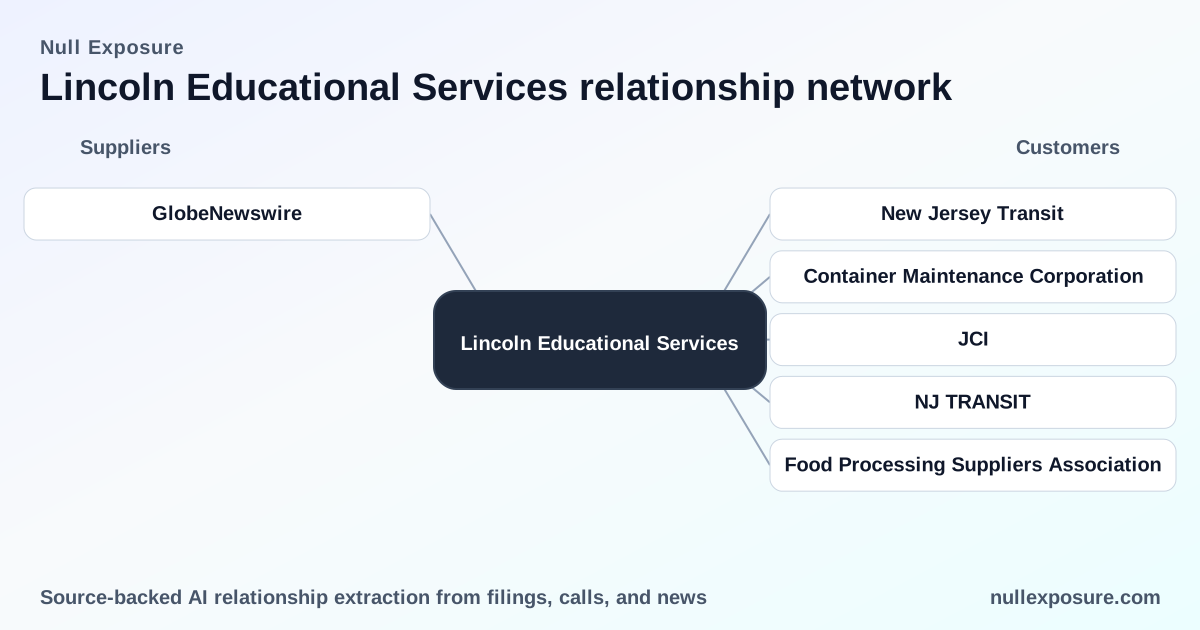
New Jersey Transit — public agency training customer
Lincoln’s WorkforceLinc unit signed a contract to deliver diesel and electrical systems training to NJ Transit technicians at the agency’s maintenance facilities, a relationship announced on the Q4 2025 earnings call and covered by press in March 2026. This engagement positions Lincoln as a government service provider, selling technical upskilling directly to a public transit operator and expanding recurring training revenue. (Source: Q4 2025 earnings call; March 2026 press coverage on Yahoo Finance and Finviz.)
Container Maintenance Corporation — expansion of corporate training
Container Maintenance Corporation reached out to Lincoln to expand training to more of its workforce, according to the company’s Q4 2025 earnings call. This is an example of mid-market industrial demand for on-site or partner-provided technical training that converts Lincoln’s curriculum into enterprise-delivered workforce capability. (Source: Q4 2025 earnings call, March 2026.)
Johnson Controls / JCI — large enterprise hiring and sponsored training partner
Lincoln expanded a partnership with Johnson Controls to provide technicians for the company’s growing data center AI business and lists Johnson Controls among manufacturers sponsoring advanced, tuition-covered training for accepted candidates. That relationship ties Lincoln directly into Fortune 500 hiring pipelines and demonstrates employer-funded tuition and placement programs. (Sources: Q4 2025 earnings call; GlobeNewswire and TradingView coverage, FY2025–FY2026.)
Food Processing Suppliers Association — pathway for employer-sponsored candidates
Lincoln’s electrical/electronics program notes that students can apply for advanced manufacturer-sponsored training with organizations such as the Food Processing Suppliers Association, where employers cover tuition for accepted applicants; this represents sector-specific hiring pathways that reduce student financing friction and strengthen placement metrics. (Source: GlobeNewswire, Oct 27, 2025.)
RC (Ready Capital context) — third-party reference to Lincoln as manager
Media excerpts referencing “RC” describe a strategy “led by our property manager, Lincoln,” focused on occupancy in a particular market; these mentions reflect Lincoln’s broader brand or service role used by third parties in property/operational contexts rather than a core customer contract for training services. The passages are drawn from market news coverage and earnings-related transcripts in early 2026. (Sources: The Globe and Mail and InsiderMonkey, FY2026.)
What these relationships imply about Lincoln’s contracting posture
- Contracting posture is service-oriented and program-length focused. The firm sells multi-week to multi-year training programs and B2B training contracts, which produce predictable revenue over the contract term and create onboarding friction for competitors.
- Counterparty mix is diversified across individuals, government financing, and large enterprise hiring partners. That mix reduces single-channel exposure but leaves the company heavily reliant on Title IV funding flows for cash receipts.
- Concentration risk is material and operationally critical. Title IV represented roughly 82% of cash receipts in 2024, which is a company-level signal that government funding policy and compliance are central to revenue continuity (company filing for FY2024).
Operational constraints and risk signals investors should watch
- High government funding dependence is critical. The company states that Title IV Programs represented approximately 82% of cash receipts in 2024; a compliance or policy failure would have an outsized effect on revenue and liquidity (company filing disclosures, FY2024).
- Program duration and tuition structure lock in long-term revenue but slow flexibility. Diplomas/certificates and associate degrees range from several months to nearly two years, which compresses the firm’s ability to rapidly pivot enrollment in a downturn (company program descriptions).
- Counterparty composition includes both individuals and very large enterprises. Individual tuition is the primary cash source, while relationships with Fortune 500 firms (e.g., Johnson Controls) provide employer-paid tuition and hiring channels—useful for margins but less predictable than multi-year education enrollments.
- Geographic footprint is North America-focused. The company operates 21 campuses across 12 U.S. states and continues to expand campus leases (company leasing disclosures), a signal of continued domestic market concentration.
Bottom line for investors and operators
Lincoln converts educational assets into steady, contract-like revenue through long-duration programs and employer-sponsored training, while remaining highly exposed to Title IV funding streams. Corporate and government contracts such as those with Johnson Controls and NJ Transit materially improve revenue mix but do not eliminate the company’s policy and compliance dependence. For investor-grade customer intelligence on Lincoln’s partner set and contract posture, see the consolidated analysis at https://nullexposure.com/.
If you want a tailored briefing or a slide-ready one-page summary for board or investor discussions, contact us through the homepage: https://nullexposure.com/.
Bold takeaways:
- Title IV funding is a core revenue engine (≈82% of cash receipts, FY2024).
- Corporate and agency training contracts (NJ Transit, Johnson Controls, Container Maintenance) add higher-margin service revenue and placement pathways.
- Program length and campus footprint create revenue durability but reduce near-term nimbleness.