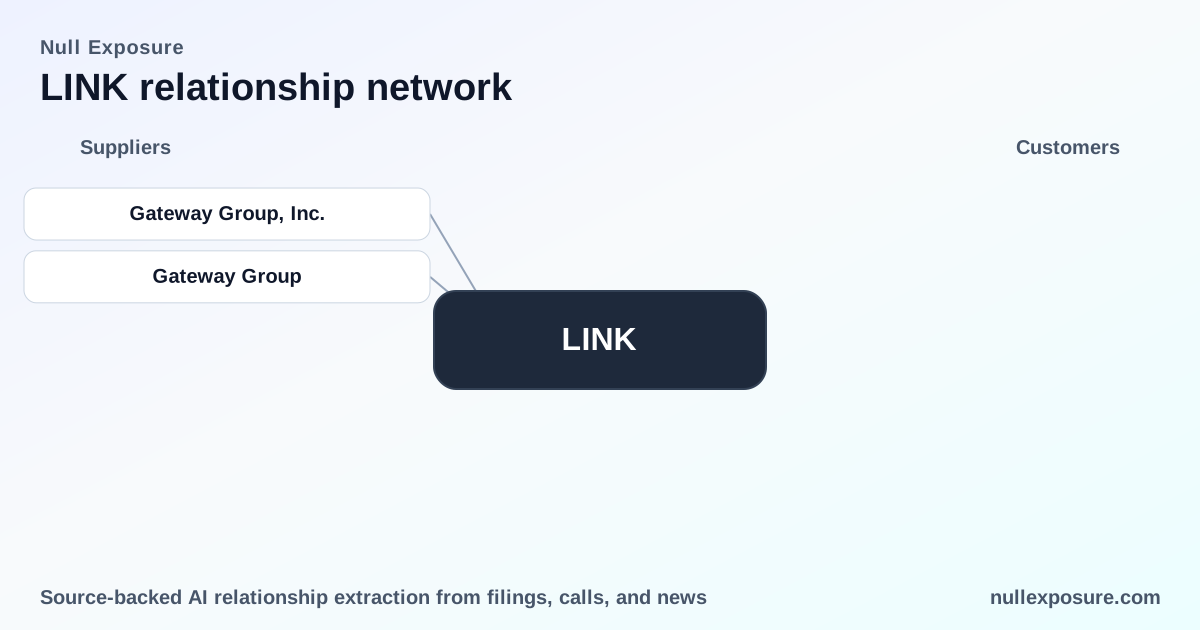
LINK customer relationships: who buys, integrates, and uses the product set
Interlink Electronics (ticker LINK) sells force‑sensing technologies and packaged sensor solutions to product manufacturers and system integrators, monetizing through direct product sales, distributor channels, and custom engineering contracts. Revenue recognition is tied to shipment and title transfer, customers place cancellable purchase orders, and a geographically diversified but concentrated client base drives current business dynamics. For investors, the key questions are customer concentration, contract tenor, channel mix, and the degree to which Interlink’s sensors are mission‑critical inside customer value chains. Learn more at https://nullexposure.com/.
Quick read: what the news‑extracted relationships tell us
The recent relationship signals fall into three practical categories: corporate treasury buyers and token integrations (news items referencing Chainlink usage), strategic product integrations for real‑world assets, and legacy platform transactions that share the “interlink” name. Taken together, these items illuminate external demand for data and verification services, occasional financial exposures to token holdings, and Interlink’s continued role as a commercial partner for manufacturing and sales support.
- StableX (SBLX): StableX executed a strategic purchase of Chainlink (LINK) tokens as part of its stablecoin/tokens strategy; see The Globe and Mail press note dated March 10, 2026 (https://www.theglobeandmail.com/investing/markets/markets-news/ACCESS/35497044/stablex-executes-next-purchase-in-its-stablecoin-strategy-with-acquisition-of-chainlink-link-tokens/).
- CaliberCos (CWD): CaliberCos completed token purchases and later staked LINK; corporate statements from September 2025 and press releases reported an initial purchase and a $6.5M acquisition of LINK, plus a 75,000 LINK stake with a Chainlink node operator (TipRanks announcement and Globe and Mail press releases, Sept 2025 / May 2026: https://www.tipranks.com/news/company-announcements/calibercos-completes-initial-purchase-of-chainlink-tokens; https://www.theglobeandmail.com/investing/markets/stocks/CWD/pressreleases/34914892/calibercos-acquires-65m-in-chainlink-tokens/; https://www.theglobeandmail.com/investing/markets/stocks/CWD-Q/pressreleases/36610182/calibercos-stakes-75-000-link-in-chainlink-network/).
- Streamex (STEX): Streamex’s GLDY tokenized security integrates Chainlink Proof of Reserves to provide transparency of NAV and reserves; multiple company releases in early 2026 and a GlobeNewswire distribution describe live feeds and real‑time reserve data via Chainlink oracles (March–April 2026: https://intellectia.ai/news/stock/streamex-launches-gldy-a-goldbacked-tokenized-security; https://www.citybiz.co/article/808830/streamex-announces-official-launch-date-of-gldy-a-yield-bearing-gold-backed-tokenized-security/; https://www.globenewswire.com/news-release/2026/04/28/3282485/22558/en/streamex-corp-announces-first-yield-dividend-distribution-for-gldy.html).
- Dyadic (DYAI): Dyadic’s earnings call transcript explicitly notes Interlink provides on‑the‑ground commercial resources and regional experience that accelerate engagement with manufacturers, distributors and partners—an operating relationship that supports Dyadic’s go‑to‑market execution (Dyadic Q3 2025 earnings transcript published on Investing.com, referenced 2025 results: https://m.uk.investing.com/news/transcripts/earnings-call-transcript-dyadics-q3-2025-results-miss-forecasts-stock-dips-93CH-4406339?ampMode=1).
- Webster Bank / interLINK (WBS and WBS‑P‑F): News coverage documents Webster’s acquisition of the interLINK digital deposit gathering platform, a separate transaction in the banking/fintech space; coverage cites the acquisition and the platform’s prior management of FDIC‑backed deposits (Banking Dive and American Banker articles, coverage referencing 2022–2023 transaction reporting: https://www.bankingdive.com/news/webster-bank-interlink-stonecastle-veritex-acquisition-9b/638111/; https://www.americanbanker.com/news/webster-bank-makes-deal-for-more-medical-related-deposits).
Relationship-by-relationship: one‑line investor takeaways
- StableX (SBLX): StableX purchased Chainlink tokens as a strategic treasury action, signaling corporate treasury interest in LINK as an asset class (The Globe and Mail, March 10, 2026).
- CaliberCos (CWD): CaliberCos executed material LINK acquisitions and staked tokens with a node operator, demonstrating both treasury accumulation and active network participation (TipRanks and Globe and Mail announcements, Sept–May 2025–2026).
- Streamex (STEX): Streamex’s GLDY RWA product uses Chainlink Proof of Reserves to publish NAV and reserve data, indicating commercial demand for Chainlink’s oracle services in regulated tokenized securities (CityBiz and GlobeNewswire, early 2026).
- Dyadic (DYAI): Interlink supplies Dyadic with regional commercial resources and manufacturing engagement support, a direct B2B commercial relationship that accelerates client adoption and distribution channels (Dyadic Q3 2025 earnings call transcript).
- Webster Bank / interLINK (WBS, WBS‑P‑F): Webster’s acquisition of the interLINK platform and its prior deposit management role is a separate fintech transaction that shares naming but sits outside Interlink Electronics’ core sensor business; press reports document the 2022–2023 transaction and platform scale (Banking Dive; American Banker).
What the constraints say about how LINK operates
These relationship signals sit against a set of company‑level operating characteristics that shape commercial risk and upside.
- Short‑term contracting posture: Interlink’s customers generally place cancellable purchase orders rather than long‑term firm volume commitments, which makes revenue responsive to end‑market demand and increases working‑capital volatility.
- Large enterprise counterparties: The company targets blue‑chip customers across industrial, medical, automotive and IoT verticals, reflecting a buyer base with scale and sophisticated procurement—this improves credibility but concentrates bargaining power.
- Global footprint with regional revenue drivers: Revenue is geographically diversified across North America, EMEA and APAC, with notable sales to Japan and China, indicating manufacturing and distribution exposure across multiple regions.
- Customer concentration and criticality: One customer represented 41% of accounts receivable at year‑end and two customers each exceeded 10% of revenue in the most recent filing; this creates material counterparty concentration risk.
- Channel and role mix: Sales flow through direct sellers and distributors (with rights of return), which dilutes visibility into end demand and can accelerate revenue reversals.
- Product maturity and focus: The business operates as a single reportable segment centered on sensor technology, reflecting specialization and potential vulnerability to sector cycles.
How investors should translate this into action
- Monitor receivables and top‑customer disclosures each quarter; a material change in concentration or delinquency will move valuation faster than unit growth.
- Track order book trends and distributor inventory levels as the primary leading indicators of revenue direction given short‑term purchase orders.
- Assess geographic exposure to manufacturers in China and Japan to gauge supply‑chain and demand shocks.
- Evaluate margin sensitivity to channel mix shifts (direct vs. distributor) and the company’s ability to convert engineering wins into recurring product revenue.
Interlink’s mix of specialized IP, concentrated customers, and global manufacturing footprint composes a business with attractive niche positioning but asymmetric downside if customer ordering patterns retract. For a succinct dashboard of the relationships above and ongoing monitoring, visit https://nullexposure.com/.
Conclusion: Investors should value Interlink for its proprietary sensor technology and existing commercial partnerships, while pricing in short contract tenor, customer concentration, and distributor return risk. The next inflection points worth watching are quarterly receivable movements, top‑customer revenue disclosures, and order flow into strategic verticals.