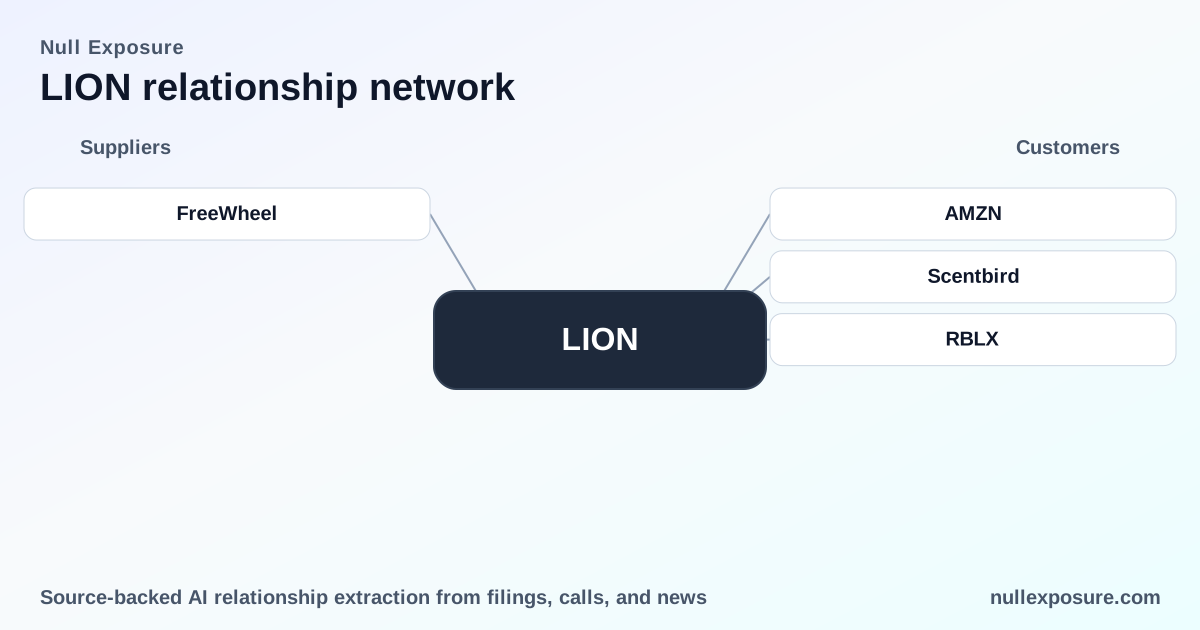
Lionsgate Studios (LION): Content licensing, franchise leverage, and distribution economics
Lionsgate Studios monetizes intellectual property through a mix of licensing and distribution agreements, multi-window streaming deals, and expanding franchise consumer-product tie‑ins; the company extracts value from both recurring platform relationships and one‑off territorial sales while leaning on a sizable content library to generate high-margin licensing revenue. Investors should view LION as a content monetization platform whose economics are shaped by licensing cadence, partner concentration, and franchise extension opportunities.
For a concise, enterprise-level view of partner exposures, see Null Exposure’s coverage: https://nullexposure.com/
Why the partner map matters: licensing-first, windowed monetization
Lionsgate runs a licensing-first operating model. The company consistently licenses theatrical and episodic content across distributors, streaming platforms, and international partners, capturing revenues at discrete points (delivery, first showing, or availability). This structure produces predictable, high‑value cash inflows when content is delivered and creates optionality for additional revenue through consumer products and ancillary licensing. Company disclosures show large, recurring revenue from a small number of platform partners, and deferred revenue balances tied to ongoing licensing arrangements indicate active, contractually governed flows.
Key commercial characteristics: licensing-heavy contracts, global distribution reach, material reliance on major platform relationships, and active monetization of franchises through non‑media channels.
Customer relationships driving near-term momentum
Below I cover every partner referenced in recent coverage and summarize the relationship, with sources.
Amazon Prime Video – multi-year streaming window for Lionsgate slate
Lionsgate has a multi‑year arrangement with Amazon’s Prime Video to stream Lionsgate titles after their Starz window, establishing Amazon as a downstream subscription partner in Lionsgate’s multi‑window monetization chain. According to a TS2 Tech report (Mar 10, 2026), this arrangement underscores the studio’s approach to sequencing rights across platforms to maximize lifetime value. Source: TS2 Tech article (Mar 10, 2026) — https://ts2.tech/en/lionsgate-studios-corp-nyse-lion-stock-jumps-to-new-highs-on-dec-23-2025-latest-news-analyst-forecasts-and-whats-driving-the-move/
Comcast / Universal (CMCSA) – territorial distribution sale to recoup production spend
To offset a near‑$200 million production cost, Lionsgate sold international distribution rights to Universal Studios (a Comcast division), transferring territory risk and unlocking immediate cash recovery. A Sahm Capital pre‑market note referenced this transaction as the mechanism Lionsgate used to recoup production spend (first seen May 2026). Source: Sahm Capital (May 2, 2026) — https://www.sahmcapital.com/news/content/lionsgate-studio-surges-over-9-in-monday-pre-market-whats-going-on-2026-04-27
Scentbird – franchise consumer-products extension (Twilight / John Wick fragrances)
Lionsgate is commercializing franchises through limited‑edition fragrances in partnership with Scentbird, including Twilight Saga‑inspired and John Wick‑inspired products sold on Scentbird’s platform; this represents a brand-extension revenue stream rather than core content licensing. Multiple press items (PR Newswire coverage and reporting aggregated by Finviz, Bitget, and IBTimes) describe the collaboration and product descriptions (March–May 2026). Source examples: PR Newswire coverage cited in Finviz (Mar 5, 2026); Bitget news (May 3, 2026); IBTimes Australia reporting (Mar 10, 2026).
Roblox (RBLX) – IP licensing to a creator platform for experiential builds
Lionsgate joined an IP licensing initiative with Roblox to let creators build experiences using film and TV franchises, enabling user‑generated experiences and derivative monetization on a major gaming/creator platform. Reuters coverage in mid‑2025 reported Roblox’s platform launch and partnerships, including Lionsgate. Source: Reuters coverage referenced by TS2 Tech (mid‑2025 / article referenced Mar 10, 2026) — https://ts2.tech/en/lionsgate-studios-corp-stock-nyse-lion-near-a-52-week-high-latest-news-analyst-forecasts-and-what-to-watch-before-mondays-open/
For a fuller enterprise view of Lionsgate’s customer exposures and contract patterns, visit https://nullexposure.com/ to see how partner concentration and contract type alter cash‑flow predictability.
What the contractual and commercial constraints tell investors
Lionsgate’s public disclosures and the extracted relationship signals produce a coherent picture of operating model constraints and strategic posture:
- Contracting posture: licensing-first and windowed. The company structures revenue around licensed windows (theatrical → pay / premium networks → subscription/ad platforms → ancillary), which produces discrete cash events rather than continuous subscription receipts. Evidence includes repeated references to licensing of motion pictures and television programming and deferred revenue related to licensing arrangements.
- Contract mix: licensing, subscription, and usage-based elements. Contracts range from fixed licensing fees to subscription platform deals and transactional/usage-based distribution (TVOD, EST), creating a diversified revenue mix but one that still depends on timing of deliveries and platform scheduling.
- Counterparty profile: large enterprise partners. Lionsgate deals with major platform and distributor enterprises (e.g., Amazon, Comcast/Universal), which provides scale distribution but increases counterparty bargaining power and concentration risk.
- Geography: global distribution footprint. The company explicitly licenses and distributes content internationally through its sales operations and third‑party distributors, making revenue sensitive to territory‑by‑territory rights monetization.
- Materiality and concentration: single relationships can be material. Disclosures note Starz Business revenues greater than 10% of consolidated revenues in recent fiscal years, indicating that a small number of partners account for material revenue proportions, and that similar arrangements could materially move results.
- Relationship roles and maturity: licensor, distributor, reseller, seller. Lionsgate acts as licensor of IP, distributor for certain territories, reseller of packaged media, and seller of accounts receivable—reflecting a mature, multi‑role studio business capable of multiple monetization levers.
- Spend band and financial scale: large transactions. The company routinely engages in high‑value deals and sales (evidence: Starz revenues and multi‑hundred‑million production recoupment structures).
- Lifecycle stage: active monetization of libraries and franchises. Deferred revenue balances and continuing licensing activity indicate ongoing, active commercial relationships rather than one‑off legacy monetization.
Together, these constraints point to a business that is structurally asset‑light on capital but asset‑rich in IP, reliant on strong partner agreements and effective rights sequencing to maximize lifetime value.
Investment implications — risks and upside
- Upside: Franchise extensions (consumer products, gaming experiences, themed collaborations) create high‑margin, incremental revenue without the full cost of production, enhancing ROI on existing IP. Strategic streaming windows with Amazon and distribution sales to majors like Universal accelerate cash recovery for big productions.
- Risk: Concentration with major networks/platforms and timing of multi‑window monetization creates earnings volatility and event‑driven cash flows; loss of key partners or unfavorable renewal economics would materially affect near‑term revenue.
- Valuation lens: Investors should evaluate LION on both content pipeline economics and franchise monetization growth, not solely on box‑office cycles; licensing cadence and deferred revenue recognition are central to forecasting near‑term cash receipts.
For a tailored exposure analysis and partner concentration scoring for content companies, visit Null Exposure: https://nullexposure.com/
Conclusion: Lionsgate operates as a rights‑monetization engine—its value today depends on disciplined licensing, selective sales to global distributors, and the company’s ability to turn franchises into recurring non‑media revenue. Investors must underwrite partner concentration and the sequencing risk baked into licensing windows when modeling LION.