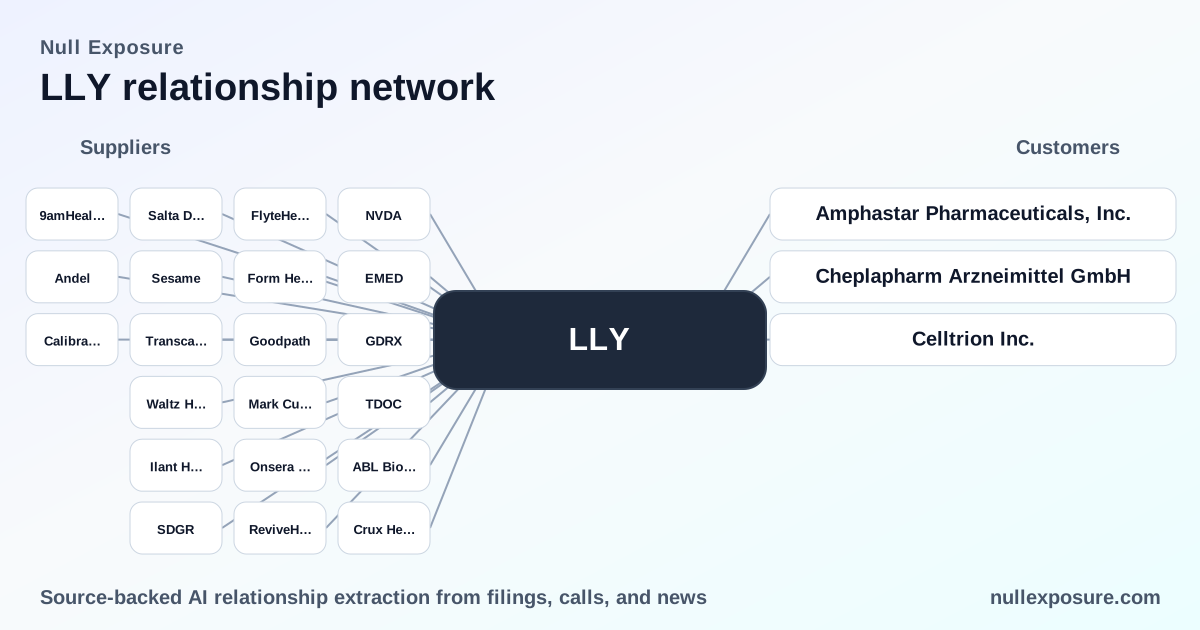
Eli Lilly (LLY): Customer Relationships and Commercial Footprint
Eli Lilly monetizes a vertically integrated pharmaceutical model: it discovers, manufactures, and sells prescription medicines worldwide, capturing margin at product launch and through broad commercial distribution via wholesalers, retail pharmacy partners, and programmatic health platforms. Its revenue profile is highly concentrated in cardiometabolic therapies (notably Mounjaro and Zepbound), while strategic divestitures, manufacturing agreements, and clinical collaborations extend Lilly’s cash flows and risk-sharing across partners. For deeper commercial and counterparty intelligence, visit https://nullexposure.com/.
How Lilly’s commercial engine actually works
Lilly operates as a single reportable segment that leverages internal R&D and manufacturing to feed an extensive global sales and distribution network. The company recognizes revenue at shipment to customers (primarily wholesalers) and relies on three large U.S. distributors for material shares of revenue; government payers, PBMs and self-pay channels are meaningful customers that influence collections and rebate accruals. The result is a business that is commercially mature, globally diversified, but materially concentrated around a handful of blockbuster products—a dynamic that both fuels growth and creates channel and payer sensitivity.
Relationship roll call — who Lilly sells to, partners with, or transfers assets to
Below are the companies that show up in recent filings and news as customers, licensees, purchasers of rights, manufacturing partners, supply customers, or distribution channels for Lilly products. Each entry contains a concise plain-English summary plus a source reference.
Amphastar Pharmaceuticals, Inc.
Lilly sold the rights for Baqsimi in 2023 to Amphastar, transferring commercial rights for that cardiometabolic product to the purchaser. According to Lilly’s 2025 Form 10‑K, the Baqsimi rights were divested in 2023 (FY2025 10‑K).
Cheplapharm Arzneimittel GmbH
Lilly sold its olanzapine portfolio, including Zyprexa, to Cheplapharm in 2023 as part of portfolio rationalization and life-cycle management. This disposition is disclosed in Lilly’s 2025 Form 10‑K (FY2025 10‑K).
United Therapeutics (UTHR)
United Therapeutics reports that Lilly manufactures and distributes Adcirca on United Therapeutics’ behalf through Lilly’s wholesaler network under a manufacturing and supply agreement—United Therapeutics relies entirely on Lilly for Adcirca supply through the contract. This is described in United Therapeutics’ SEC-related filing and commentary (United Therapeutics filing, 2026).
Zura Bio (ZURA)
Zura Bio licensed tibulizumab (ZB‑106) from Lilly on April 26, 2023, indicating Lilly’s use of out‑licensing to advance early-stage assets through partners. The license was reported in a company financing announcement (BizWire / FinancialContent, 2023).
LifeMD (LFMD / LFMDP)
LifeMD announced it is offering Lilly’s newly approved oral GLP‑1, Foundayo (orforglipron), to eligible patients through its virtual care programs, expanding Lilly’s self‑pay and telehealth distribution footprint. See LifeMD press releases and investor communications (GlobeNewswire, 2026).
Mangoceuticals (MGRX)
Mangoceuticals announced programs claiming direct access to Lilly’s Zepbound and Novo Nordisk’s Wegovy via its telemedicine brands, with later industry reporting that Lilly and Novo publicly disowned the claimed partnership—an example of channel confusion and brand-control risk. See Mangoceuticals announcements and follow-up coverage (Mangoceuticals press release and Pharmaceutical‑Technology coverage, 2025–2026).
Organon (OGN)
Organon acquired European licensing and distribution rights to Emgality from Lilly beginning in early 2024, shifting regional commercialization to a specialized partner. This transaction is referenced in Organon’s corporate communications (BioSpace / Organon statements, 2026).
Schrödinger (SDGR)
Schrödinger integrated Lilly’s TuneLab platform into its LiveDesign enterprise informatics, reflecting an informatics licensing and integration relationship to accelerate discovery. See Schrödinger corporate update (Schrödinger press release, 2026).
BioAge Labs (BIOA)
BioAge disclosed that Lilly’s Chorus clinical development organization will advise and assist on the STRIDES trial design and execution, demonstrating Lilly’s operational role in third‑party clinical programs. This is noted in a company filing and related press material (NewsfileCorp/press release, 2026).
GoodRx (GDRX)
GoodRx expanded access to Lilly products—selling Mounjaro and Zepbound through retail channels and adding Foundayo—indicating Lilly’s widening reach into self‑pay and consumer affordability channels. See GoodRx coverage and market reports (Yahoo Finance / MarketScreener, 2025–2026).
Pieris Pharmaceuticals (PIRS)
Lilly contributed ramucirumab (Cyramza) and paclitaxel to a Phase 2 HER2‑positive gastric cancer trial run with Pieris, illustrating in‑kind drug contributions to external oncology research. The collaboration was reported in company coverage (Yahoo Finance summary, 2022 mention reported 2026).
WW International (WW)
WW has added Lilly’s oral GLP‑1 Foundayo to its Med+ program, integrating Lilly medication into subscription‑based weight management offerings. This deployment is reported in market press (Investing.com / SimplyWall.st, 2026).
Kroger (KR)
Kroger pharmacies expanded access to Lilly’s Zepbound KwikPen across participating stores, increasing retail syringe/pen availability and community access. See retail coverage and investment commentary (SimplyWall.st / InsiderMonkey, 2026).
CRISPR Therapeutics (CRSP)
CRISPR established a collaboration and clinical supply agreement with Lilly to evaluate zugo‑cel in combination with pirtobrutinib, expanding Lilly’s role as clinical supply and co‑developer in oncology trials. See CRISPR’s strategic update (GlobeNewswire, 2026).
Celltrion Inc.
Celltrion agreed to acquire Lilly’s Branchburg, NJ manufacturing plant for about 460 billion won (~$330 million), marking an asset sale and capacity transition in biomanufacturing. Reporting of the facility sale appeared in industry press (KEDGlobal, 2026).
Vanda Pharmaceuticals (VNDA)
Vanda licensed NEREUS (tradipitant) from Lilly, illustrating product licensing for neurokinin‑1 receptor antagonists and Lilly’s out‑licensing activity. This licensing is described in Vanda’s trial announcement (PR Newswire, 2026).
Immuneering (IMRX)
Immuneering announced a clinical supply agreement with Lilly for olomorasib, indicating Lilly’s role as a supplier to small‑molecule oncology collaborators. The agreement was noted in financing and corporate communications (QuiverQuant, 2025–2026).
Tandem Diabetes (TNDM)
Tandem’s t:slim X2 insulin pump is compatible with Lilly’s Lyumjev in the EU and U.S., reflecting device‑drug interoperability agreements that support broader product use. This compatibility was noted in sector commentary (TradingView/Zacks, 2026).
Revvity (RVTY)
Revvity announced a collaboration to make Lilly’s TuneLab predictive models available through the Revvity Signals platform, an example of commercial informatics partnership and wider distribution of Lilly‑derived models. See Revvity coverage (TradingView, 2026).
CVS Health (CVS)
CVS opted out of the Medicare obesity drug coverage model, a payer decision that constrains coverage and influences market penetration for Lilly’s obesity treatments (investor commentary and market reporting, 2026).
ProQR (PRQR)
ProQR flagged the importance of securing collaboration benefits from partners including Lilly, signaling that Lilly partnerships are material to smaller biotech development plans and execution risk. See ProQR investor materials (GlobeNewswire, 2026).
Foghorn Therapeutics (FHTX)
Foghorn’s lead collaboration with Lilly includes an operationally run Phase 1 study with costs shared 50/50 and dosing beginning in 2024, demonstrating cost‑share and operational leadership by Lilly in partnered trials. See company comments and conference reporting (MarketBeat / Yahoo Finance, 2026).
Atossa Therapeutics (ATOS)
Atossa’s I‑SPY 2 investigations include combination arms using abemaciclib (VERZENIO), a drug marketed by Lilly, showing Lilly’s marketed agents being used in external adaptive trials. Referenced in corporate outreach (Finviz summary, 2026).
Lexxarias (LEXX)
Lexxarias reported that a trial used pure tirzepatide as the active input rather than reformulated commercial Zepbound, underscoring differences between investigational inputs and Lilly’s commercial formulations. See trial reporting (jsonline press release, 2025).
What these relationships say about Lilly’s operating constraints and commercial posture
- Contracting posture: Lilly executes a mix of asset sales, licensing, manufacturing and supply agreements, and co‑development cost‑share deals; this demonstrates a deliberate strategy to monetize mature assets while retaining manufacturing and distribution control where it improves margin capture.
- Concentration and criticality: Mounjaro and Zepbound generated 56% of 2025 revenue, creating concentrated exposure to cardiometabolic product performance and access. Three wholesale distributors (McKesson, Cencora, Cardinal) each accounted for significant portions of revenue, showing distribution concentration that creates counterparty dependency (company disclosures, FY2025 10‑K).
- Global footprint and payer complexity: Lilly sells in dozens of countries and serves governments, PBMs, insurers, and cash‑pay patients; government and payer payment terms materially affect accruals and collections, a structural constraint on working capital (company filings).
- Role maturity: Lilly is mature across discovery, manufacturing, and commercial distribution, and it frequently assumes manufacturer and distributor roles for partners (e.g., Adcirca manufacturing for United Therapeutics), allowing it to monetize supply expertise beyond its own brands.
Investment implications — risks and levers for value
- Upside: High-margin cardiometabolic franchises and strategic out‑licensing/manufacturing deals generate cash and optionality. Partnerships with informatics and device firms extend Lilly’s moat into discovery and ecosystem services.
- Risk: Revenue concentration in a few products and reliance on large wholesale and payer relationships create single‑point distribution and access risks; payer policy moves (e.g., CVS decisions) materially change addressable markets.
- Operational levers: Asset sales and licensing reduce exposure to mature categories while manufacturing agreements (and facility sales) reallocate capital and capex needs.
For a practical commercial counterparty profile and to track how these relationships evolve in near‑real time, explore our full coverage at https://nullexposure.com/.
Key takeaway: Lilly’s commercial strength is built on integrated discovery, supply and distribution, but the business is commercially concentrated—so partner arrangements and payer decisions are the primary risk levers for investors.