LMNL: From R&D to Realized Value — What the customer slate tells investors
Liminal BioSciences historically operated as a biotech developer of specialty therapeutics and manufacturing assets and has increasingly monetized physical assets and equity value through discrete, deal-driven transactions. The company’s commercial footprint over the last several years is defined less by recurring, prescription-driven revenue and more by asset sales, plant divestitures and an ultimate takeover transaction, creating a capital-return and liability-resolution profile that investors should treat differently from an ongoing commercial-stage drug company.
For a concise view of counterparties and strategic outcomes, visit the NullExposure research hub: https://nullexposure.com/
The three counterparties that narrate LMNL’s transition
LMNL’s public relationship history since FY2021 is short and transaction-heavy. Each counterparty below is a counterparty to a specific disposal or corporate transaction rather than a long-term commercial customer relationship.
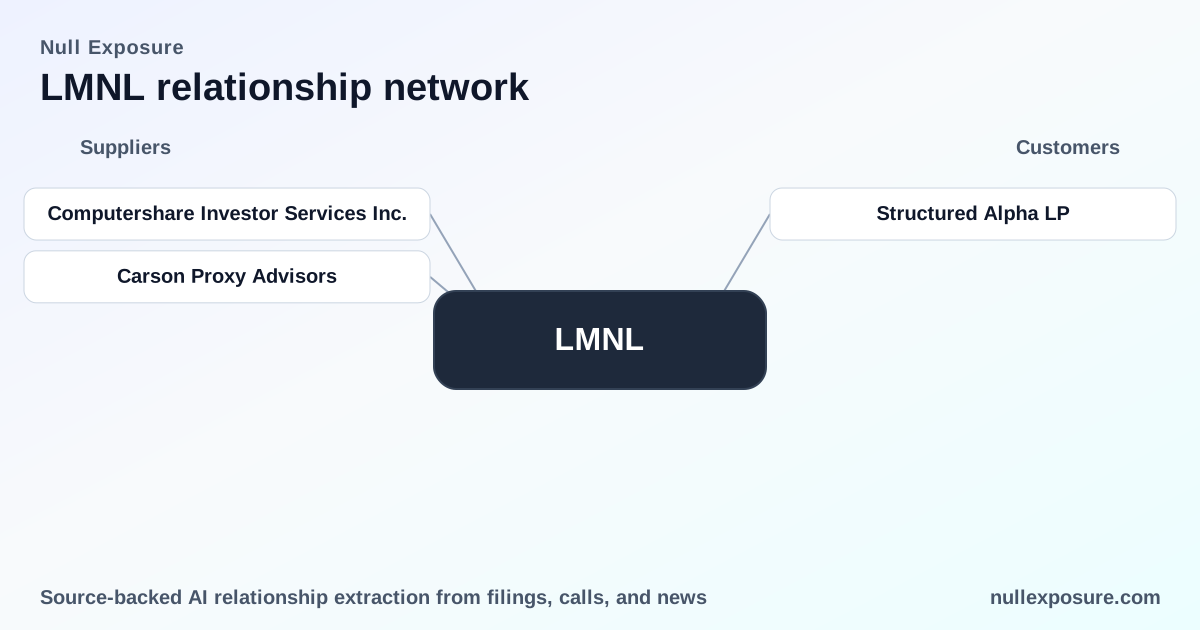
Structured Alpha LP — the acquirer that completed the takeover
Structured Alpha LP completed a plan of arrangement to acquire all issued common shares of Liminal at US$8.50 per share, paying cash to minority shareholders as part of a control transfer in March 2026. This transaction converted public-equity exposure into a cash outcome for shareholders and effectively ended Liminal’s independent public-company path. According to BioSpace coverage dated March 10, 2026, Structured Alpha executed the arrangement and acquired the remaining shares outstanding.
Kedrion — buyer of plasma centers and a cash realization for LMNL
Liminal sold plasma collection facilities to Kedrion in a transaction that generated $17 million in cash proceeds for Liminal. That divestiture is an explicit example of LMNL converting operational assets into liquidity rather than retaining those assets for ongoing manufacturing or commercialization. A May 2026 Yahoo Finance report notes the $17 million cash payment tied to that sale.
Ocugen — purchaser of a Canadian manufacturing plant
Earlier in the decade, Ocugen entered an agreement to buy Liminal’s manufacturing plant in Ontario, representing another disposal of production capacity to a strategic buyer that needed capacity for vaccine and biologic manufacturing. The Philadelphia Business Journal reported on the Ocugen transaction in January 2022, describing the sale of the Malvern/Ontario plant to Ocugen as part of LMNL’s asset disposition activity.
What these relationships collectively signal about LMNL’s operating model
These three items form a coherent picture: LMNL’s commercial relationships have been transaction-specific, focused on asset monetization and corporate reorganization rather than sustaining recurring customer revenue. From an investor and operator standpoint, that implies a distinct set of business-model characteristics:
- Contracting posture — transactional and deal-driven. Counterparties are buyers/acquirers in one-off sales or an acquisition, not long-term volume customers under multi-year supply contracts.
- Concentration — high counterparty concentration by outcome. Value realization for shareholders came from a small number of large counterparties instead of broad-based commercial channels; that concentrates execution and counterparty risk around a few discrete buyers.
- Criticality — low ongoing revenue criticality for ex-LMNL. The deals are consistent with shedding operational responsibility rather than preserving customer-servicing infrastructure, reducing the importance of continuing operating relationships.
- Maturity — exit and wind-down posture. The mix of asset sales and a controlling acquisition is consistent with a company in transition toward capital recovery and liability management rather than growth investment.
These constraints are company-level signals: they describe how LMNL conducts business and realizes value, independent of any single counterparty.
Investment implications and key risk factors
Investors evaluating LMNL exposure — whether for legacy shareholders, creditors, or potential buyers of remaining assets — should prioritize a different checklist than for an operating biotech:
- Valuation is deal-price driven. Recent liquidity events provide hard price points (e.g., $8.50 per share acquisition) that anchor exit-value expectations more than pipeline probability models. Use realized transaction prices as primary value inputs.
- Liquidity and timing risk fall to buyers. With assets sold and corporate control transferred, residual upside for legacy stakeholders is limited; conversely, acquirers and asset buyers assume integration and commercialization risk.
- Contingent liabilities matter. Asset disposals and acquisitions frequently accompany retained or transferred liabilities (manufacturing liabilities, indemnities, workforce obligations). Assess legal and contingent liability schedules before relying on headline cash proceeds.
- Counterparty execution risk is concentrated. A small number of counterparties carried the bulk of monetization outcomes; any dispute or renegotiation around those deals would meaningfully change realized proceeds.
- Operational decline reduces recurring revenue optionality. Once plants and facilities are sold and operations curtailed, upside from future product sales is constrained unless a buyer explicitly commits to continuing manufacturing and commercialization efforts.
Practical takeaways for investors and operators
- For investors: Treat LMNL as an asset-realization story with clear transaction comparables and limited continuing commercial revenue. The most relevant datapoints are documented sale proceeds and the acquisition price.
- For operators and potential counterparties: The company’s posture favors clean, one-off transactions and rapid monetization rather than layered, long-term supplier relationships; negotiate warranties, indemnities and transition services accordingly.
Explore additional counterparty intelligence and historical transaction coverage at NullExposure: https://nullexposure.com/
Final read
LMNL’s recent public record is a concise map of strategic exits: asset sales to strategic buyers and an ultimate cash acquisition for shareholders. Those outcomes produce a different risk-reward profile than a company pursuing scale through recurring commercial contracts. Investors should reframe their diligence around realized deal economics, concentration of counterparties, and the residual liability picture rather than pipeline milestones.