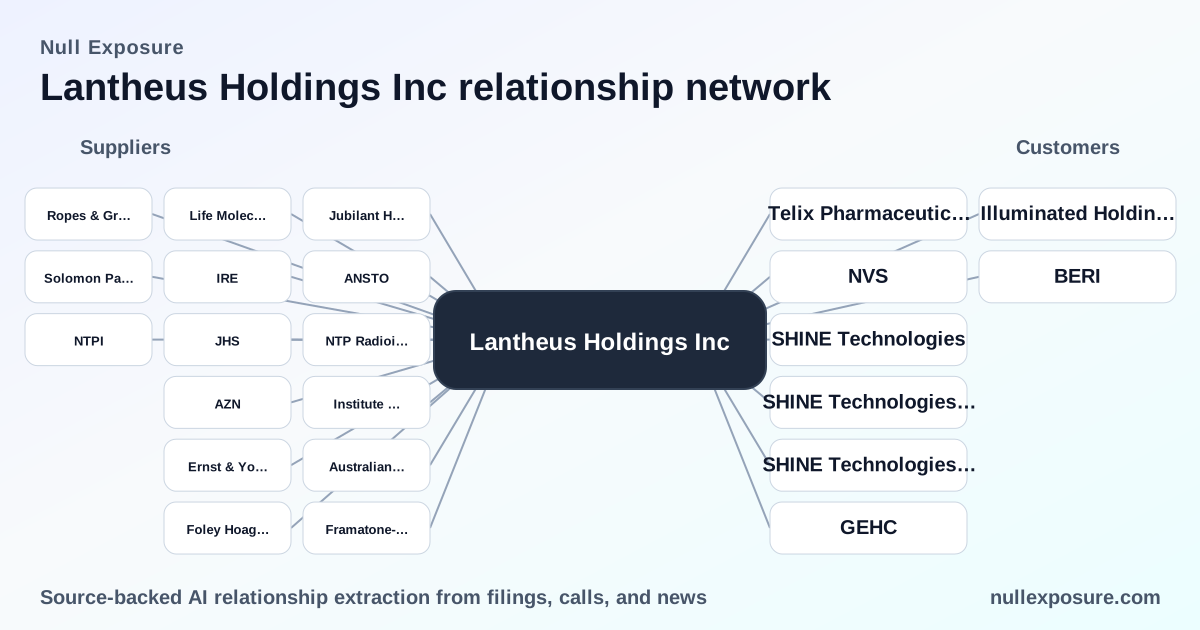
Lantheus (LNTH) — customer relationships, commercial posture, and what matters to investors
Thesis: Lantheus monetizes a focused radiopharmaceutical and diagnostic-products franchise by selling high-value imaging agents (most notably PYLARIFY) to hospitals, independent diagnostic testing facilities and radiopharmacies, while supplementing product sales with licensing fees, milestone payments and royalties; the business is organized around a combination of direct U.S. sales and third‑party international distribution, and recent strategic moves (notably the divestiture of the legacy SPECT unit) materially refocus the company toward PET and therapeutic assets. PYLARIFY is the revenue engine — generating over $1.1 billion in 2024 — and licensing/royalty streams are strategic complements to product sales. For a deeper view of named counterparties and commercial constraints, see NullExposure: https://nullexposure.com/.
How Lantheus actually sells — the operating model investors should price
Lantheus conducts the bulk of commercialization through direct selling in the U.S. and third‑party distributors internationally, with primary customers made up of hospitals, independent diagnostic testing facilities (IDTFs) and radiopharmacies. According to Lantheus’ FY2024 Form 10‑K, customer orders are often governed by master sales or group purchasing organization agreements, underscoring a framework contracting posture rather than transaction‑by‑transaction spot sales. The company also pursues licensing arrangements that produce up‑front fees, milestone receipts and royalty streams, establishing recurring and semi‑predictable cash flows beyond unit sales.
- Concentration and criticality: PYLARIFY is the core commercial asset with material revenue concentration (>$1.1B in 2024), so counterparty performance and market access for that product drive near‑term cash flow sensitivity.
- Global reach: Lantheus sells outside the U.S. via third‑party distributors in Europe, Australia, Asia‑Pacific, Central America and South America, and direct distribution in Canada — a distribution model that both reduces capital intensity and introduces partner execution risk.
- Contract maturity and posture: Framework agreements and licensing terms create multi‑year revenue visibility for core assets but also embed dependency on regulatory milestones and partner commercialization capacity.
For more on Lantheus’ commercial footprint, see the company’s FY2024 Form 10‑K and related earnings releases at NullExposure: https://nullexposure.com/.
Named relationships you need on your model
Below are the counterparties, competitors and acquirers explicitly referenced in public filings and reports; each entry includes the plain‑English implication and a source reference.
Telix Pharmaceuticals Limited
Telix is listed by Lantheus as a direct competitor for PYLARIFY, meaning market share dynamics in prostate‑cancer PET imaging include Telix’s approved imaging agents. According to Lantheus’ FY2024 Form 10‑K, Telix is a named peer in the competitive set for PYLARIFY (FY2024 10‑K).
Novartis AG (NVS)
Novartis is identified in Lantheus’ public filing as another large competitor for PYLARIFY, representing a substantial, diversified competitor with meaningful commercialization resources (FY2024 10‑K).
Blue Earth (a Bracco subsidiary)
Blue Earth — part of the Bracco group — is called out as an approved‑agent competitor to PYLARIFY, which highlights competitive pressure from established imaging manufacturers in selected markets (FY2024 10‑K).
GE Healthcare / GEHC
GE Healthcare is cited both as a competitor for DEFINITY (Lantheus’ ultrasound enhancing agent) and as a minor royalty/partner contributor in forward-looking commentary, with anticipated royalties tied to other programs and to Pylarify commercialization in Japan; that mix signals both head‑to‑head product competition and selective collaborator economics (FY2024 10‑K; SCR/Zacks commentary, March 2026).
SHINE Technologies / SHINE Technologies LLC / SHINE Technologies, LLC
SHINE (a subsidiary of Illuminated Holdings) is the acquirer of Lantheus’ legacy SPECT business, a completed transaction effective January 1, 2026 that transferred SPECT diagnostic agents, part of the North Billerica manufacturing campus and SPECT‑related Canadian operations to SHINE. Multiple press releases and earnings commentaries reported the closing and the specific product and asset transfers (TradingView, Yahoo Finance, CityBiz, Bitget and FinViz coverage, January–March 2026).
Illuminated Holdings
Illuminated Holdings is the parent company of SHINE Technologies and was reported as the intended buyer when Lantheus announced the planned SPECT divestiture; this places Illuminated at the top of the ownership chain for the acquired assets (SCR/Zacks reporting, March 2026).
What the constraints tell you about counterparty risk and revenue durability
The company‑level constraints extracted from Lantheus’ FY2024 filing and 2025 commentaries frame how investors should think about counterparty exposures and model cadence:
- Framework contracting posture: Lantheus treats many customer orders as governed by master sales or GPO agreements, which increases revenue predictability for recurring products but concentrates negotiation leverage with institutional buyers (10‑K, FY2024).
- Licensing as a separate revenue channel: Lantheus routinely uses licensing agreements that deliver up‑front fees, development/commercial milestones and royalties — these are non‑linear revenue drivers that can produce step changes around regulatory events (10‑K, FY2024).
- Global distribution and reseller risk: The company relies on third‑party distributors in Europe, APAC, Latin America and other regions, which reduces fixed costs but adds execution and regulatory variability outside the U.S. (10‑K, FY2024).
- Customer base and role: Lantheus is primarily a seller to hospitals, IDTFs and radiopharmacies; the company also functions through distributor relationships overseas (10‑K, FY2024).
- Revenue scale and activity: The business is active and material — PYLARIFY generated approximately $1.1 billion in 2024, a spend band signal that seats the asset in the >$100m category and makes partner performance materially consequential to near‑term cash flow (10‑K, FY2024).
Investment takeaway: Lantheus’ transition toward PET and away from legacy SPECT—via the SHINE transaction—concentrates upside and downside on higher‑growth PET assets and licensing/royalty outcomes; investors should model regulatory milestones and partner commercialization capabilities explicitly and price in distributor execution risk outside North America.
Final practical considerations for investors
- Monitor PYLARIFY uptake and regulatory timelines closely; that single product dominates current revenue and drives valuation sensitivity.
- Track international distributor performance and any licensing milestone receipts — both will materially affect revenue timing.
- The SPECT divestiture to SHINE/Illuminated reduces legacy operational complexity but also removes lower‑margin product volume; the net margin and cash‑flow effect should be viewed through 2026 reported results and reconciliations (earnings releases and transaction disclosures, early 2026).
For a structured feed of Lantheus counterparties and constraint signals tailored for investor workflows, visit NullExposure for the full coverage and related company maps: https://nullexposure.com/.