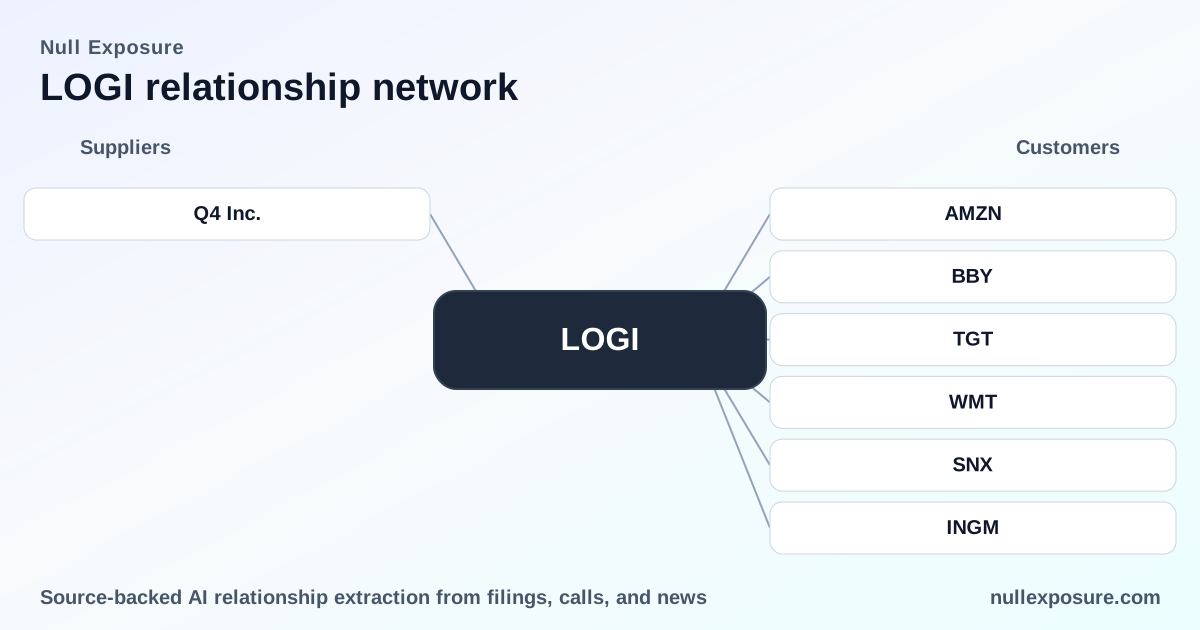
Logitech (LOGI) — customer relationships and what they mean for investors
Logitech designs, manufactures and sells software-enabled peripheral hardware and monetizes through product sales across retail, e-tail and distributor channels, supplemented by subscription services for streaming and video collaboration support that generate deferred and recurring revenue. Revenue is driven by scale distribution (retail and e-commerce), selective recurring services, and a single, mature “Peripherals” operating segment that benefits from strong gross margins and steady cash flow. For a deeper look at how customer relationships shape risk and upside, visit https://nullexposure.com/.
Executive snapshot — concise investor takeaways
- Core business: hardware peripherals sold through retailers, distributors and direct e-commerce; software and services provide a modest recurring layer.
- Channel concentration: three customers—Amazon, Ingram Micro and TD Synnex—account for a meaningful share of gross sales but none individually exceeds 20% (FY2025).
- Geographic exposure: heavy exposure to North America, material presence in EMEA and APAC.
- Contract posture: primarily transactional product sales with some subscription and long-term service contracts producing deferred revenue up to five years.
- Strategic implication: diversified go-to-market reduces single-counterparty leverage, while subscription and long-term support create predictable revenue pockets.
How Logitech’s operating model shapes customer risk and opportunity
Logitech operates as a single consolidated operating segment—Peripherals—focused on hardware that is software-enabled. The company sells primarily to distributors, retailers and e-tailers while also serving end users directly through its e-commerce storefront. That mix produces a contracting posture dominated by product sales and reseller agreements, with select subscription and multi-year service contracts that create deferred revenue recognized ratably over periods up to five years. These features make Logitech a hybrid of a traditional hardware vendor and a services-enabled supplier: product sales drive scale and margins; subscriptions and support add stickiness and recurring cash.
Concentration is meaningful but controlled. Logitech disclosed that Amazon, Ingram Micro and TD Synnex together accounted for a sizable portion of gross sales in FY2025, though no single customer outside those three exceeded 10% in the three-year window. This produces a mid-level counterparty concentration: dependence on large distributors and e-tailers is material, but not single-counterparty critical. Geography is explicitly diversified—North America is the largest region (roughly a third of sales), with substantial EMEA and APAC exposure that creates both growth optionality and regional execution risk. Finally, the business is mature and capital-efficient, operating within a stable product category where channel relationships and retail placement are the key competitive advantages.
Customer relationships — what every investor should know
MSGM — simulation developer integration
Logitech’s Trueforce haptics technology received native support in Le Mans Ultimate version 1.3, giving the simulator direct low-latency vibrotactile effects from the physics engine in addition to traditional force feedback. This is a product-integration relationship that extends Logitech’s gaming haptics footprint into simulator software. Source: Sahm Capital news post on Le Mans Ultimate update (March 31, 2026).
Amazon (AMZN) — strategic e-tailer and major channel partner
Amazon is a major e-tail channel for Logitech products and, together with its affiliates, represented 19% of Logitech’s gross sales in FY2025, establishing Amazon as a primary distribution and retail partner without single-customer control. Logitech also notes that its products are widely stocked and discounted on Amazon in the U.S., reinforcing Amazon’s role as a price-and-volume driver for Logitech’s consumer lines. Source: Logitech FY2025 10‑K (filed for year ended March 31, 2025) and an Ad-Hoc News overview (March 10, 2026).
Best Buy — national retail placement in the U.S.
Best Buy is listed alongside other national retailers as a major U.S. stocking partner for Logitech products, supporting in-store discovery and premium product placement for higher-margin SKUs. Source: Ad-Hoc News overview (March 10, 2026).
Target — mass‑market retail distribution
Target is cited as a U.S. retail channel where Logitech maintains shelf presence and participates in promotional cycles that drive volume during shopping events. This supports Logitech’s mainstream consumer reach. Source: Ad-Hoc News overview (March 10, 2026).
Walmart — broad retail reach and price-led volume
Walmart provides broad U.S. market coverage and price-sensitive volume for Logitech’s mainstream peripherals, reinforcing scale distribution and promotional cadence. Source: Ad-Hoc News overview (March 10, 2026).
Ingram Micro — distributor and indirect channel
Ingram Micro is one of Logitech’s three named concentrated customers and accounted for 14% of gross sales in FY2025, positioning the distributor as a material channel for indirect enterprise and reseller fulfillment. Source: Logitech FY2025 10‑K (filed March 31, 2025).
TD Synnex — distribution partner for channel reach
TD Synnex and its affiliates accounted for 12% of Logitech’s gross sales in FY2025, making the company a material distributor and important partner for enterprise and commercial reselling channels. Source: Logitech FY2025 10‑K (filed March 31, 2025).
What the constraints signal about Logitech’s business model
- Contracting posture: Logitech’s revenue mix is predominantly transactional product sales, supplemented by subscription services (streaming software, video collaboration support) and deferred revenue recognized over terms up to five years, indicating a strategic push toward predictable cash flows without abandoning hardware economics. Evidence for subscription and deferred revenue exists in company filings and revenue recognition notes.
- Counterparty mix and concentration: The customer base spans large enterprise distributors, small businesses and individual consumers, which reduces single-counterparty dependency while concentrating a meaningful share of gross sales with three distributors/e-tailers (Amazon, Ingram Micro, TD Synnex). This creates an intermediate concentration risk profile.
- Geographic diversification: Revenue is North America‑heavy (~35% of sales) with material EMEA and APAC exposure, which spreads market risk but requires multi‑regional supply chain management.
- Role and maturity: Logitech is the seller and supplier, leveraging distributor and reseller channels, and operates in a mature hardware segment (Peripherals) where brand, shelf placement and channel relationships matter more than rapid product-cycle reinvention.
Investment implications — pragmatic conclusions for investors
- Strengths: Strong channel coverage (both e-tail and brick-and-mortar), durable brand in peripherals, attractive margins, and growing recurring revenue pockets give Logitech a balanced revenue profile. The top-three customer concentration is notable but not destabilizing—the largest single partner (Amazon) was sub-20% in FY2025.
- Risks: Dependence on distribution partners for a sizeable share of gross sales creates negotiating leverage risk during promotional cycles and potential margin pressure from price-led e-tail environments. Geographic exposure requires continued supply-chain resilience.
- Catalysts to watch: expansion of subscription services and enterprise video-collaboration contracts (to grow recurring revenue), deeper platform integrations (e.g., gaming haptics with software partners), and changes in distribution agreements or promotional intensity at major retailers and e-tailers. For continued monitoring and to access structured relationship analytics, visit https://nullexposure.com/.
Bold conclusion: Logitech is a mature peripherals business that balances scale retail distribution with emerging recurring services — concentrated but diversified enough to be investible on a fundamentals basis, provided investors monitor distributor/retailer dynamics and subscription revenue growth.