Lovesac (LOVE) — Customer Relationships That Drive and Constrain Growth
Thesis: The Lovesac Company operates as a direct-to-consumer furniture retailer that designs, manufactures and sells primarily its Sactional modular sofa line through an omni-channel model of showrooms, online sales, mobile concierge and select third-party partners; the business monetizes through high-margin core product sales (Sactionals represent the majority of net sales), showroom-driven customer acquisition and occasional wholesale or pop-up partnerships that supplement reach. For investors evaluating customer relationships, the key takeaways are product concentration, North American retail scale, and selective third‑party partnerships that have recently shifted from expansion to contraction. For a concise operational snapshot visit https://nullexposure.com/.
How Lovesac sells — an operating model shaped by retail and partnerships
Lovesac’s operating model is a retail-first one: individual consumers (25–54, HHI >$75k) are the primary counterparty, and the company serves them through 257 showroom locations across 42 U.S. states plus direct online. This mix produces a contracting posture that is transactional and experience-driven rather than enterprise-locked, with revenue concentration heavily weighted to a single product family — the Sactional line, which represented over 89% of net sales across recent fiscal years. That combination creates high product concentration risk, meaningful geographic concentration in North America, and an operating maturity consistent with an established omni-channel specialty retailer.
- Contracting posture: retail, direct-to-consumer seller with showroom-led conversion.
- Concentration: Sactionals account for the majority of sales, central to revenue and product strategy.
- Criticality: showrooms and online channels are critical customer acquisition assets.
- Maturity: nationwide showroom footprint and established online channel indicate a mature retail rollout.
If you’re screening partners and risks for LOVE, these company-level signals explain why third-party distribution decisions (partnership openings or closures) have an outsized impact on operating expense and impairment flows.
Where third-party relationships matter — the counterparties in the public record
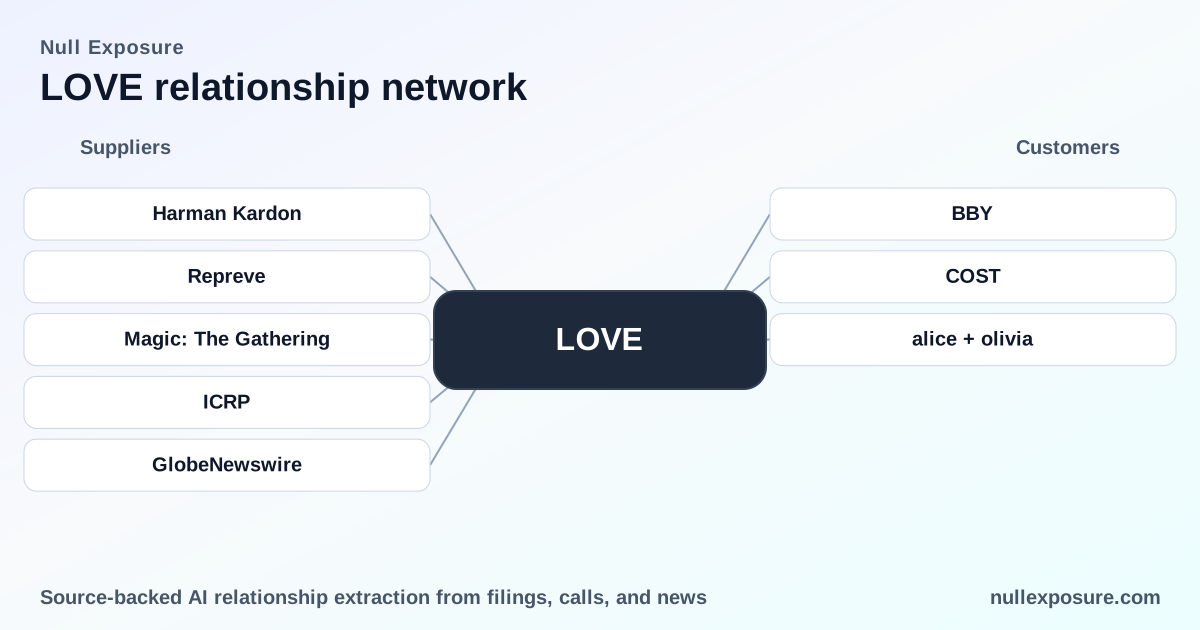
The public record for LOVE’s customer-facing partnerships in the provided results includes Best Buy (BBY), Costco (COST) and a branded collaboration with alice + olivia. Below I summarize each relationship with the precise source context.
Best Buy (BBY) — a recent retreat from shop-in-shop and an earlier experiential showcase
Lovesac previously placed immersive product displays and speaker-equipped sofas at select Best Buy locations and used the chain for experiential marketing; GeekSpin reported that the immersive tech was available at Lovesac showrooms and select Best Buy locations (GeekSpin, March 2026).
The relationship shifted to contraction: company disclosures and earnings commentary document a discontinuation of the Best Buy partnership, closure of shop-in-shop locations, and related impairment and other non-recurring expenses that contributed to SG&A increases and impairment charges in FY2025 and FY2026 (earnings call transcript reporting in InsiderMonkey, Quiver Quant reporting of FY2026 results, and HFBusiness fiscal-year filings, March–May 2026). These combined sources show Best Buy moved from a promotional distribution channel to an exited partner, with tangible P&L impacts recorded.
Sources: GeekSpin (Mar 2026); earnings call transcript coverage in InsiderMonkey (Mar 2026); Quiver Quant reporting on Q3 FY2026 (Mar 2026); HFBusiness coverage of fiscal 2026 results (May 2026).
Costco (COST) — an enhanced partnership but with operational caveats
Lovesac described an expansion of activity with Costco in Q3 commentary, noting the company “enhanced our Costco partnership extensively in quarter three,” indicating strategic emphasis on that wholesale/pop-up channel (earnings call transcript coverage in InsiderMonkey, Mar 2026).
At the same time, the FY2025 Form 10‑K records that decreases in certain revenue metrics were driven by a reduction in barter transactions and lower productivity of temporary online pop-up-shops on Costco.com, signaling that Costco activity is material but operationally uneven (Lovesac FY2025 10‑K filing, Feb 2025).
Sources: InsiderMonkey earnings call coverage (Mar 2026); Lovesac FY2025 Form 10‑K (filed Feb 2, 2025).
alice + olivia — brand collaboration sold through Lovesac channels
Lovesac executed a product collaboration with fashion brand alice + olivia; the co-branded CitySac and Squattoman covers were sold through Lovesac showrooms and Lovesac.com, with the inventory appearing in alice + olivia specialty boutiques as an ancillary placement (FashionWeekDaily, fiscal references to FY2022). This partnership is a brand-extension play designed to reach fashion-conscious buyers through the company’s existing retail footprint and online channels.
Source: FashionWeekDaily coverage of the Lovesac x alice + olivia collaboration (reported in connection with FY2022).
What these relationships imply for investors and operators
- Partnership volatility has direct P&L consequences. The Best Buy exit generated impairment and other non-recurring charges that lifted SG&A; this shows third-party retail partnerships can produce discrete earnings volatility when they change posture. (See HFBusiness and Quiver Quant reporting in 2025–2026.)
- Wholesale/pop-up partners can expand distribution but yield uneven productivity. Costco activity is both a growth lever and an operational risk when temporary pop-ups underperform, as called out in the FY2025 10‑K.
- Brand collaborations extend reach without changing core product dependence. The alice + olivia collab broadens customer appeal and showroom visitation but does not alter the underlying revenue concentration in Sactionals.
Risks tied to the customer model and partner posture
- High product concentration: Sactionals constitute the bulk of net sales, increasing sensitivity to product lifecycle and demand shifts. (Company FY2025 disclosures.)
- North America and showroom dependency: With showrooms concentrated in the U.S., macro and mall/lifestyle center trends in North America materially affect customer acquisition and conversion.
- Partner execution risk: Partner openings and closures (Best Buy, Costco pop-ups) produce measurable P&L swings—both in impairments and in the productivity of sales generated through those channels.
Investment implications and next steps for due diligence
For investors, Lovesac is a retail growth story that depends on continued Sactional demand, efficient showroom economics, and disciplined use of third‑party partnerships. Monitor: same-store showroom productivity, margin trends on Sactionals, the cadence of Costco pop-up performance, and any contingent liabilities or impairment exposure tied to partner exits. For operators, prioritize showroom-to-online conversion, SKU-level margin tracking for Sactionals, and formal gatekeeping on third-party experiments to limit impairment risk.
If you want a structured lens on customer counterparties and how they affect revenue and expense volatility, see more at https://nullexposure.com/.
Key takeaway: Lovesac’s customer base is individual, U.S.-centric and product-concentrated; third-party partnerships like Best Buy and Costco are complementary distribution levers that have recently shown both upside and episodic cost consequences.