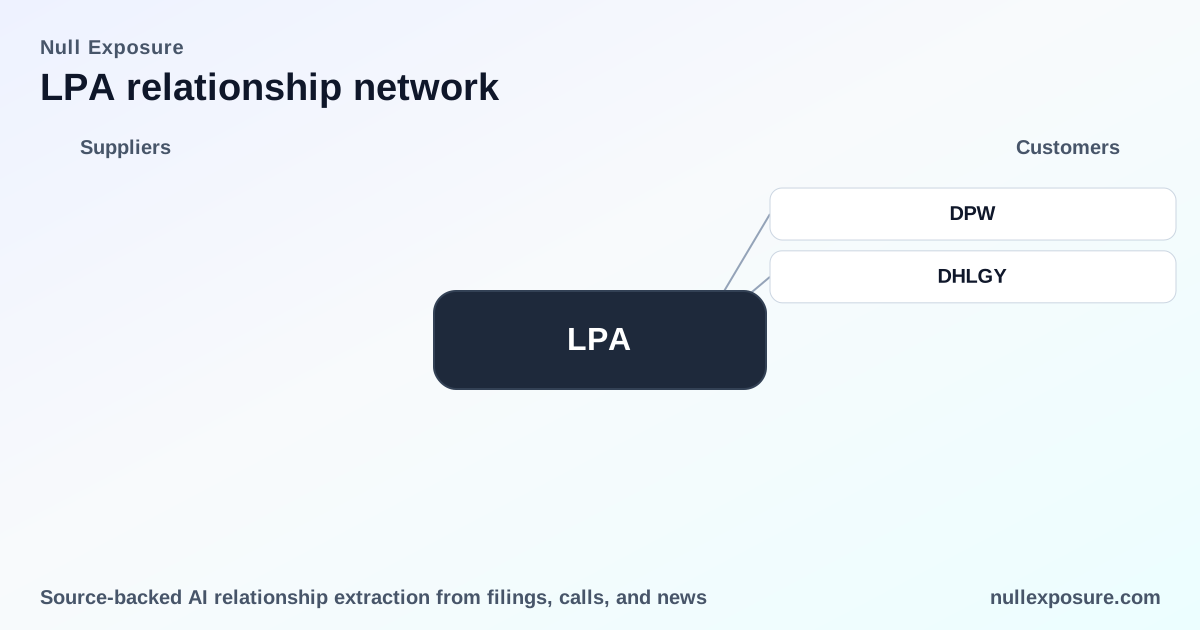
LPA’s customer footprint: DHL anchors LPA’s first Mexico entry and shifts revenue mix
Logistic Properties of the Americas (LPA) acquires, develops and manages industrial real estate and monetizes through long-term leases, asset appreciation and selective dispositions. Recent disclosures show LPA is actively expanding geographically — notably into Mexico — and using blue‑chip logistics tenants to secure cash flows and accelerate near‑term revenue growth. For investors, the critical question is whether tenant quality and lease economics offset concentration and cross‑border execution risks. Learn more at https://nullexposure.com/.
Why the DHL relationship matters for an investor evaluating LPA
LPA’s strategy is straightforward: buy or develop logistics assets in high‑demand corridors and lock in rental income with large logistics operators. The Puebla acquisition anchored by DHL is a clear example of that playbook — a targeted, income‑centric purchase that immediately moved the revenue needle, as LPA reported Mexico contributed to a 14.3% revenue increase in the quarter.
Key operating signals this relationship surfaces:
- Contracting posture: LPA executed a dollar‑denominated, five‑year lease on the Puebla assets, demonstrating an emphasis on hard currency cash flows in international markets.
- Customer concentration and criticality: Anchoring with a global logistics leader like DHL reduces vacancy risk for specific assets, but also concentrates counterparty exposure at the property level.
- Maturity and geographic expansion: This transaction represents LPA’s first entry into Mexico, signaling deliberate cross‑border portfolio diversification rather than opportunistic single‑asset flips.
All reported customer relationships — line by line
Below are every customer relationship item disclosed in the search results, each described in plain English with its cited source.
DHL — earnings call (lpa-2025q3-earnings-call)
LPA stated that two logistics facilities in Puebla are anchored by DHL under a five‑year dollar‑denominated lease, and that Mexico contributed to a 14.3% revenue increase in Q3 2025. This highlights immediate revenue accretion from the acquisition and a preference for USD‑linked rent in that market. According to LPA’s Q3 2025 earnings call (reported March 2026), the Puebla assets are a material contributor to near‑term top‑line growth.
DPW — earnings call (lpa-2025q3-earnings-call)
The same earnings call also references DPW as the inferred symbol connected to DHL’s operations in the transaction; the company noted the Puebla acquisition is anchored by the logistics operator and drove the reported revenue uplift. The Q3 2025 commentary links the Mexico acquisition directly to the quarter’s 14.3% revenue increase (LPA Q3 2025 earnings call, March 2026).
DHL — news report (IndexBox blog)
Independent reporting on the transaction describes LPA’s purchase as its first acquisition in Mexico, involving two warehouses anchored by DHL. The IndexBox article frames the move as LPA’s market entry into Mexico and highlights the anchoring tenant as a structural element of the deal (IndexBox, March 2026).
DHLGY — news report (IndexBox blog)
IndexBox’s coverage also surfaces the inferred market ticker DHLGY tied to DHL’s participation in the Mexican leases; the same article reiterates that both Puebla warehouses are anchored by DHL and constitute LPA’s initial Mexican footprint. The coverage confirms the transaction’s role in LPA’s geographic expansion (IndexBox, March 2026).
What investors should infer about LPA’s operating model
The DHL‑anchored Puebla acquisition provides a clear window into how LPA underwrites international opportunities:
- Revenue model: LPA relies on lease income from tenants like DHL to generate predictable cash flow and to justify acquisition pricing; dollar‑denominated leases in Mexico protect reported cash flow from local currency volatility.
- Concentration dynamics: Single‑asset acquisitions with an anchor tenant reduce leasing risk at the property level but create counterparty dependency; a major tenant default or non‑renewal would have outsized local impact.
- Execution profile: Entering a new country through an anchored acquisition is a low‑complexity way to scale quickly, but it requires operational capability to manage cross‑border leasing, taxation and local landlord obligations.
- Maturity and repeatability: The deal reads as a measured, repeatable expansion approach — acquire assets with strong tenants rather than speculative development — which is consistent with a yield‑oriented REIT/developer posture.
Investment implications and risks
- Positive: tenant quality and immediate revenue: Having a global logistics operator as an anchor accelerates cash flows and mitigates short‑term leasing risk for those assets; LPA’s Q3 contribution figure underlines that effect.
- Negative: concentration and lease term: A five‑year lease provides limited long‑run visibility compared with typical industrial triple‑net leases that often span longer periods; investors should monitor rollover schedules and renewal economics.
- Cross‑border execution risk: Dollar‑denominated contracts reduce FX exposure but do not eliminate operational, regulatory or political risks associated with a new jurisdiction.
- Portfolio impact: The Mexico acquisition materially affected quarter‑over‑quarter revenue growth, which suggests single transactions can move LPA’s reported performance — a signal of current portfolio scale and sensitivity to individual deals.
If you want a deeper look into how these tenant relationships influence valuation and cash‑flow models, visit https://nullexposure.com/ for access to transaction‑level summaries and investor materials.
What to watch next
- Monitor lease expirations and any reported rent escalators on the Puebla assets; renewals or relets will reveal the real pricing power in Mexico.
- Watch for additional Mexican or Latin American buys that indicate a sustained entry strategy rather than a one‑off deal.
- Track LPA’s disclosures for occupancy, tenant mix and any tenant concentration metrics in future earnings releases; given the impact of this acquisition on quarterly revenue, those metrics will move valuation multiples.
Bottom line
The DHL‑anchored Puebla deal is a practical example of LPA executing its stated strategy: buy logistics assets near transport hubs, secure rental income with blue‑chip tenants, and scale geographic exposure selectively. For investors, the transaction is both a vote of confidence in LPA’s sourcing and structuring capabilities and a reminder of concentration and cross‑border risks that warrant active monitoring.