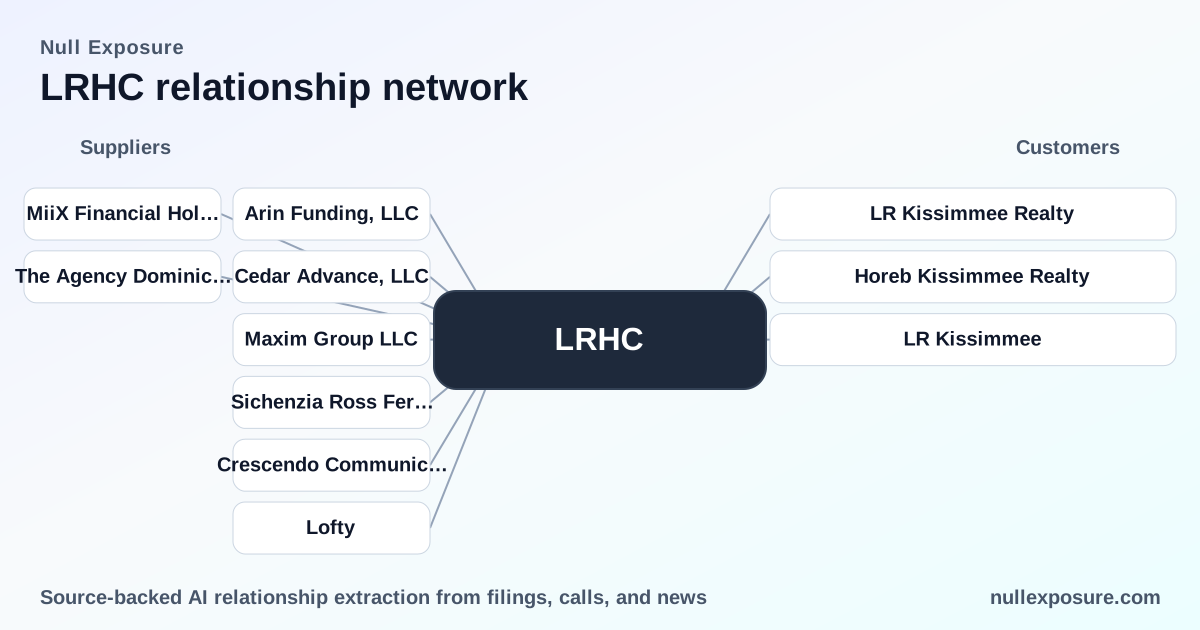
La Rosa Holdings (LRHC): Customer relationships that drive a brokerage-first revenue engine
La Rosa Holdings operates a real estate and PropTech platform that monetizes primarily through agent-generated brokerage commissions and recurring fees from agents and franchisees, supplemented by franchising, coaching, property management, commercial brokerage and title services. The company’s customer relationships are a mix of corporate offices, franchisees and project-level listing assignments that generate both transactional revenue and recurring brand/licensing fees — a structure that concentrates revenue around brokerage activity and agent economics.
For direct access to the company overview and ongoing coverage, visit https://nullexposure.com/.
How the company actually makes money — a single-sentence model and the economics underneath
La Rosa is a brokerage-centric business: 82% of 2024 revenue comes from brokerage fees and agent-related dues, while the remainder flows from complementary services (franchising, coaching, property management, commercial brokerage and title). That concentrated revenue mix creates a high linkage between agent headcount, transaction volume and cash flow, with recurring monthly and annual dues providing a modest recurring base beneath highly cyclical commission income.
Operating-model constraints that shape partner risk and upside
La Rosa’s operating model exhibits a set of practical characteristics investors must weigh:
- Contracting posture: Management notes that client and management contract terms typically run one to three years, but industry practice allows termination on relatively short notice (30–120 days). This creates mid-term revenue visibility but leaves the company exposed to agent churn and fast contract exits.
- Counterparty composition: The business transacts primarily with individual agents and consumers; most revenue derives from commissions paid by consumers through agent activity. That drives revenue sensitivity to local housing markets and recruiting/retention of licensed agents.
- Geographic concentration: La Rosa operates primarily in the United States, with a heavy presence in Florida and expanding footprints in California, Texas, Georgia, North Carolina and Puerto Rico. Geographic focus reduces operational complexity but concentrates macro and regional housing-cycle exposure.
- Materiality: Brokerage activity is critical to the company’s economics — brokerage revenue accounted for 82% of total 2024 revenue, making the relationship fabric between firm, franchisees and agents the central value driver.
- Relationship maturity and stage: The company reports an expanding agent base (2,769 agents as of March 31, 2025) and active financing arrangements in recent quarters, signaling active and growing customer relationships rather than one-off transactions.
- Segmented services: Revenue is split across six reportable segments: Real Estate Brokerage (Residential), Franchising, Coaching, Property Management, Commercial Brokerage, and Title/Settlement & Insurance — a mix that supports cross-sell but preserves brokerage as the core cash engine.
These company-level signals imply moderate contract stickiness but meaningful churn risk, high concentration of revenue risk in agent-led transactions, and operational leverage to recruiting and local market cycles.
Customer and partner relationships: the public disclosures that matter
Below are the customer and partner relationships disclosed in recent filings and news, each summarized in plain English with source attribution.
LR Kissimmee Realty (Sale and Licensing)
La Rosa completed a transaction selling a majority stake in LR Kissimmee Realty and concurrently granted LR Kissimmee a non-exclusive, non-transferable license to use La Rosa’s trademarks and branding as part of the Licensing Agreement. According to CityBiz (March 10, 2026), the sale price reported was $0.5 million and the licensing language formalizes continued brand usage post-transaction.
Source: CityBiz report, March 10, 2026.
LR Kissimmee (Trademark & Brand Licensing — recurring fee)
As part of closing activity tied to the Kissimmee transaction, La Rosa entered a one-year Trademark & Brand Licensing Agreement with LR Kissimmee that provides $4,500 per month in licensing fees for La Rosa trademarks. This creates a recurring revenue stream from the Kissimmee operator tied to brand use and supports near-term cash flow.
Source: TradingView news summary of company disclosures, March 10, 2026.
Horeb Kissimmee Realty (Membership Interest Purchase Agreement)
La Rosa signed a Membership Interest Purchase Agreement with Horeb Kissimmee Realty, signaling an acquisition or capital transaction that expands the firm’s local operating footprint in Kissimmee. The definitive agreement was disclosed in the same March 2026 rollout of multiple material agreements and reflects inorganic expansion activity in La Rosa’s core residential markets.
Source: TradingView news summary of company disclosures, March 10, 2026.
Flor de Pacífico (Exclusive U.S. Listing Agent appointment)
La Rosa was appointed the exclusive U.S. listing agent for Flor de Pacífico, a residential development in Guanacaste, Costa Rica valued at approximately $20 million. This engagement positions La Rosa to capture U.S.-based buyer interest and listing commissions on a single-project basis while showcasing the company’s PropTech and cross-border marketing capabilities.
Source: GlobeNewswire press release, May 3–29, 2026.
For readers who want to review the company’s disclosures and deal roster in one place, see https://nullexposure.com/.
What these relationships imply for investors
- Revenue diversification is limited: Despite having multiple service lines, brokerage transactions dominate, so transactions and agent recruitment drive both upside and downside.
- Recurring upside from licensing: The Kissimmee licensing agreement ($4,500/month) and similar brand deals create low-volatility fee income but are small relative to overall revenue; they act as margin-enhancing complements not core drivers.
- Active M&A and deal-making posture: Membership interest purchases and sale transactions point to an active consolidation and capital-deployment approach at the local-market level that can accelerate agent growth but comes with integration and execution risk.
- Project-level listing assignments extend addressable markets: The Flor de Pacífico exclusive listing demonstrates La Rosa’s ability to monetize project-level listings and to leverage U.S. distribution for international developments, providing potential uplift to fees and marketing services.
Key investment takeaways
- Core risk/reward centers on agents and transactions. With 82% of revenue tied to brokerage, investor returns depend on agent retention, recruiting and local housing markets.
- Small recurring licensing fees reduce volatility but do not transform the business model. Expect licensing income to be additive rather than transformational.
- Operational agility is visible but exposes the firm to execution risk as the company pursues acquisitions and third‑party listing opportunities.
For ongoing investor resources and deeper relationship mapping, visit https://nullexposure.com/.
Overall, La Rosa is a classic brokerage-first real estate operator with targeted growth through licensing and selective acquisitions; its customer relationships strengthen local market positioning and create modest recurring fees, while core financial sensitivity remains heavily correlated to agent-driven transaction volume.