Lattice Semiconductor (LSCC) — Customer relationships that drive FPGA monetization
Lattice Semiconductor designs and sells low-power field-programmable gate arrays (FPGAs), IP cores and related services worldwide, monetizing through product sales, IP licensing and usage‑based royalties; the company channels most volume through independent distributors while also pursuing strategic integrations with cloud, AI and security platform vendors. For investors, the story is a mix of strong strategic partnerships (notably with NVIDIA), recurring license and royalty economics, and high channel concentration that amplifies both upside and execution risk.
Explore more on commercial signals at https://nullexposure.com/.
How Lattice makes money — a compact investor primer
Lattice is a hybrid semiconductor vendor: it sells physical FPGA devices into communications, industrial, automotive and consumer markets while also selling licenses for IP cores and receiving royalties tied to standards and usage. According to company disclosures, licensing and services revenue includes IP core licensing, patent monetization, design services and royalty/adopter fee revenue, and a portion of that revenue is variable, usage‑based royalties tied to standards such as HDMI/MHL.
Operational characteristics that shape risk and return:
- Channel concentration: Historically, independent distributors accounted for roughly ~89% of net revenue in recent fiscal years, indicating a high reliance on third‑party distributors for fulfillment and customer reach.
- Geographic exposure: Sales are global, with Asia representing the largest share (about 65% of revenue in the referenced period), followed by the Americas and Europe.
- Contracting posture: Revenue streams combine product sales (transactional) with licensed/IP revenue (contractual and usage‑based) — a mix that supports gross margins but creates variable revenue sensitivity to end‑market device volumes.
- Relationship maturity and materiality: Distributor relationships are long‑standing and materially critical to operations; licensing relationships and strategic system integrations with AI/robotics vendors are developing into recurring avenues of value.
These company‑level signals are core to any diligence on LSCC customers and partners.
Strategic partner: NVIDIA — product integration and reference designs
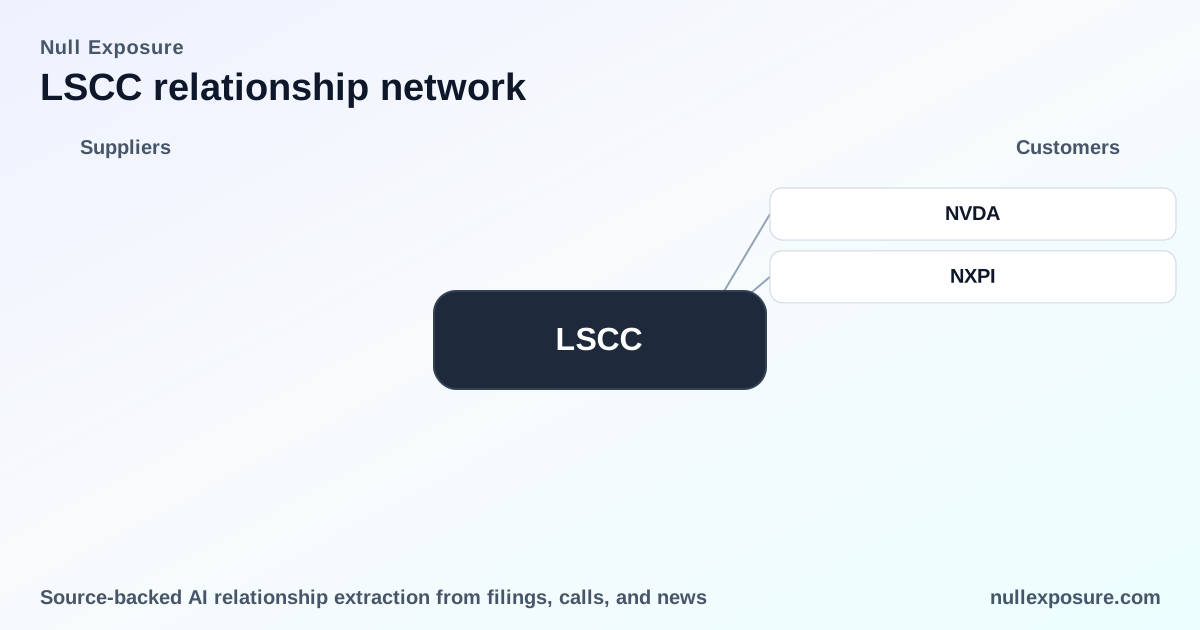
Lattice is publicly referenced as a collaborator with NVIDIA on AI/vision system reference designs, with its low‑power FPGAs integrated into NVIDIA’s Holoscan/Halos AI systems for video ingestion and robotics use cases. Multiple March–May 2026 reports highlight integration in NVIDIA design references and lab workflows, signaling product relevance in edge AI applications (see coverage in InsiderMonkey, March 2026; SimplyWallSt, May 3, 2026; Sahm Capital, April 11, 2026 — https://simplywall.st/stocks/us/semiconductors/nasdaq-lscc/lattice-semiconductor/news/why-lattice-semiconductor-lscc-is-up-117-after-new-ai-cybers, https://www.insidermonkey.com/blog/lattice-semiconductor-corporation-nasdaqlscc-q4-2025-earnings-call-transcript-1693358/, https://www.sahmcapital.com/news/content/awards-and-nvidia-ties-sharpen-focus-on-lattice-semiconductors-rich-valuation-2026-04-11).
Takeaway: NVIDIA integration is a strategic marketing and technical validation channel that supports higher‑value system sales and design wins, enhancing Lattice’s competitive positioning in AI edge markets.
Post‑quantum security partner: SEALSQ / LAES — TPM‑FPGA collaboration
SEALSQ Corp (ticker LAES) and Lattice announced a collaboration to integrate post‑quantum cryptography (PQC) into select Lattice FPGA solutions using a unified TPM‑FPGA architecture, targeting secure hardware platforms for defense, IoT and industrial applications (Quantum Computing Report, Mar 10, 2026; InsiderMonkey Mar–May 2026 coverage — https://quantumcomputingreport.com/sealsq-and-lattice-deliver-unified-tpm-fpga-architecture-for-post-quantum-security/).
Takeaway: This collaboration positions Lattice in the growing market for quantum‑resilient hardware security, supporting product differentiation in regulated and high‑security end markets.
Ecosystem progress with NXP — microprocessor/platform companionship
Lattice management referenced progress with NXP on a “companionship” strategy that pairs Lattice FPGAs with NXP microprocessors, signaling closer co‑design and platform integration efforts that aim to simplify customer adoption in embedded and automotive applications (InsiderMonkey earnings call transcript, March 2026 — https://www.insidermonkey.com/blog/lattice-semiconductor-corporation-nasdaqlscc-q4-2025-earnings-call-transcript-1693358/).
Takeaway: Platform partnerships with silicon vendors like NXP accelerate system OEM adoption and create bundled solution opportunities that lock in Lattice IP and device purchases.
What the relationship map means for investors
- Strategic validation without large single‑customer dependence: The NVIDIA design reference and NXP companionship increase Lattice’s TAM exposure in AI edge and embedded systems without implying that a single end customer drives the majority of revenue; instead, value accrues through design wins and recurring royalty/license capture.
- Channel risk is the dominant execution factor: Company filings show distributors historically account for the vast majority of net revenue, making distributor execution, inventory and order flow key operational levers and a concentration risk that can amplify macro cyclicality.
- Revenue mix supports margin resilience but adds volatility: The combination of device sales and usage‑based royalties provides upside when end markets expand, but creates revenue variability tied to standards adoption and device shipments.
- Geographic concentration matters: With ~82% of sales from foreign markets and ~65% of revenue from Asia in the documented period, trade dynamics and regional demand cycles will materially influence results.
Key risk: distributor concentration and APAC demand cycles; key opportunity: validation through high‑profile system integrations (NVIDIA) and security partnerships (SEALSQ).
Due‑diligence checklist for operators and investors
- Confirm the share of revenue tied to distributor channels versus direct OEM contracts and how distributor inventory practices affect revenue recognition.
- Track usage‑based royalty trends and the mix between one‑time license fees and recurring royalties.
- Monitor the momentum of NVIDIA and NXP integrations: design wins, reference designs published, and module/system announcements.
- Follow security partnerships (e.g., SEALSQ) for early adopters in defense/IoT that could lead to premium pricing or long‑term licensing.
- Watch regional demand in APAC and potential supply‑chain or geopolitical disruptions.
For a signal‑focused view of commercial relationships and their implications, visit https://nullexposure.com/.
Lattice’s customer relationships blur marketing validation and direct monetization: strong strategic ties enhance product credibility and open recurring revenue pathways, while distributor concentration and geographic exposure create the principal operational risks. Investors should weigh the upside from system integrations and licensing against the leverage inherent in a heavily channeled go‑to‑market model.