Leishen Energy (LSE) — customer relationships that reshape a small-cap renewables play
Leishen Energy is a China‑registered clean‑energy equipment and services company that monetizes through manufacturing and selling renewable energy hardware and related services, plus OEM-authorized production channels. The company generates revenue from equipment sales and direct supplier relationships, and it is pursuing international expansion into energy project and oil & gas supply chains that will change the mix of contracted revenue and channel sales. For investors focusing on customer concentration and go‑to‑market risk, the new supplier and OEM ties materially change Leishen’s commercial profile. Visit https://nullexposure.com/ for further relationship intelligence and monitoring.
How Leishen gets paid and why customer ties matter
Leishen’s financials show a company still in growth mode: Revenue TTM of $48.3 million against negative EBITDA indicates operating leverage is early and margins are thin. The firm’s reported metrics — Trailing P/E of 63 and EV/EBITDA of 47.4 — reflect a valuation that prices future margin expansion and revenue growth rather than current cash‑flow strength. Balance‑sheet characteristics and a small public float (roughly 1.5 million shares) produce amplified share‑price sensitivity to new customer wins or contract announcements.
Operationally, Leishen monetizes across three practical channels:
- direct equipment sales to project owners and EPCs,
- authorized manufacturing/OEM partnerships that embed Leishen into others’ sales pipelines, and
- supplier‑system inclusion with large energy buyers that converts marketing into contracted bidding and delivery opportunities.
Each channel carries different contracting postures and commercial maturity: direct project sales are higher revenue per contract but slower; OEM authorization drives recurring manufacturing volumes but often at lower margins; supplier‑system inclusion with major national energy companies accelerates scale but brings strict compliance and margin pressure.
Financial posture and investor implications
Leishen’s scale and capital structure define its strategic options. Market cap near $85.8 million with revenue around $48 million gives a revenue multiple in the low single digits, but profitability remains fragile. Quarterly revenue and earnings growth have declined year‑over‑year, and operating margin is effectively flat; these are signals that growth is occurring at compressed near‑term profitability.
Key structural takeaways:
- Concentration risk is elevated by a small float and limited institutional ownership (about 24%). A few relationship wins or losses will have outsized balance‑sheet and market impacts.
- Contracting posture is transitioning from domestic OEM work toward international supplier qualification. This changes working capital and compliance requirements.
- Maturity of customer relationships is early-stage: inclusion into a supplier system or an authorization as a manufacturer is a milestone, not yet a stable long‑term contracted revenue stream.
These dynamics create asymmetric upside if Leishen can convert qualifications into multi‑year supply contracts, and symmetric downside if major qualified buyers do not award volume.
Customer relationships: what exactly was announced
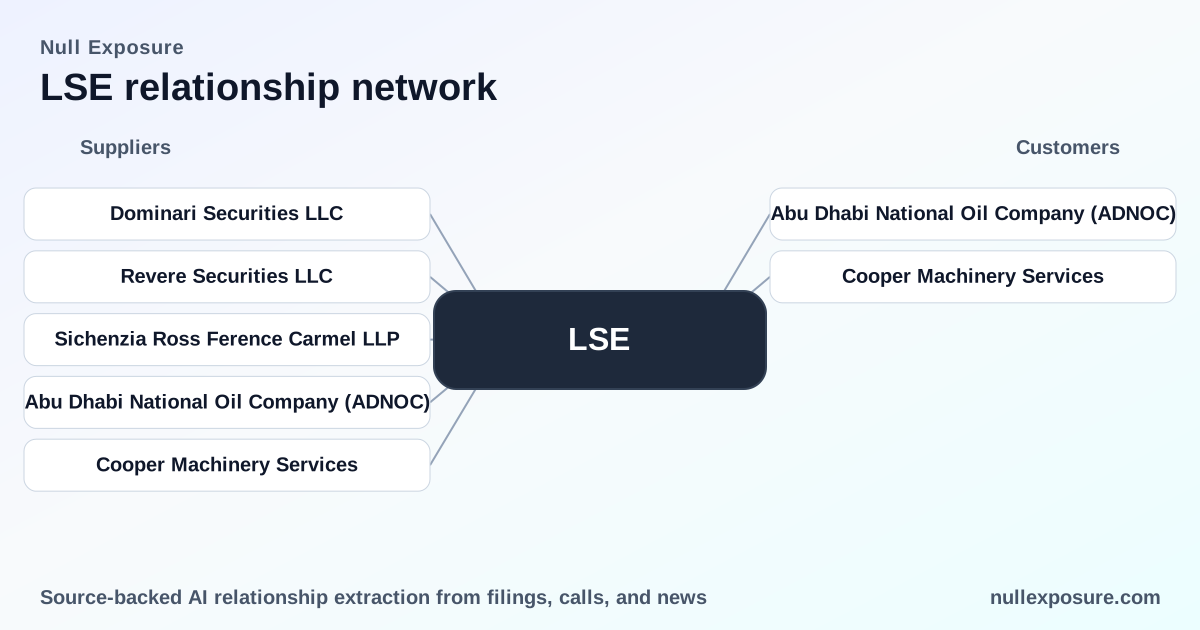
Investors should evaluate two discrete relationships disclosed in public releases: a supplier‑system inclusion with a sovereign energy entity and an OEM authorization with a global machinery company. Each relationship is short, specific, and carries distinct commercial consequences.
-
Abu Dhabi National Oil Company (ADNOC) — Leishen will be included in ADNOC’s supplier system, a step that positions the company to bid on projects and sell equipment into the UAE energy market; this is framed as a near‑term inclusion milestone in press releases. Source: GlobeNewswire press release (Nov 14, 2025) and related FinancialContent coverage (Nov 2025).
Link: https://www.globenewswire.com/de/news-release/2025/11/14/3187977/0/en/UPDATE-Leishen-Energy-LSE-Makes-a-Strong-Debut-at-ADIPEC-Abu-Dhabi-Embarking-on-a-New-Chapter-of-Strategic-Expansion-in-the-Middle-East-and-International-Markets.html -
Cooper Machinery Services — Leishen has been named an authorized manufacturer for Cooper in China and the Middle East, expanding its OEM role and providing an established channel for parts and equipment sales under an OEM umbrella. This authorization is described in the same company announcement and financial press syndication. Source: PennEnergy / FinancialContent coverage (Nov 10–14, 2025).
Link: https://markets.financialcontent.com/pennwell.pennenergy/article/gnwcq-2025-11-10-leishen-energylse-makes-a-strong-debut-at-adipec-abu-dhabi-embarking-on-a-new-chapter-of-strategic-expansion-in-the-middle-east-and-international-markets
Both disclosures are contemporaneous and presented by Leishen as strategic commercial expansion following participation at ADIPEC, the Abu Dhabi industry conference. These are qualification and channel milestones, not public announcements of multi‑year awarded volumes.
Why these relationships change the investment thesis
The two announced ties alter four dimensions of Leishen’s business model:
- Revenue mix: OEM authorization shifts incremental revenue from one‑off project sales to recurring parts and production volumes when orders flow through Cooper’s channels.
- Customer criticality: Inclusion in a national supplier system increases potential contract size and credibility with other large buyers; however, it also raises compliance, warranty, and performance obligations that can stress working capital.
- Concentration dynamics: Winning supplier approval with a major national buyer can quickly concentrate revenue if a handful of large projects are secured; Leishen’s small scale magnifies this concentration risk.
- Commercial maturity: Both moves are early commercialization steps — they convert relationship credibility into bidding opportunities but do not guarantee awarded contracts.
Positive outcome: conversion of these qualifications into multi‑year contracts would materially improve revenue visibility and margins. Negative outcome: failure to win awards or increased warranty/quality costs associated with large customers would pressure already thin operating results.
Company‑level signals and operating constraints
There are no disclosed customer‑scope constraints recorded in the source set; as a company‑level signal, this absence indicates Leishen is publicly framing and marketing commercial progress rather than publishing binding long‑term supply contracts. From an operational perspective, investors should treat the company as early in supplier qualification and channel development, with contracting posture that is now more externally facing (international standards, OEM compliance) and with customer concentration and contract conversion risk as primary governance variables.
Bottom line for investors
Leishen’s announcements represent a strategic shift from domestic equipment supplier to an internationally qualified OEM and approved supplier, a development that increases both upside and execution risk. For investors focused on customers, the key questions are whether Leishen converts supplier‑system inclusion and OEM authorization into firm purchase orders, how it manages compliance costs for large energy clients, and whether revenue concentration accelerates.
Monitor upcoming procurement awards and order books closely; qualification is now the headline, not yet guaranteed contracted revenue. Explore ongoing updates and relationship mapping at https://nullexposure.com/ for tailored alerts and deeper tracking.