Lightbridge Corp (LTBR): Commercial relationships that define a long‑dated fuel play
Lightbridge develops advanced nuclear fuel—marketed as Lightbridge Fuel—for water‑cooled reactors and monetizes primarily through licensing, joint fabrication ventures, and future fuel sales to utilities and fuel fabricators. The company is a technology developer that converts R&D into commercial partnerships with reactor operators and advanced fuel manufacturers, positioning itself as a seller of a core product with high regulatory and deployment gating. For investors, value realization depends on a small number of strategic commercial tie‑ups and a successful transition from prospecting to repeat fuel orders.
For a concise company mapping and partner tracker, visit https://nullexposure.com/.
How Lightbridge actually brings its product to market
Lightbridge operates as a developer of next‑generation metallic nuclear fuel rather than a utility or reactor vendor; its revenue model rests on a sequence of commercial milestones: validation and licensing, joint fabrication or licensing agreements with established fuel manufacturers, and eventual long‑duration fuel sales to utilities. The business is capital‑light on commercial deployment but heavy on regulatory and engineering proof points, which explains the company’s emphasis on strategic collaborations with large nuclear firms and advanced fuel manufacturers.
- Lightbridge’s product focus is its single, core technology offering—the company treats fuel commercialization as its primary and only segment, concentrating resources on moving that product through testing, licensing, and fabrication partnerships.
- The bargaining and contracting posture is that of a seller and licensor of intellectual property, negotiating with large utilities and fabricators who control reactor deployment decisions and regulatory approvals.
- Commercial maturity is early: the company is in a prospect stage, with revenue realization contingent on regulatory approvals and partner‑led fabrication scale‑up over many years.
Constraints that shape commercial execution
Several company‑level signals in public disclosures determine how Lightbridge negotiates, structures deals, and pursues customers:
- Contracting posture — Seller: Lightbridge positions itself to sell or license its fuel rather than to operate reactors or fuel fabrication plants directly. This imposes a licensing and partnership negotiation dynamic with large counterparties.
- Customer concentration — Large enterprise focus: The technology is being designed for the needs of large utilities and reactor OEMs, which creates long procurement cycles and concentrated counterparty risk.
- Geographic addressable market — Global: The potential customer base spans the global fleet of light‑water reactors, reinforcing the need for multi‑jurisdiction regulatory strategies and international partners.
- Maturity — Prospect stage: The company projects commercial orders decades out, which indicates a long lead time between technical validation and recurring revenue.
- Segment focus — Core product orientation: Lightbridge runs as a single‑product developer. That improves focus but amplifies execution risk if adoption stalls.
These constraints imply long sales cycles, high regulatory dependency, and outsized importance of a few strategic partners in converting intellectual property into recurring cash flow. For more context on partner progress and deal flow, see the company tracker at https://nullexposure.com/.
Customer relationships: who Lightbridge is actually working with
Below are the partner relationships that show up in public reporting and news coverage. Each entry is a concise commercial summary with the underlying source.
-
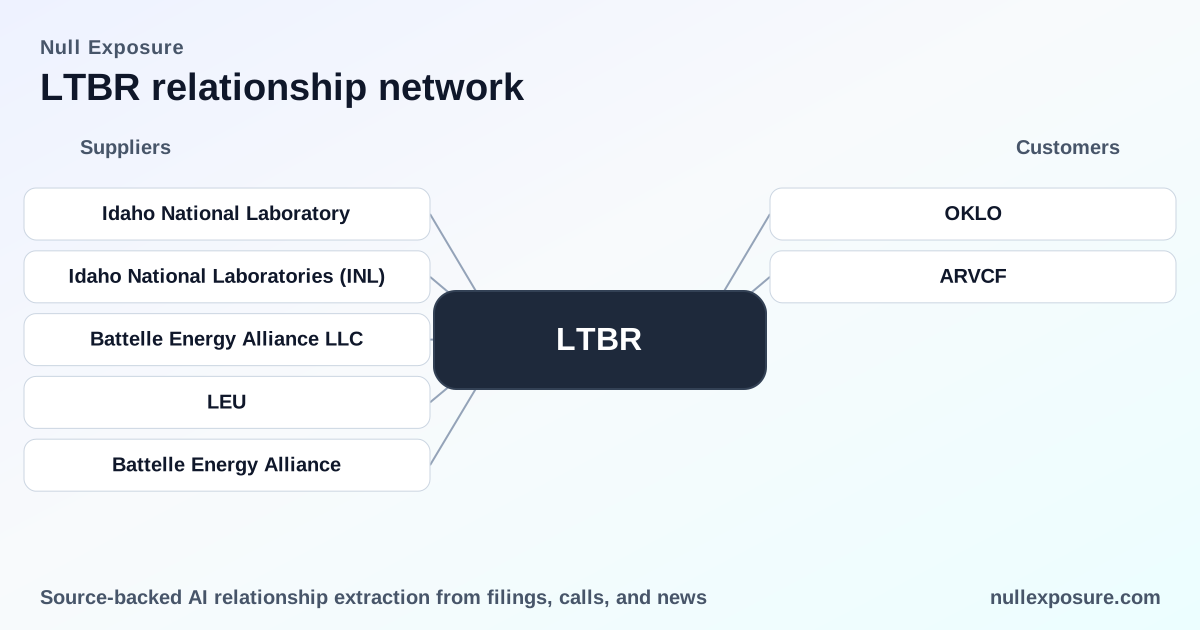
Areva (inferred symbol ARVCF): Lightbridge agreed to work with French nuclear giant Areva to commercialize its new fuel rods, with the collaboration described as targeting potential installation in existing and newly built reactors as early as 2020. This collaboration was reported in Technology Review in March 2016 and is cited in historical coverage of Lightbridge’s early commercialization attempts (Technology Review, March 2016 — https://www.technologyreview.com/2016/03/31/71267/).
-
Oklo / OKLO / Oklo Inc.: Lightbridge announced a strategic collaboration and memorandum of understanding with Oklo in January 2025 to explore co‑locating a Lightbridge fuel fabrication operation within Oklo’s planned advanced fuel manufacturing facility and to evaluate synergies in reprocessing and recycling of spent uranium‑zirconium fuel. The collaboration is described in Lightbridge’s public business update and in industry press coverage detailing the potential for co‑located fabrication (Lightbridge press release on GlobeNewswire, May 12, 2025; NEI Magazine report, 2025; StocksToTrade coverage, Aug 2025 — see GlobeNewswire May 12, 2025 release and NEI Magazine article).
Notes on the coverage: the Oklo relationship appears repeatedly across company press releases and trade outlets in FY2025, indicating ongoing exploratory work rather than an executed sales contract (GlobeNewswire business update, May 12, 2025; NEI Magazine, 2025; StocksToTrade, Aug 2025).
What these relationships mean for revenue and risk
- Commercial upside hinges on partner execution. Deals with fuel fabricators and advanced reactor firms such as Oklo convert Lightbridge’s IP into manufactured product lines; success would drive licensing income and future fuel sales. The Areva collaboration from 2016 demonstrates Lightbridge’s strategy of aligning with incumbent fabricators and OEMs to accelerate deployment.
- Adoption is binary and slow. Fuel conversion for commercial reactors requires regulatory validation, multi‑year testing, and utility procurement cycles; as a result, material revenues are long dated and tied to a small number of strategic outcomes.
- Concentration and regulatory risk are high. The company’s customer base is large enterprises (utilities, OEMs) that control purchasing and regulatory interactions, concentrating counterparty risk and extending negotiation timelines.
Investment implications — clear trade‑offs
- Upside scenario: successful licensing agreements and co‑located fabrication with players like Oklo create a pathway to recurring fuel sales and meaningful revenue scaling, validating the technology and unlocking valuation compression risk into growth recognition. Partnerships with established fabricators or reactor firms are the fastest route to monetization.
- Downside scenario: regulatory delays, failure to secure fabrication partners, or limited utility adoption keep Lightbridge revenueless for an extended period, preserving the company as a technology hedge rather than an operational seller of fuel.
Bottom line for investors and operators
Lightbridge is a high‑conviction technology developer whose commercial value is concentrated in a handful of strategic relationships and long‑dated licensing outcomes. The company is a seller in the prospect stage, targeting large, global enterprise customers with a single core product, which creates significant upside if partners execute but equally significant execution and regulatory risk. Track the Oklo collaboration and any renewed fabrication agreements with incumbent fuel manufacturers (historically referenced through Areva coverage) as the primary catalysts for revenue recognition.
For a deeper partner and risk map of LTBR and comparable fuel plays, visit https://nullexposure.com/ for the latest curated coverage.